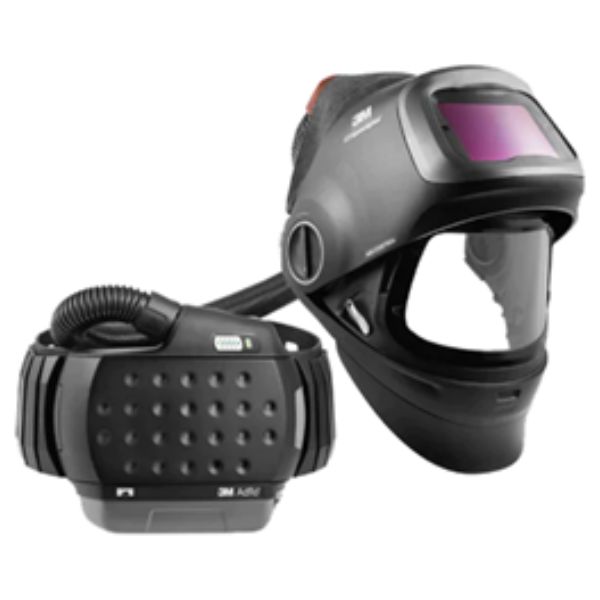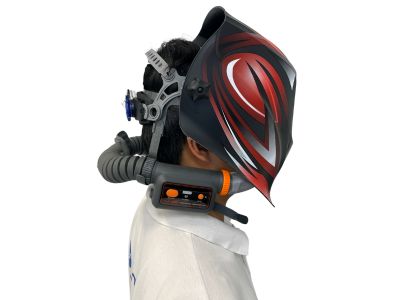
How Does the Aimwell™ AYO™ WX FFM-LF P-Boost PAPR System Compare with the 3M Versaflo System?


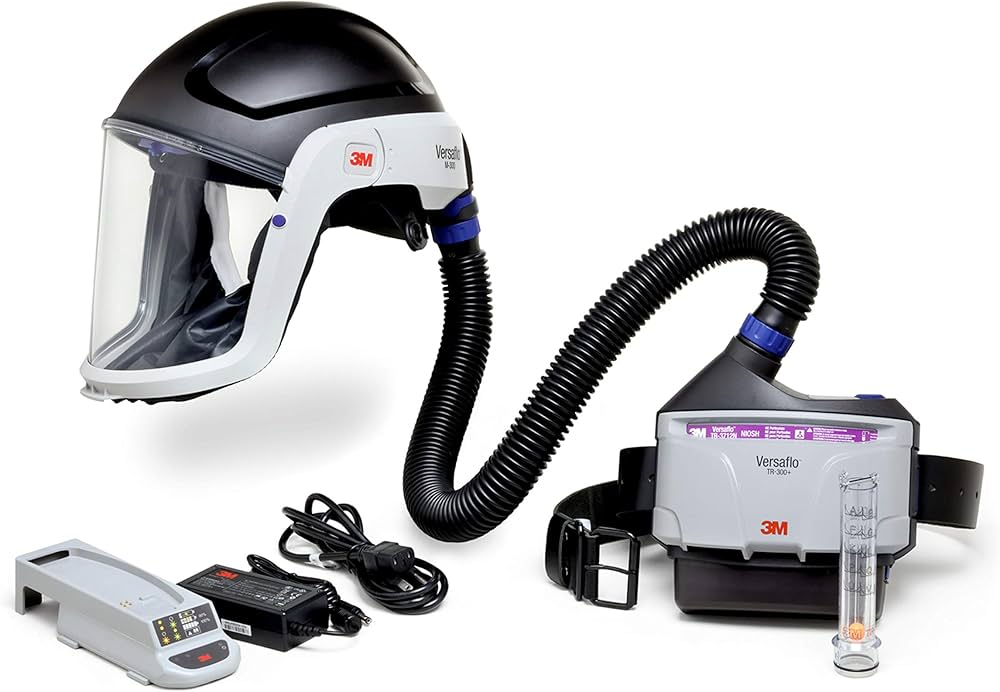
Key Comparison 3M Versaflo TR-315A+ PAPR Kit with M307C helmet

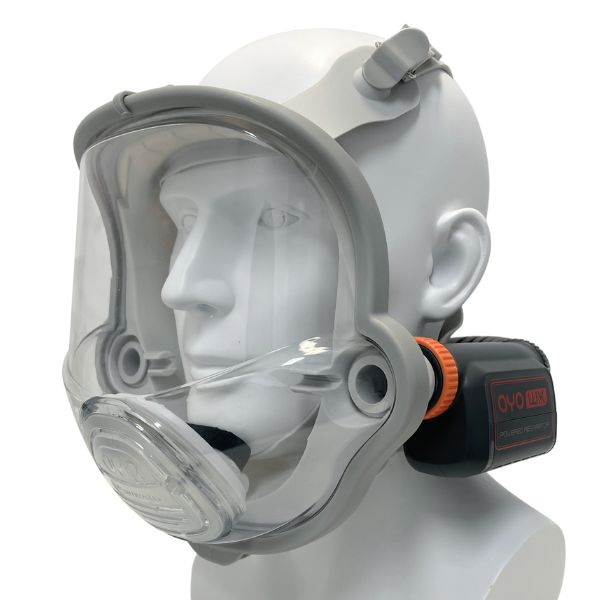
Aimwell AYO WX FFM-LF P-Boost PAPR System

Protection Class AS/NZS 1716: 2012 P3, EN12941 TH3 AS/NZS 1716: 2012 PAPR P3, EN 12941:2023 TH3
Wearability/Mobility

Heavy with hose and belt, troublesome to don and doff, and poor mobility


Lightweight and low-profile, no hose no belt, easy to don and doff, good mobility


Peak flow 170 – 205 L/min Up to 220 L/min (Breath responsive)
Battery Run-time 9-12 hours Up to 16 hours
Weight ~2kg (Including Power unit1139g with battery, belt, filter, and Helmet 832g, not including hose) 1.0 Kg (Full system)
Fit Testing Not Required Not Required
Fitting type Loose-fitting only, can not be converted to tight-fitting PAPR if needed. Loose-fitting but can be configured to AYO WX
FFM-DS tight-fitting PAPR for applications that demand heavy breathing.
Maintenance Difficult to maintain and clean Much easier to maintain and clean
Service life 5 years 10 years
Cost $2390 $921

In summary, AYO WX FFM-LF P-Boost PAPR can provide over 3M Versaflo TR-315A+ PAPR Kit with 307C helmet:

  • At least equivalent protection but with higher peak flow.
  • Half the weight.
  • Better mobility: No hose and belt.
  • Longer battery life.
  • Easier to clean and maintain.
  • Doubled service life.
  • Less than half of the cost.

When should AYO WX FFM-LF PAPR System be used instead of 3M Versaflo TR-315A+ PAPR Kit with a 307C helmet?

When doing work requiring frequent donning and doffing and large physical movements, especially in confined spaces, such as tunnelling or building work, instead of work just sitting or standing with minimum body movement most of the time:

  • The long hose and heavy belt-mounted power unit are troublesome to don and doff, and difficult to move around while doing highly physical work.

When you need to carry tools around your waist:

  • The belt-mounted power unit prevents you from carrying tools around your waist.

When doing work with heavy dust:

  • The bulky Versaflo system is difficult to clean, while the AYO WX FFM-LF PAPR system is much easier to clean and maintain.

When doing high-exertion work that causes very heavy breathing:

  • The Versaflo will not provide protection when you over-breathe the blower with a peak of 205 L/min. For example, you may well breathe over 250 L/min doing heavy work, which will cause negative pressure in the face shield at the initial phase of inhalation. Due to the loose-fitting nature of the 307 helmet, you will breathe in harmful dust or gas easily.

  • In this situation, for the AYO WX FFM-LF PAPR System, you can configure it into an AYO WX FFM-DS PAPR system, which provides a tight-fitting double-seal Full-face mask that can protect you well when the pressure in the mask goes negative briefly during very heavy inhalation.

When you are on a budget:

  • 3M Versaflo is over 2 times the cost of the AYO WX FFM-LF P-Boost PAPR system. Why pay more for a product that is less suitable for doing the same job?
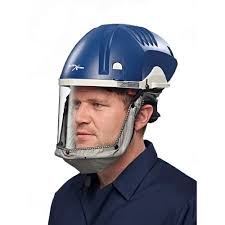
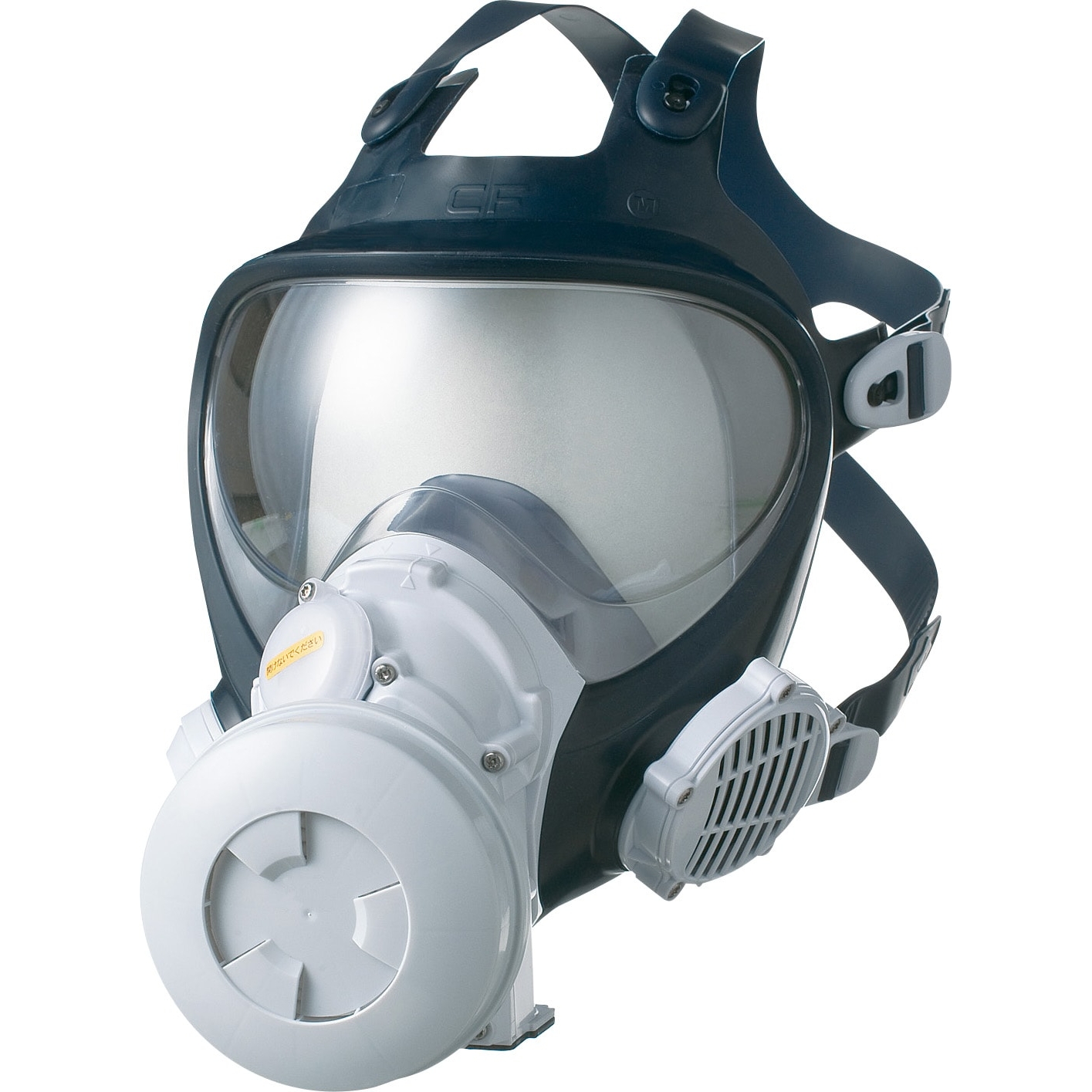
How Does Aimwell™ AYO™ WX FFM-LF P-Boost Full-Face Mask PAPR System Compare with Other Full-Face PAPR Brands?

PAPR Type Brand/Model Key Comparison
Head-mounted
Loose-fitting

PureFlo Purelite

Protection level: AS/NZS 1716 PAPR P2

Peak flow: > 200 L/min
Weight: 1 kg
Battery Time: 8 hours
Cost: $1160

Shortcoming:

  • P2 protection only.
  • Loose-fitting only: not suitable for heavy breathing.
  • Poor mobility – Top-heavy, not suitable in confined spaces, or for work requiring lowering the head.
  • Not suitable for asbestos removal.
  • You are locked to the helmet plus a visor for respiratory protection when you prefer not to.
  • Not easy to clean.
Face-mounted Tight-fitting SHIGEMATSU
SYNC01VP3


Protection level: AS/NZS 1716 PAPR P3
Peak flow:  only 138 L/min
Weight: 0.8 kg
Battery Time: 9 hours
Cost: $1995


Shortcoming:

  • Low flow – not suitable for heavy work.
  • Tight-fitting only: must be clean-shaven and fit tested.
  • Poor mobility – The front of the mask is too bulky and heavy, not suitable in confined spaces.
  • The front unit blocks the downward view – not suitable for downward-looking work.
  • Not easy to clean.
  • Expensive.
Belt-mounted Tight-fitting

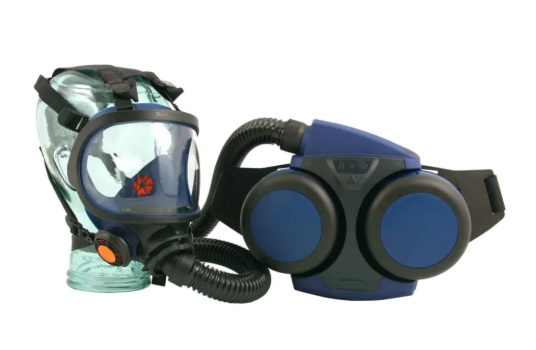
Sundstrom SR500/200

Protection level: AS/NZS 1716 PAPR P3
Peak flow:  240 L/min
Weight: 1.65 kg
Battery Time: 7 hours
Cost: $2903


Shortcoming:

  • Poor mobility – Bulky, heavy with long hose, troublesome to wear, not suitable in confined spaces.
  • Tight-fitting only: must be clean-shaven and fit tested.
  • Not easy to clean and maintain.
  • Very expensive
Belt- mounted
Loose-fitting

3M Versaflo TR-315A+ PAPR Kit with 307C helmet

Protection level: AS/NZS 1716 PAPR P3, EN12941 TH3
Peak flow:  200 L/min
Weight: ~2kg (Including Power unit with battery, belt, filter), and Helmet.
Battery Time: 9-12 hours
Cost: $2390


Shortcoming:

  • Poor mobility – Bulky, heavy with long hose, troublesome to wear, not suitable in confined spaces.
  • Loose-fitting only: not suitable for heavy breathing.
  • You are locked to the integrated helmet plus a visor for respiratory protection when you prefer not to.
  • Not easy to clean and maintain.
  • Expensive.
Belt- mounted
Loose-fitting

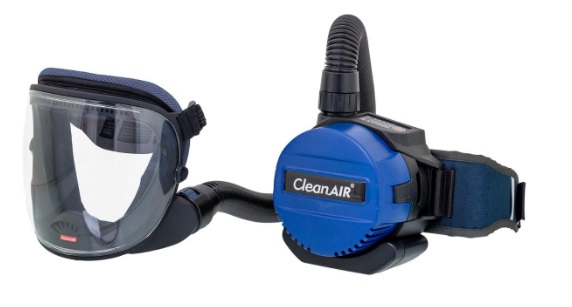
CleanAIR Unimask with Basic PAPR RFU837-CB

Protection level: EN12941 TH3
Peak flow:  170 – 240 L/min
Weight: 1.26kg (Including Power unit with battery, belt, filter, not including hose), and face shield.
Battery Time: 10 hours
Cost: $1650


Shortcoming:

  • Poor mobility – Bulky with long hose and belt, troublesome to wear, not suitable in confined spaces.
  • Loose-fitting only: not suitable for heavy breathing.
  • Not easy to clean and maintain.
  • Expensive.
Around-neck
Tight-fitting and loose-fitting configurable

AYO WX FFM-LF P-Boost Loose-Fitting Full-Face Mask PAPR System

Protection level: AN/NZS 1716 PAPR P3, EN 12941:2023 TH3
Peak flow: Up to 220 L/min (Breath responsive)
Weight: 1.0kg
Battery Time: 16 hours
Battery replaceable
Cost: $921


Best overall performance among all:

  • Loose-fitting by default.
  • Can be configured to be tight-fitting for applications that demand heavy breathing.
  • Great mobility – low profile and lightweight, no hose and belt.
  • Perfect for silica dust and asbestos protection.
  • Very easy to clean and maintain.
  • The most value-for-money Full-Face Mask PAPR System in the world.

In summary, AYO™ WX FFM-LF is on par with most PAPR brands regarding peak flow performance, while it stands out in mobility, configurable loose-fitting and tight-fitting, ease of use, and value-for-money.

Buy AYO™ WX FFM-LF P-Boost Full-Face Mask PAPR System – the best all-rounder Full-Face Mask PAPR System in the world.

How Does AYO WX HFM-W Welding Half-Face Mask PAPR System Compare with 3M Speedglas + Adflo System?

Key Comparison 3M Speedglas G5-01 TW Heavy-Duty Flip-Up Welding Helmet with Adflo PAPR (Loose-fitting) Aimwell AYO WX HFM-W P-Boost Welding Half-Face Mask PAPR (Tight-fitting or loose-fitting)
(Tight-fitting or loose-fitting)
Protection Class AS/NZS 1716 PAPR P3
EN12941 TH3
AS/NZS 1716 PAPR P3, EN 12942:2023 TM3,
EN 12941:2023 TH3
Wearability/Mobility

Heavy with hose and belt, troublesome to don and doff, and poor mobility

Lightweight and low-profile, no hose no belt, easy to don and doff, good mobility

Welding Helmet Integrated Existing non-integrated
Don and Doff Difficult due to the hose and belt Easy, no hose and belt
Peak flow 170 – 200 L/min Up to 220 L/min (Breath responsive)
Battery Run-time 12 hours Up to 16 hours
Weight 2.13kg (Helmet 1kg, PAPR 1.1kg) – not including hose) 1.26kg (Helmet 0.54kg (typical), PAPR+half-face mask 0.72kg)
Fit Testing Not required Not generally required, but can be done if needed.
Fitting type Loose-fitting only, can not be converted to tight-fitting PAPR if needed. Dual-fitting, with optional Face Seal for beard covering.
Maintenance Difficult to maintain and clean Much easier to maintain and clean
Service life 5 years 10 years
Cost $2195 $739

In summary, AYO WX HFM-W P-Boost Welding PAPR can provide over 3M Adflo/Speedglas:

  • Easier to don and doff.
  • Dual-fitting, better usability and flexibility.
  • Higher protection in tight-fitting.
  • Longer battery run-time.
  • 40% lighter.
  • Easier maintenance.
  • At least 1/2 of the cost after combining a common welding helmet.


When to use the AYO WX HFM-W P-Boost Welding Half-Face Mask PAPR System instead of the 3M Speedglas/Adflo System?

When a better protection is needed:

  • The Versaflo can only be loose-fitting, while AYO WX HFM-W P-Boost PAPR provides dual-fitting, giving higher protection in tight-fitting.

When doing work requiring frequent donning and doffing:

  • The long hose and heavy belt-mounted power unit are a nuisance to don and doff.

When having an existing welding helmet:

  • AYO WX HFM-W Welding PAPR System allows you to use your existing welding helmet, enhancing protection and comfort over non-powered respirators while saving costs.

When you are on a budget:

  • The Speedglas/Adflo is over 2 times the cost of the AYO WX HFM-W P-Boost PAPR System. Why pay more for a product that is inferior in overall performance while doing the same job?

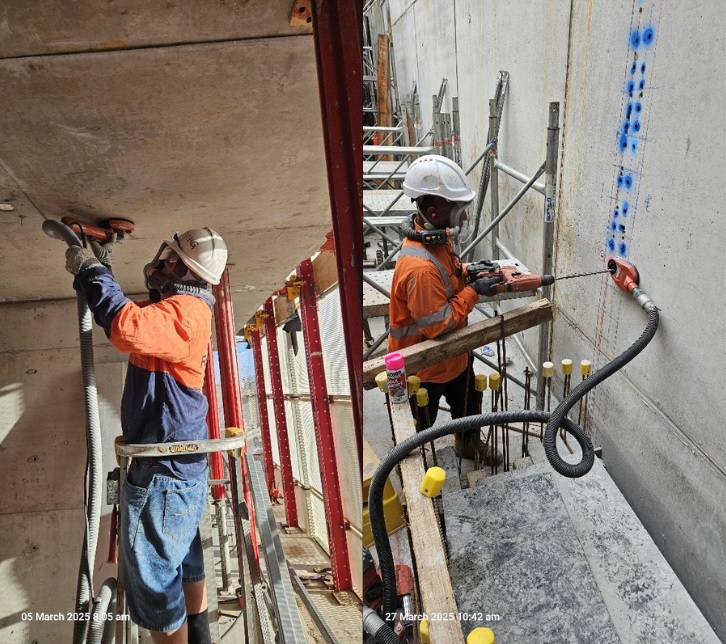
Case Study: Future Form Enhances Worker Safety and Efficiency with AYO WX Loose-Fitting PAPR Systems

Eliminating Silica Dust Risks in Construction Without Compromise

Overview

Future Form, a leading formwork and concrete construction company, faced significant challenges protecting its workforce from silica dust—a pervasive hazard in their industry. Traditional solutions like disposable paper masks and non-powered respirators proved inadequate due to fit testing requirements, worker discomfort, and logistical inefficiencies. After adopting the Aimwell™ AYO™ WX FFM-LF Loose-Fitting Full-Face PAPR System, Future Form transformed its safety protocols, achieving compliance, cost savings, and worker satisfaction.
________________________________________

Challenges: Why Traditional Respirators Fell Short

1. Bearded Workers: Many employees wore facial hair, making tight-seal respirators ineffective and forcing costly, uncomfortable shaving mandates.
2. High Contractor Turnover: Frequent onboarding of new contractors required repeated fit testing, delaying projects and increasing expenses.
3. Mobility Constraints: Belt-mounted PAPRs or hose systems hindered workers carrying tools or navigating confined spaces.
4. Cost Barriers: Competitor PAPR systems (e.g., 3M Versaflo) were prohibitively expensive for widespread deployment.
________________________________________

The Solution: Aimwell™ AYO™ WX FFM-LF Loose-Fitting PAPR System

Future Form chose the Aimwell™ AYO™ WX for its unique combination of innovation, practicality, and affordability:

  • No Hose, No Belt-Mounted Unit: The lightweight, around-neck design eliminates tripping hazards and frees workers’ waists for tool belts, critical in dynamic job sites.
  • Loose-Fitting, No Fit Testing Required: Powered by positive pressure and breath-responsive flow control technology (200+ L/min airflow), it ensures protection without a tight seal—ideal for bearded workers and fast-paced teams.
  • Easy to Don/Doff: Perfect for confined spaces or quick adjustments, enhancing productivity.
  • Cost-Effective Safety: Priced for scalability, enabling Future Form to equip every worker without sacrificing budget.
    ________________________________________

Results: Safety Meets Efficiency

• Eliminated Fit Testing: Saved 8+ hours monthly in administrative tasks and testing costs.
• 100% Compliance: Bearded workers and new contractors now have immediate, reliable protection.
• Increased Productivity: Workers reported less fatigue and unrestricted movement, even in tight spaces.
• Worker Satisfaction: Employees praised the comfort and ease of use, with one contractor noting,
                                          “It’s the first mask I can wear all day without itching to take it off.”
________________________________________

Results: Safety Meets Efficiency

• Eliminated Fit Testing: Saved 8+ hours monthly in administrative tasks and testing costs.
• 100% Compliance: Bearded workers and new contractors now have immediate, reliable protection.
• Increased Productivity: Workers reported less fatigue and unrestricted movement, even in tight spaces.
• Worker Satisfaction: Employees praised the comfort and ease of use, with one contractor noting, “It’s the first mask I can wear all day without itching to take it off.”
________________________________________

Why Aimwell™ AYO™ WX FFM-LF is Ideal for Construction Companies

The Aimwell™ AYO™ WX addresses universal pain points in construction:
• High Turnover? Skip fit testing and onboard workers instantly.
• Diverse Workforce? Accommodate beards and facial hair without compromise.
• Mobility-Critical Tasks? The around-neck design ensures unrestricted movement.
• Budget Constraints? Achieve enterprise-grade protection at half the cost of traditional PAPRs.
________________________________________

In Their Words

“The Aimwell™ AYO™ WX changed the game for us. Fit testing is obsolete, and our workers no longer have to choose between safety and comfort.

The cost savings alone justified the switch—but seeing our team embrace the system without complaint? That’s priceless.”

Greg Rogers

WHSE Manager , Future Form

Conclusion: Protect Your Team Like Future Form

For construction companies battling silica dust, the Aimwell™ AYO™ WX FFM-LF delivers unmatched flexibility, compliance, and value.

Say goodbye to fit testing, mobility issues, and costly alternatives.

Ready to Transform Your Safety Program?

Contact us today to learn how the Aimwell™ AYO™ WX can safeguard your team—beards, confined spaces, and tight budgets included.
________________________________________

AYO™ WX: Breathe Easy. Work Better.

Why Paper Masks/Non-Powered Respirators Are Inadequate for High-Exertion Work?

Q1: What are the works regarded as high exertion?

For examples: most construction/tunnelling work involving frequent bending and heavy lifting, operating an impacting drill on a concrete wall, sanding over a ceiling, etc.

Q2: Why aren’t paper masks or non-powered respirators sufficient for high-exertion work?

A: They rely on a tight seal to the face, which is hard to maintain during high-exertion tasks. They are also harder to breathe than powered respirators, especially when dust is loaded.

Q3: Why isn’t fit testing for non-powered respirators effective to ensure a good fit during high-exertion work?

A: Fit testing ensures a proper seal only in a controlled environment, such as in an office. However, even if having a good fit in the test, physical strain during heavy work causes sweating, facial shifts, and frequent head movements, which can shift the mask fit and make a good fit into a bad fit. Workers can’t readjust masks mid-task (e.g., while handling tools, or needing focus on complex or risky job), leading to gaps and rendering protection ineffective.
Relying on fit testing for good protection during high-exertion work is in reality just an act of Self-comfort or Self-deception.

Q4: Why are beards a problem for non-powered respirators?

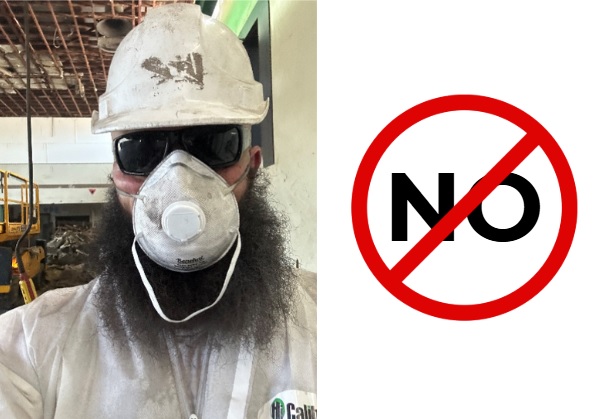
A: Facial hair prevents a secure seal, allowing contaminants to bypass the mask. Clean-shaven is required, but not always practical, e.g. due to strong personal preference or religion, stubble grows mid-day or late in a shift.

Q5: Why choose a loose-fitting PAPR instead?

A: Loose-fitting PAPRs don’t require a tight seal to work, the protection is ensured via positive pressure in the breathing zone.

They tolerate mask shifting during movement, no need for fit testing and adjustments, letting workers focus – ideal for high-exertion work or workers with beards.

They reduce breathing effort compared with a non-powered respirator, thus can improve comfort.

They also provide fresh airflow – reduces heat buildup and fogging.

Q6: Do Loose-fitting PAPRs provide better protection than well-fitted non-powered respirators?

A: Yes. Most certified loose-fitting PAPRs can provide at least 5 times better protection for a bearded worker than a well-fitting nonpowered respirator for a clean-shaven worker.

Q7: What type of Loose-fitting PAPRs are most suitable for High-Exertion work?

A: PAPRs that hinder the work: belt-mounted PAPRs with hoses, helmet mounted PAPRs (top heavy).

Around-neck Loose-fitting PAPRs are most suitable, as they offer best mobility, can be worn like a non-powered respirator, such as Aimwell® AYO™ WX FFM-LF Loose-Fitting Full-Face PAPR System.

Conclusion: For High-Exertion tough jobs, Loose-fitting PAPRs ensure safety, comfort, and focus. Non-powered masks risk failure when it matters most. Around-neck Loose-Fitting PAPRs are most suitable among all types of loose-fitting PAPRs.

PAPR Respirators for Beards and Facial Hair

Common Requirement on Facial Air

Powered Air Purifying Respirator (PAPR) for beards

The Question here refers to respiratory protection when wearing a mask or a respirator.

Here, the ‘respirator’ can be categorized as an Air Purifying Respirator (APR) and a Powered Air Purifying Respirator (PAPR).

Within PAPRs, we have Tight-Fitting PAPRs and Loose-Fitting PAPRs.

Here, ‘tight-fitting’ means a tight facial seal between the respirator and the skin as intended by design to prevent leaks; and ‘loose-fitting’ means a partial seal between the respirator and the skin as intended by design to relax the fitting allowing some leaks.

Typical tight-fitting respirators involve an elastomeric facial cushion, and typical loose-fitting respirators involve a helmet, a visor, or a hood. Where the blower and hose sit changes the picture again — we compare the four main types of PAPR separately.

Except for Loose-fitting PAPRs, clean-shaven is the common requirement for wearing a tight-fitting respirator, especially a paper mask or an APR.

The reason is simple:

We want all the hazardous contaminants to be blocked by the filter media with a mask or respirator. To ensure that, we want to ensure no gap between the mask/respirator and your facial skin. With facial hair, such as a beard, your mask or the respirator cushion will contact your beard first instead of your skin, leaving a gap for the contaminants to bypass the filter media to be sucked under negative pressure in the mask during inhalation.

So yes, with a negative pressure mask or respirator (APR), you must be clean-shaven to achieve the expected protection, and there is no question here, period.

Powered Air Purifying Respirator (PAPR) for bearded people

Loose-fitting PAPRs are suitable for bearded people, or are they?

Loose-fitting PAPRs are designed not to rely on a tight seal to ensure protection, instead, they rely on positive pressure generated by the PAPR in the breathing zone to block outside contaminants from getting through the gaps in the loose-fitting partial seal while the PAPR sucks air via a filter.

To get it to work properly, the blower needs to produce all the flow for the wearer to breathe, and yes, if the PAPR can achieve it, it is indeed suitable for the bearded wearer or the wearer with facial hair.

However, there may be a danger of misconception here that loose-fitting PAPRs are suitable for bearded wearers without considering the limitations. The fact is that the suitability is highly conditional and can be affected by several factors for a given application, such as:

  • How long is the facial hair and where is it located?
  • How powerful is the loose-fitting PAPR being used?
  • How is the airflow controlled? Will the flow get less when the built-in battery level is low?
  • How heavy is the physical work demanding on your breathing?
  • How dense are the contaminants?
  • What is the maximum exposure limit for the contaminants?

Most of these factors are related to the single most essential characteristic of PAPRs: Positive Pressure in the mask/breathing zone. As long as positive pressure is maintained all the time, there will be no leak issue from facial hair, as the air tends to be pushed out of the mask instead of being sucked in.

Now the question comes as to how positive pressure can be always maintained.

In a theoretical scenario, as long as the airflow generated from the blower in the PAPR is not less than the inhaled flow, positive pressure can be maintained. But in practice, for loose-fitting helmets, visors, or hoods, the leak paths can vary so that not all the flow from the blower can reach the breathing zone. Some may well leak out before reaching the breathing zone.

Therefore, the PAPR needs to be designed in such a way that it generates a flow more than what the wearer can breathe plus the flow leaked over the loose-fitting interface.

How much air can be generated from the PAPR is a matter of the blowing power of the PAPR; whereas, how much air you inhale depends on how hard you need to breathe to do your job.

The reality is that the maximum flow a PAPR can generate is limited and will also be reduced from its peak when the battery level becomes lower after a certain time of use.

Also, most loose-fitting PAPRs deliver constant flow. When the flow rate is high, so will the battery capacity, making the battery larger and heavier, and this will affect wearability and cost.

On the other hand, if your job is highly physical and causes heavy breathing, your inhaled air could outrun what the blower can deliver.

The other important factor to consider is the protection factor requirement of the PAPR for doing certain work. The concentration of the contaminants and the maximum exposure limit will determine the minimum protection factor of the PAPR. Typically, loose-fitting PAPRs have a lower protection factor than tight-fitting PAPRs. When the contaminant exposure limit demands a PAPR with a high protection factor, loose-fitting PAPRs may not be suitable, regardless of whether you have a beard or not. Welding fume is a recent example: Australia’s welding fume exposure standard is now 1 mg/m³, down from 5 mg/m³.

So to make sure a given loose-fitting PAPR is suitable for any given application, especially for a bearded person, a careful assessment is needed case-by-case.  

Can Tight-fitting PAPRs be used for bearded people?

When the flow capacity of the blower, the filter used, and the system leak are equal, tight-fitting PAPRs generally have a higher protection factor than loose-fitting PAPRs.

This is because during a negative pressure condition, when the inhaled air outruns the air delivered from the blower, a tight-fitting mask will let in much less outside air compared with a partially sealed loose-fitting covering.

Typically, a tight-fitting mask is made of soft silicone rubber that contacts the front of the face, and it is elastic enough to adapt to the contour of the face to achieve a good seal. In contrast, a loose-fitting covering typically uses elasticized fabric at the contact interface, and it may cover a much larger area, such as the head, the face, and the neck, than only the front of the face.

A tight-fitting PAPR has a much better seal over a relatively small area, whereas a loose-fitting PAPR has a partial seal over a rather large area, resulting in the leak from tight-fitting PAPAs being much less than from the loose-fitting PAPRs, hence, the tight-fitting PAPRs have a higher protection factor.

Now, if the beard is short enough such that the silicone cushion from the tight-fitting PAPR can still achieve a better seal than loose-fitting PAPRs, there is no reason why the tight-fitting PAPR can’t work as effectively, if not better than a loose-fitting PAPR, given the loose-fitting covering has more leaks.

As an example, AYO WX HFM Standard Half-Face Mask PAPR System, which has a well-designed silicone facial cushion, was tested on a light-beard person achieving an average PortaCount fit factor over 2000 when powered on, similar to a clean-shave person under the same test conditions and far better than a non-powered respirator of typically only between 100 to 500. The key reasons AYO WX PAPR can achieve this are due to its powerful peak flow of over 200 L/min, which is similar to most loose-fitting PAPRs, and also due to its positive pressure ensured by the responsive flow control that can quickly accelerate the blower output anytime when the inhalation increases.

So to answer the question, yes, a tight-fitting PAPR can be used with a light-beard person similarly to a loose-fitting PAPR, provided the facial cushion is well designed, the beard is reasonably short, the flow generation is powerful enough, and most importantly, the ability to ensure positive pressure inside the mask.

Having said that, the EU highest class TH3 for loose-fitting is not ideal for work conditions that require a minimum protection factor of 1000 with heavy breathing, as once the breathing outruns the blower, negative pressure will be created in the breathing zone, causing leaks to contaminants. In this situation, a tight-fitting PAPR is more appropriate, and loose-fitting PAPRs are normally limited to light to moderate workloads for a protection factor of up to 500.

In Summary, here are our recommendations for bearded people

  • You must be clean-shaven when you wear a negative-pressure respirator.
  • You should be clean-shaven whenever you can, even if you wear a PAPR.
  • If you insist on keeping your beard, you must use a PAPR and make sure:
    • Trim your beard to a minimum.
    • Use for work with light to moderate exertion.
    • Charge the battery in full before using the PAPR.
    • Avoid using blocked filters – change filters frequently.
    • Try to use a PAPR that can produce more air.
    • Try to use a PAPR with a minimum leak path and an elastomeric mask cushion.
    • Try to use a PAPR with powerful and intelligent breath-responsive flow control like an Aimwell® AYO™ WX.

If the beard stays, the direct route is a facepiece that never seals against skin: the AYO WX FFM-LF loose-fitting full-face PAPR, which needs no clean shave and no fit test.

Choosing the respirator is only half of it. The employer still carries the training, fit testing and record-keeping duties: see PAPR training requirements for Australian employers.

0
0
Your Cart
Your cart is emptyReturn to Shop