
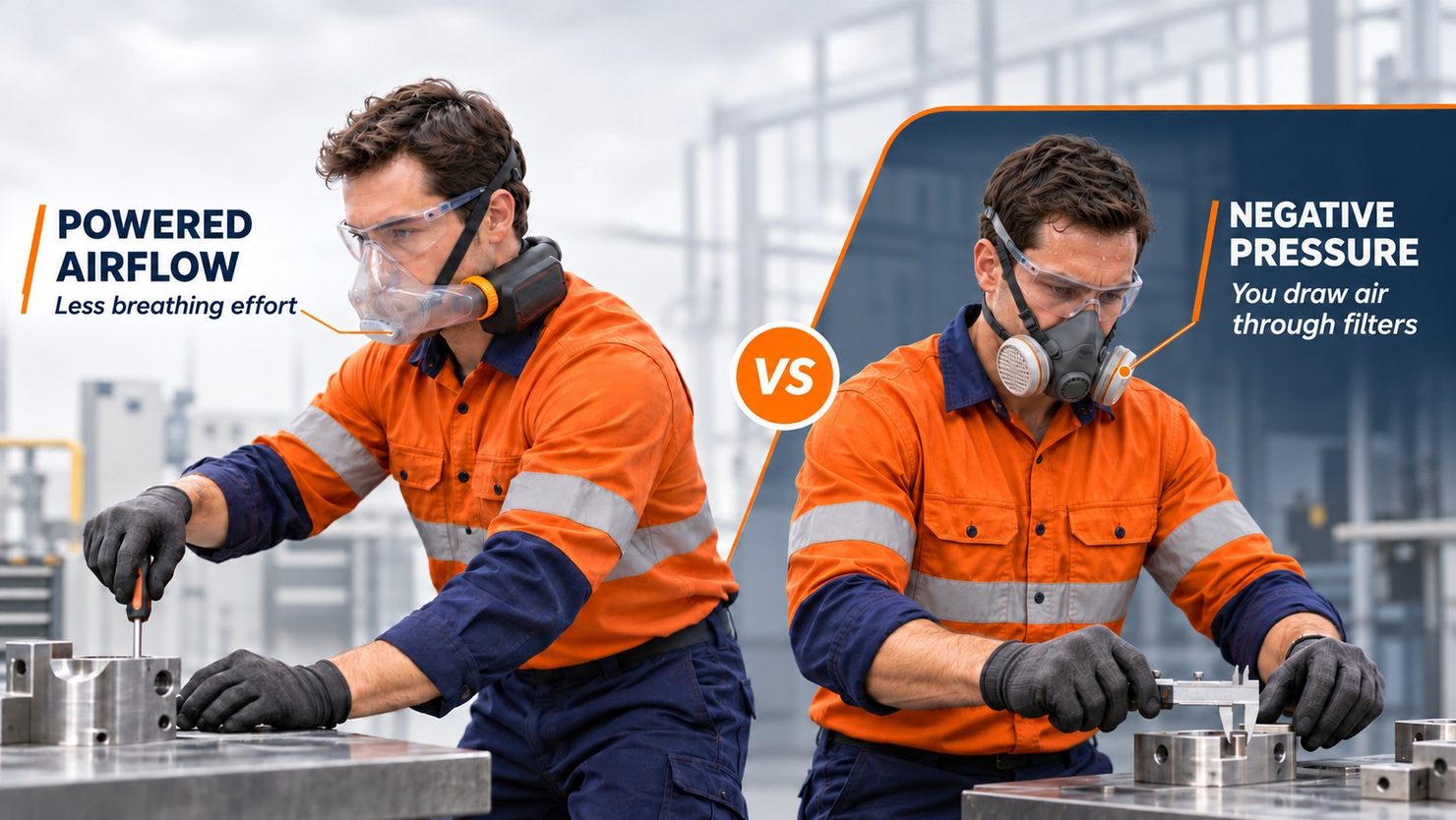
A negative pressure respirator relies on your lungs to pull air through the filter, so it protects you only while its face seal holds. A PAPR uses a battery-powered blower to push filtered air into the mask and is designed to keep the pressure inside above the air outside. In high-exertion work, where sweat and movement shift a mask, that difference decides how well you can do the job while staying protected.
Key Takeaways
- A negative pressure (non-powered) respirator works only as well as its face seal: every breath pulls air through the filter, and through any gap between the mask and the face.
- A PAPR respirator’s blower delivers filtered air to the wearer, which reduces inward leakage and keeps breathing resistance low.
- SafeWork SA notes that tight-fitting non-powered respirators worn for more than an hour or during hard physical work may become uncomfortable, and may be taken off while the worker is still in a contaminated area.
- For high-exertion work and for workers with beards, our recommendation is a loose-fitting, around-neck PAPR.
Negative Pressure vs Positive Pressure Respirators
In a negative pressure respirator, the air pressure inside the facepiece drops below the air outside every time you breathe in. That pressure difference is what draws air through the filter, and it will also draw air through any gap between the mask and your face. Disposable P2 masks and reusable half-face and full-face respirators without a blower all work this way, so the seal is what keeps unfiltered air out.
A positive pressure respirator is designed so the pressure inside the mask or hood stays above the air outside. A PAPR respirator does this with a battery-powered fan that pulls air through the filters and delivers it to the wearer. Because the air is pushed in rather than sucked in, the blower works to stop contaminated air leaking in.
Negative Pressure Respirator vs PAPR at a Glance
| Negative pressure respirator | PAPR | |
|---|---|---|
| What moves the air | Your lungs | A battery-powered blower |
| Pressure inside the mask as you inhale | Below the outside air | Designed to stay above the outside air |
| What keeps contaminants out | The face seal | The filtered airflow from the blower |
| Breathing effort | You pull every breath through the filter | The blower does that work |
| Facial hair | Hair under the seal lets air leak in | Loose-fitting PAPRs can be worn with a beard |
When Should a PAPR Be Used?
Use a PAPR when the work is long, physically hard or hot. SafeWork SA makes the same link: it notes that tight-fitting non-powered respirators may become uncomfortable when worn for more than an hour or during hard physical work, and that powered respirators may be more appropriate where heat stress is a risk.
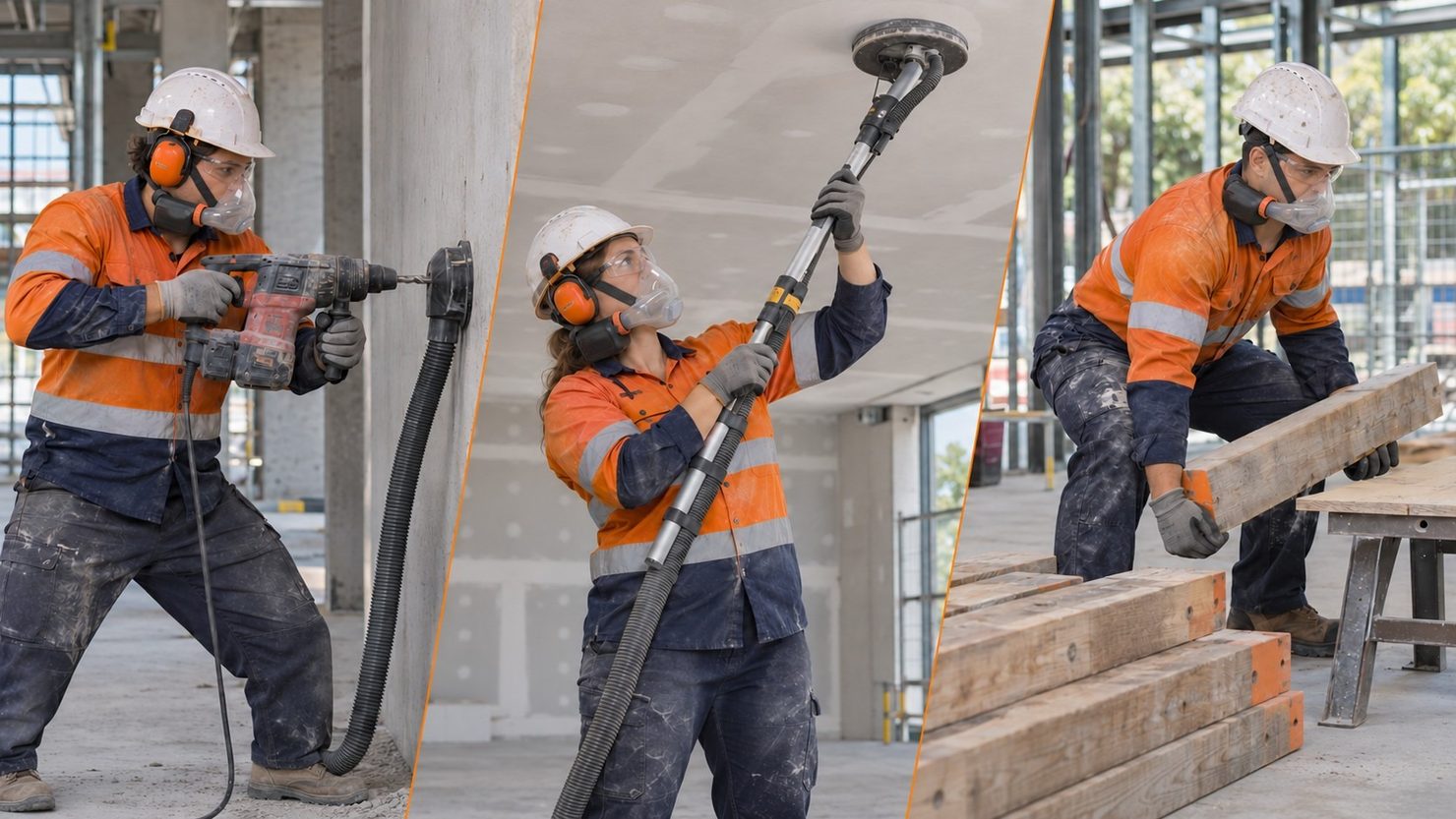
Q1: What are the works regarded as high exertion?
For examples: most construction/tunnelling work involving frequent bending and heavy lifting, operating an impacting drill on a concrete wall, sanding over a ceiling, etc.
What Are the Disadvantages of a Negative Pressure Respirator?
Each disadvantage below comes back to the same mechanism: a negative pressure respirator protects you only while its seal holds.
Q2: Why aren’t paper masks or non-powered respirators sufficient for high-exertion work?
A: They rely on a tight seal to the face, which is hard to maintain during high-exertion tasks. They are also harder to breathe than powered respirators, especially when dust is loaded.
Q3: Why isn’t fit testing for non-powered respirators effective to ensure a good fit during high-exertion work?
A: Fit testing ensures a proper seal only in a controlled environment, such as in an office. However, even with a good result in the test, physical strain during heavy work causes sweating, facial shifts, and frequent head movements, which can shift the mask fit and make a good fit into a bad fit. Workers can’t readjust masks mid-task (e.g., while handling tools, or needing focus on complex or risky job), leading to gaps and rendering protection ineffective.
So passing a fit test does not guarantee the seal will hold through a hard shift.
Q4: Why are beards a problem for non-powered respirators?
A: Facial hair prevents a secure seal, allowing contaminants to bypass the mask. Clean-shaven is required, but not always practical, e.g. due to strong personal preference or religion, stubble grows mid-day or late in a shift.
PAPR vs Full Face Respirator
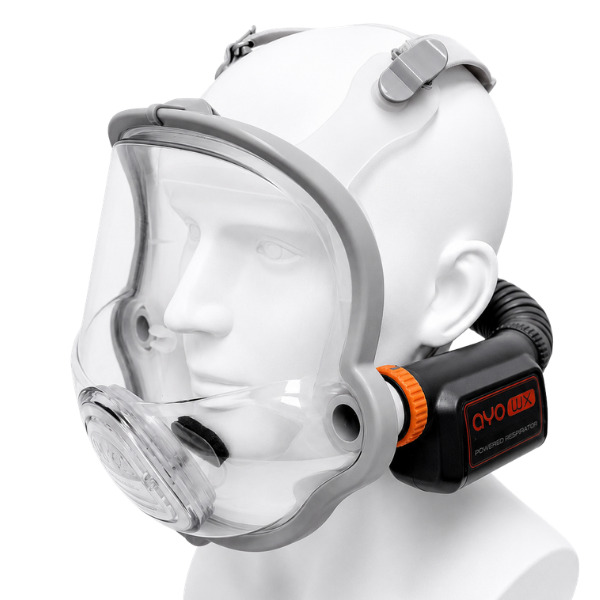
A non-powered full face respirator covers the eyes and face as well as the nose and mouth, and its full facepiece tends to seal more reliably than a half mask. It is still a negative pressure respirator, though: your lungs pull every breath through the filters, and it still needs a clean-shaven seal and a fit test. A full-face PAPR keeps the eye and face coverage and adds the blower, so the air is delivered to you rather than drawn in by you.
Is a PAPR Better Than a Non-Powered Respirator?
For high-exertion work, yes. NIOSH’s own summary of PAPRs makes two points: they are generally more protective than non-powered half mask respirators, because the blower creates positive pressure inside the facepiece, and they have low breathing resistance.
Q5: Why choose a loose-fitting PAPR instead?
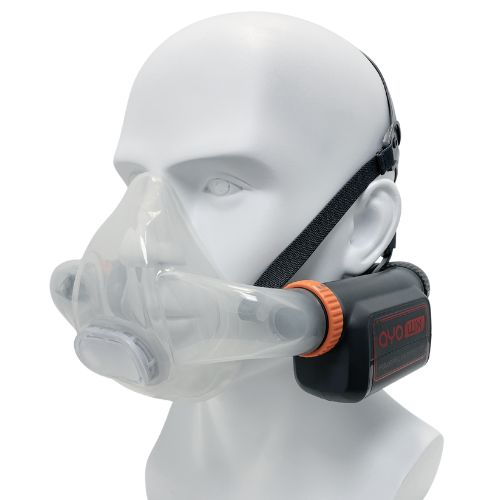
A: Loose-fitting PAPRs don’t require a tight seal to work; they are designed to protect the wearer by keeping positive pressure in the breathing zone.
They tolerate mask shifting during movement, no need for fit testing and adjustments, letting workers focus – ideal for high-exertion work or workers with beards.
They reduce breathing effort compared with a non-powered respirator, thus can improve comfort.
They also provide fresh airflow – reduces heat buildup and fogging.
Q6: Is a PAPR Easier to Breathe Through?
A: Yes. With a non-powered respirator, your lungs do the work of pulling air through the filter. A PAPR’s blower takes over that work. Our AYO WX P-Boost systems use breath-responsive flow control with up to 205 L/min peak flow, regulating the airflow breath by breath, so the air keeps up as you work harder.
Q7: Do Loose-fitting PAPRs provide better protection than well-fitted non-powered respirators?
A: Yes. Under the European laboratory ratings (nominal protection factors), a loose-fitting PAPR certified to EN 12941 TH3 is rated about 40 times higher than a well-fitted P2 non-powered respirator.
Choosing a PAPR for High-Exertion Work
For high-exertion work, the choice comes down to how the PAPR is worn. Our PAPR respirator page compares the AYO WX systems side by side, including which ones are certified as loose-fitting.
Q8: What type of Loose-fitting PAPRs are most suitable for High-Exertion work?
A: Two types are not suitable for high-exertion work: belt-mounted PAPRs with hoses, which get in the way when you bend, climb or lift, and helmet-mounted PAPRs, which are top-heavy.
Around-neck loose-fitting PAPRs are the most suitable, as they offer the best mobility and can be worn like a non-powered respirator, such as the AYO™ WX FFM-LF Loose-Fitting Full-Face Mask PAPR P-Boost System.
Conclusion: For High-Exertion tough jobs, Loose-fitting PAPRs ensure safety, comfort, and focus. Non-powered masks risk failure when it matters most. Around-neck Loose-Fitting PAPRs are most suitable among all types of loose-fitting PAPRs.
Working hard in dust, or wearing a beard on site?
See the AYO™ WX FFM-LF Loose-Fitting Full-Face Mask PAPR P-Boost System, or shop all AYO WX PAPR systems
About the Author
Eric Fu is Managing Director of Aimwell Pty Ltd (ABN 68 652 924 957), an Australian respiratory protection manufacturer headquartered in Sydney. Aimwell designs the AYO™ WX powered air-purifying respirator range in Sydney and manufactures it in its own ISO 9001-certified facility in China.