Negative Pressure Respirator vs PAPR for High-Exertion Work

Negative Pressure Respirator vs PAPR for High-Exertion Work
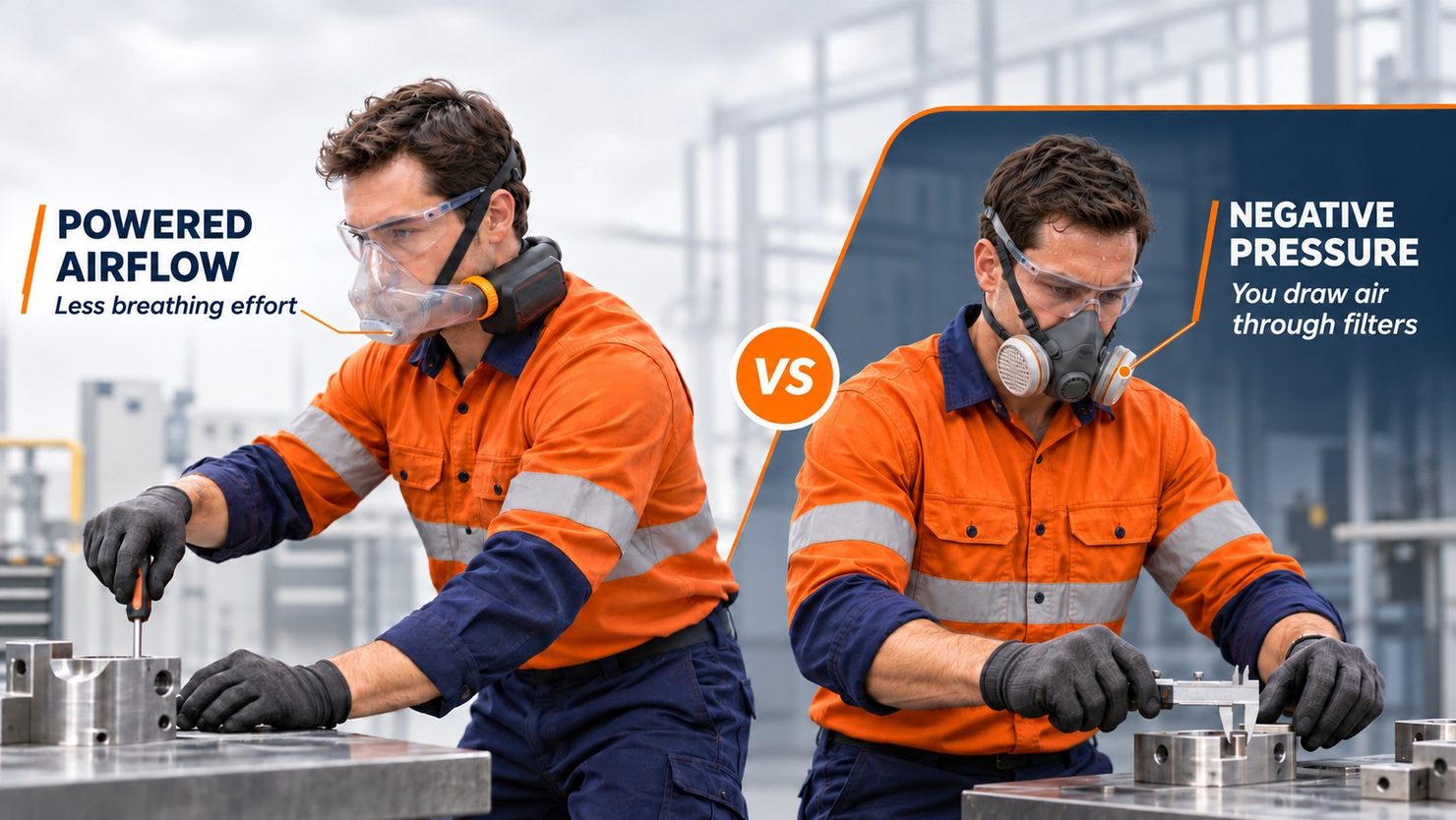
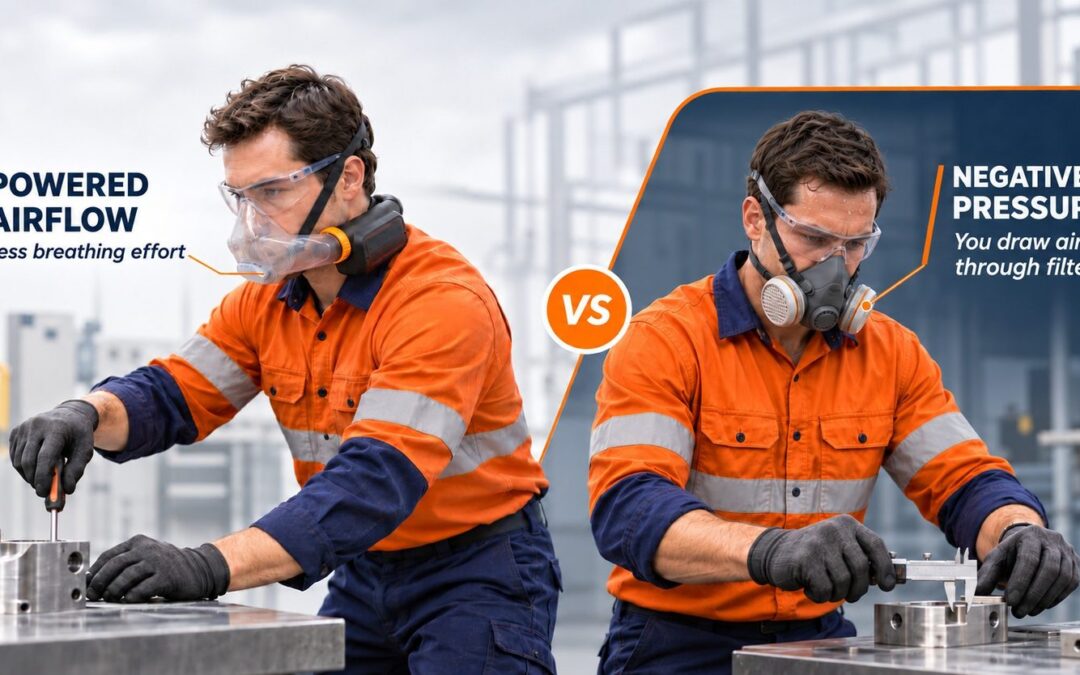
Illustration comparing a worker wearing an around-neck powered air purifying respirator with a worker wearing a negative pressure half-face respirator, both doing bench work

A negative pressure respirator relies on your lungs to pull air through the filter, so it protects you only while its face seal holds. A PAPR uses a battery-powered blower to push filtered air into the mask and is designed to keep the pressure inside above the air outside. In high-exertion work, where sweat and movement shift a mask, that difference decides how well you can do the job while staying protected.

Key Takeaways

  • A negative pressure (non-powered) respirator works only as well as its face seal: every breath pulls air through the filter, and through any gap between the mask and the face.
  • A PAPR respirator’s blower delivers filtered air to the wearer, which reduces inward leakage and keeps breathing resistance low.
  • SafeWork SA notes that tight-fitting non-powered respirators worn for more than an hour or during hard physical work may become uncomfortable, and may be taken off while the worker is still in a contaminated area.
  • For high-exertion work and for workers with beards, our recommendation is a loose-fitting, around-neck PAPR.

Negative Pressure vs Positive Pressure Respirators

In a negative pressure respirator, the air pressure inside the facepiece drops below the air outside every time you breathe in. That pressure difference is what draws air through the filter, and it will also draw air through any gap between the mask and your face. Disposable P2 masks and reusable half-face and full-face respirators without a blower all work this way, so the seal is what keeps unfiltered air out.

A positive pressure respirator is designed so the pressure inside the mask or hood stays above the air outside. A PAPR respirator does this with a battery-powered fan that pulls air through the filters and delivers it to the wearer. Because the air is pushed in rather than sucked in, the blower works to stop contaminated air leaking in.

Negative Pressure Respirator vs PAPR at a Glance

Negative pressure respirator PAPR
What moves the air Your lungs A battery-powered blower
Pressure inside the mask as you inhale Below the outside air Designed to stay above the outside air
What keeps contaminants out The face seal The filtered airflow from the blower
Breathing effort You pull every breath through the filter The blower does that work
Facial hair Hair under the seal lets air leak in Loose-fitting PAPRs can be worn with a beard

When Should a PAPR Be Used?

Use a PAPR when the work is long, physically hard or hot. SafeWork SA makes the same link: it notes that tight-fitting non-powered respirators may become uncomfortable when worn for more than an hour or during hard physical work, and that powered respirators may be more appropriate where heat stress is a risk.

Q1: What are the works regarded as high exertion?

For examples: most construction/tunnelling work involving frequent bending and heavy lifting, operating an impacting drill on a concrete wall, sanding over a ceiling, etc.
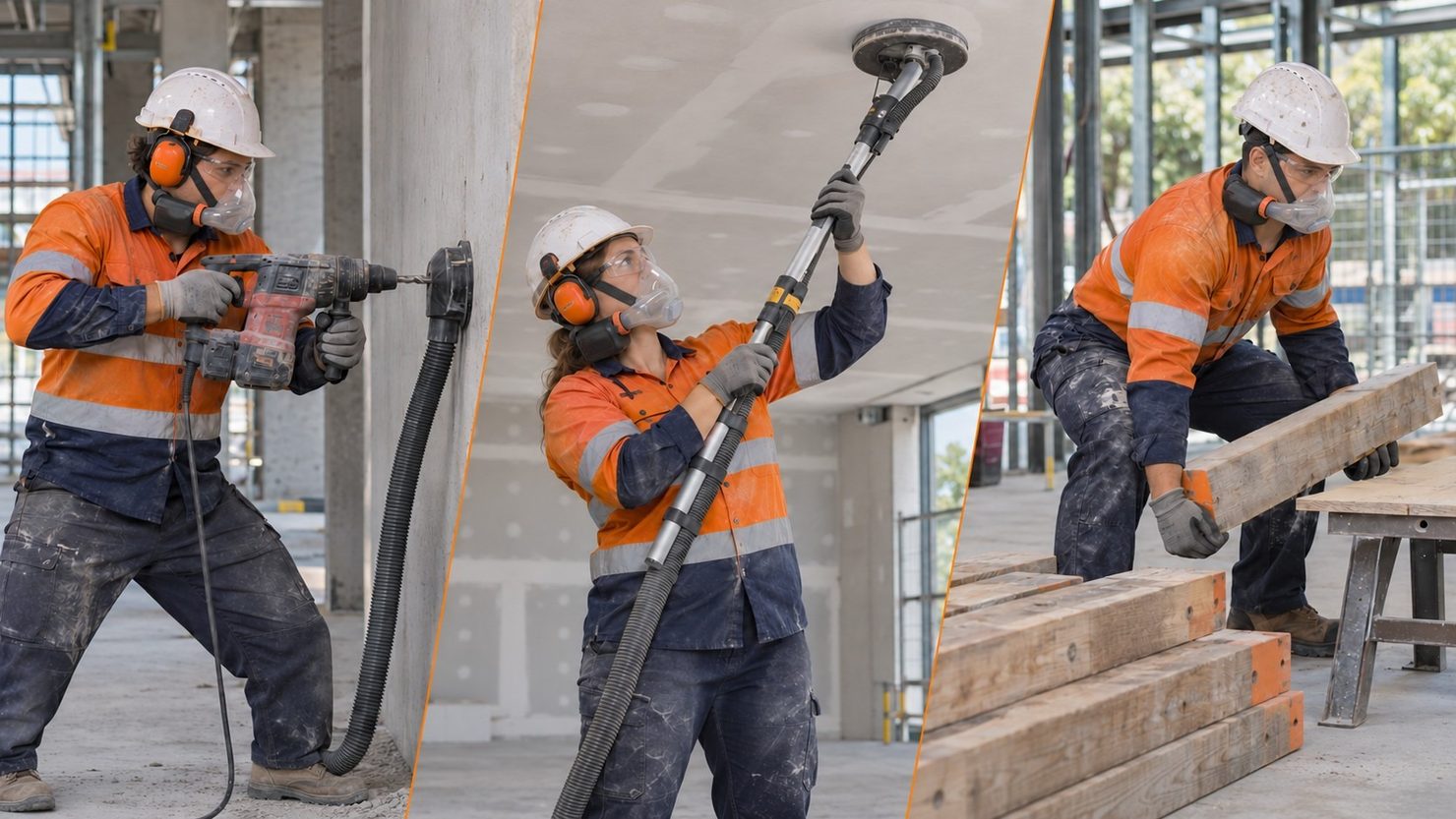
Illustration of construction workers wearing around-neck PAPRs while drilling a concrete wall, sanding a ceiling and lifting timber

What Are the Disadvantages of a Negative Pressure Respirator?

Each disadvantage below comes back to the same mechanism: a negative pressure respirator protects you only while its seal holds.

Q2: Why aren’t paper masks or non-powered respirators sufficient for high-exertion work?

A: They rely on a tight seal to the face, which is hard to maintain during high-exertion tasks. They are also harder to breathe than powered respirators, especially when dust is loaded.

Q3: Why isn’t fit testing for non-powered respirators effective to ensure a good fit during high-exertion work?

A: Fit testing ensures a proper seal only in a controlled environment, such as in an office. However, even with a good result in the test, physical strain during heavy work causes sweating, facial shifts, and frequent head movements, which can shift the mask fit and make a good fit into a bad fit. Workers can’t readjust masks mid-task (e.g., while handling tools, or needing focus on complex or risky job), leading to gaps and rendering protection ineffective.

So passing a fit test does not guarantee the seal will hold through a hard shift.

Q4: Why are beards a problem for non-powered respirators?

A: Facial hair prevents a secure seal, allowing contaminants to bypass the mask. Clean-shaven is required, but not always practical, e.g. due to strong personal preference or religion, stubble grows mid-day or late in a shift.

PAPR vs Full Face Respirator

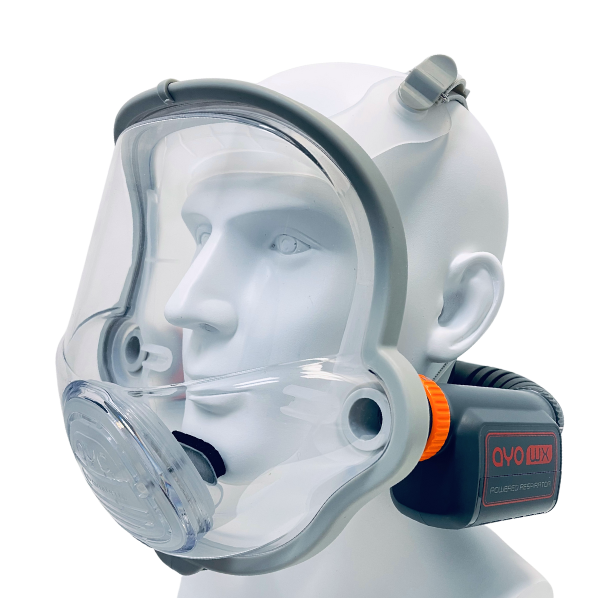
A non-powered full face respirator covers the eyes and face as well as the nose and mouth, and its full facepiece tends to seal more reliably than a half mask. It is still a negative pressure respirator, though: your lungs pull every breath through the filters, and it still needs a clean-shaven seal and a fit test. A full-face PAPR keeps the eye and face coverage and adds the blower, so the air is delivered to you rather than drawn in by you.

Is a PAPR Better Than a Non-Powered Respirator?

For high-exertion work, yes. NIOSH’s own summary of PAPRs makes two points: they are generally more protective than non-powered half mask respirators, because the blower creates positive pressure inside the facepiece, and they have low breathing resistance.

Q5: Why choose a loose-fitting PAPR instead?

A: Loose-fitting PAPRs don’t require a tight seal to work; they are designed to protect the wearer by keeping positive pressure in the breathing zone.

They tolerate mask shifting during movement, no need for fit testing and adjustments, letting workers focus – ideal for high-exertion work or workers with beards.

They reduce breathing effort compared with a non-powered respirator, thus can improve comfort.

They also provide fresh airflow – reduces heat buildup and fogging.

Q6: Is a PAPR Easier to Breathe Through?

A: Yes. With a non-powered respirator, your lungs do the work of pulling air through the filter. A PAPR’s blower takes over that work. Our AYO WX P-Boost systems use breath-responsive flow control with up to 205 L/min peak flow, regulating the airflow breath by breath, so the air keeps up as you work harder.

Q7: Do Loose-fitting PAPRs provide better protection than well-fitted non-powered respirators?

A: Yes. Under the European laboratory ratings (nominal protection factors), a loose-fitting PAPR certified to EN 12941 TH3 is rated about 40 times higher than a well-fitted P2 non-powered respirator.

Choosing a PAPR for High-Exertion Work

For high-exertion work, the choice comes down to how the PAPR is worn. Our PAPR respirator page compares the AYO WX systems side by side, including which ones are certified as loose-fitting.

Q8: What type of Loose-fitting PAPRs are most suitable for High-Exertion work?

A: Two types are not suitable for high-exertion work: belt-mounted PAPRs with hoses, which get in the way when you bend, climb or lift, and helmet-mounted PAPRs, which are top-heavy.

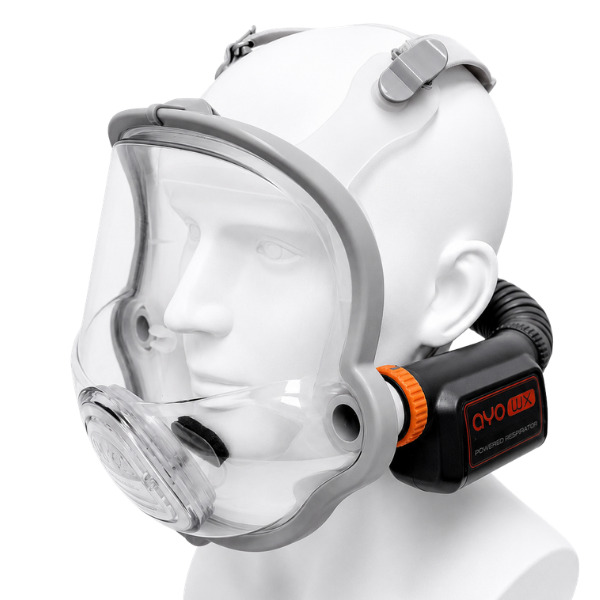
Around-neck loose-fitting PAPRs are the most suitable, as they offer the best mobility and can be worn like a non-powered respirator, such as the AYO™ WX FFM-LF Loose-Fitting Full-Face Mask PAPR P-Boost System.

Conclusion: For High-Exertion tough jobs, Loose-fitting PAPRs ensure safety, comfort, and focus. Non-powered masks risk failure when it matters most. Around-neck Loose-Fitting PAPRs are most suitable among all types of loose-fitting PAPRs.

Working hard in dust, or wearing a beard on site?

See the AYO™ WX FFM-LF Loose-Fitting Full-Face Mask PAPR P-Boost System, or shop all AYO WX PAPR systems

About the Author

Eric Fu is Managing Director of Aimwell Pty Ltd (ABN 68 652 924 957), an Australian respiratory protection manufacturer headquartered in Sydney. Aimwell designs the AYO™ WX powered air-purifying respirator range in Sydney and manufactures it in its own ISO 9001-certified facility in China.

PAPR Types: Four Ways to Wear a Powered Respirator

PAPR Types: Four Ways to Wear a Powered Respirator

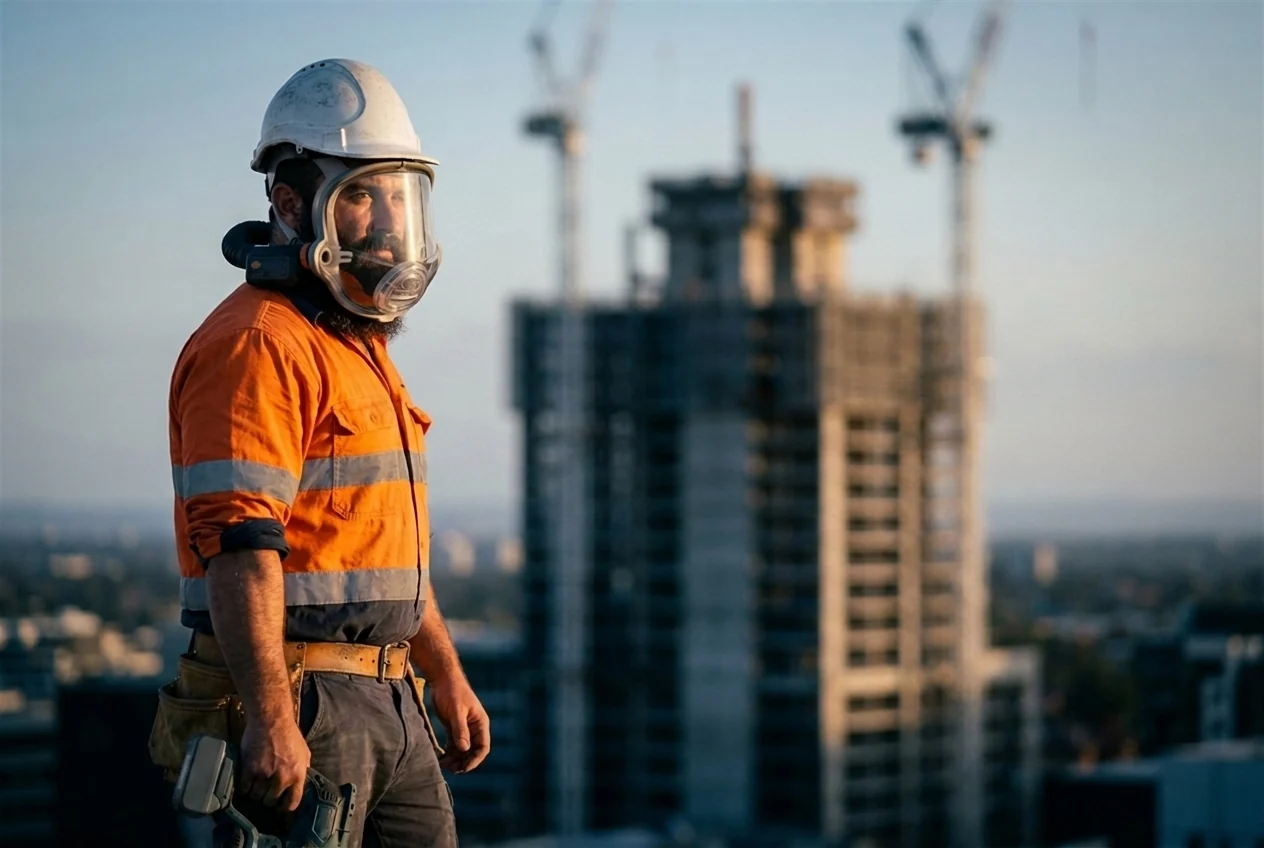
Illustration of a construction worker in hi-vis on a high-rise deck wearing an around-the-neck loose-fitting full-face powered air purifying respirator, with nothing crossing his chest

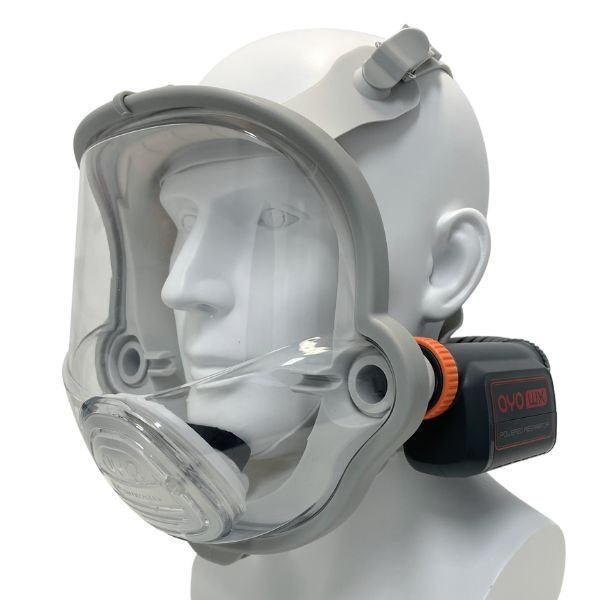
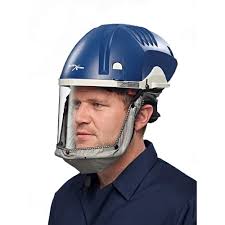
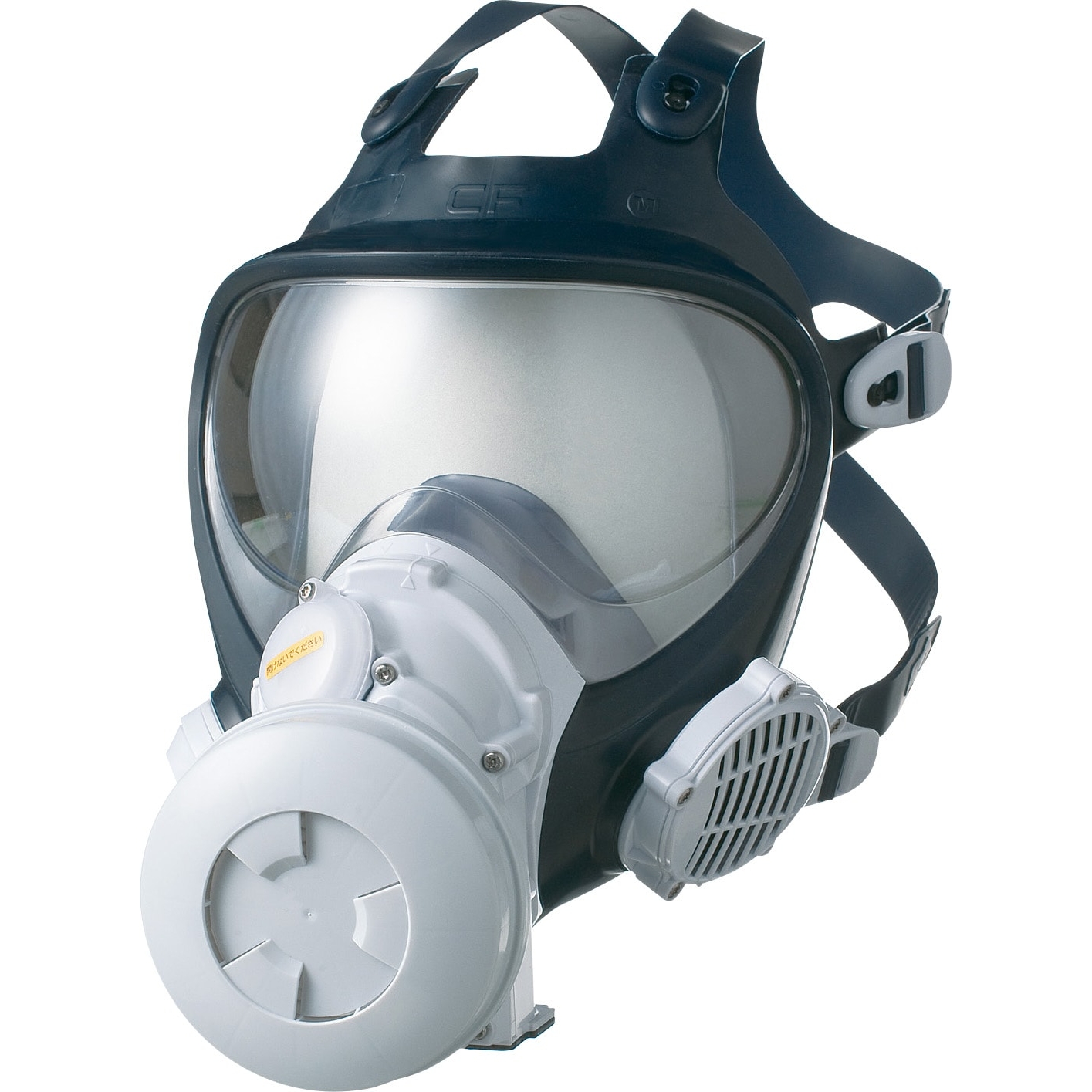
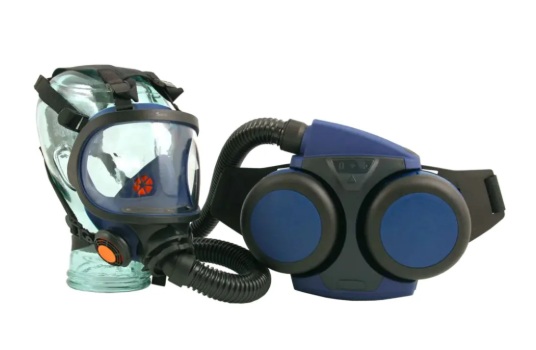
Different PAPR types place the powered air supply in different positions, and that design choice affects how comfortably a respirator can be worn during work. The four traditional types of PAPR respirators covered here include on-facepiece systems, helmet-mounted systems, belt-mounted systems with a facepiece, and belt-mounted systems with a hood or helmet.

Each PAPR design introduces different considerations, from weight on the face or head to breathing hoses that may restrict movement. Around-the-neck PAPR systems offer an alternative layout, keeping the air supply close to the wearer without a belt-mounted blower or external breathing hose.

When comparing different PAPR respirator types, protection class is only one part of the selection process. Comfort, mobility, compatibility with other PPE and the demands of the task also matter. A powered respirator that interferes with the work may be less likely to be worn consistently.

Key Takeaways

  • Different PAPR types distribute weight differently. On-facepiece PAPR systems place the blower on the mask, while helmet-mounted PAPR designs add weight to the head. Belt-mounted PAPR systems use a breathing hose, which may affect mobility, visibility or ease of donning and doffing in certain working environments.
  • Around-the-neck PAPR systems offer an alternative to traditional belt-mounted designs. The AYO WX configuration eliminates the external breathing hose and waist belt, supports compatible half-face and full-face respirator options, and can be used with suitable head protection where required. Its low-profile design may reduce interference during tasks involving frequent movement or limited clearance.
  • Aimwell‘s breath-responsive around-the-neck PAPR design reduces reliance on bulky belt-mounted components. The AYO WX power unit weighs 437 g, with a 126 g filter. For comparison, 3M lists approximately 1,135 g for its Versaflo TR-300+ blower assembly, including a high-capacity battery, belt and filter. These figures describe different system configurations and do not represent a complete like-for-like worn-weight comparison.
  • The AYO WX powered air purifying respirator platform delivers up to 205 L/min peak airflow in P-Boost mode, with a user-replaceable battery offering a stated operating duration of 8 to 16 hours, depending on the configuration and operating conditions.

  • A dual-fitting facepiece is certified to both the loose-fitting and the tight-fitting standard: no need to shave and no fit testing required as loose-fitting, higher protection when fitted tight.
  • Australian respiratory protection standards are transitioning. AS/NZS 1715:2009 and AS/NZS 1716:2012 are scheduled to be superseded by a suite of ISO-based standards from 1 January 2030, with a transition period allowing the existing and new frameworks to operate in parallel.

How PAPR Standards and Workplace Requirements Are Changing

Two changes are running at once.

The first change is regulatory. Australia and New Zealand are transitioning towards an ISO-based respiratory protection framework. According to Standards Australia, the new standards place greater emphasis on wearer performance, protection requirements, breathing rates and working conditions. This creates a more comprehensive framework for evaluating respiratory protective equipment, including different types of PAPR systems.

The second change is growing interest in powered respiratory protection for demanding industrial environments. Employers comparing negative-pressure respirators with different PAPR types are considering not only respiratory protection requirements, but also wearer comfort, work intensity, mobility, maintenance and total operating costs. Low-profile and loose-fitting PAPR options can be particularly relevant when conventional respirator designs interfere with everyday tasks.

Together, these changes reinforce the importance of selecting a PAPR respirator based on both certified protection and real-world usability. Understanding the different PAPR designs is an important first step.

4 Traditional Types of PAPR Respirators Compared

Powered air purifying respirators come in several configurations, distinguished by where the blower is positioned and how filtered air reaches the wearer. The four traditional PAPR designs below illustrate common approaches to integrating the blower, breathing hose and facepiece or headtop.

Each type of PAPR has advantages and limitations depending on the working environment, required protection, other personal protective equipment and wearer preferences.

Layout Where the mass sits The cost to the wearer
On-facepiece — blower in the mask On the face Compact, but heavy on the face; affects downward vision and work; difficult in confined spaces; difficult to implement on a half facepiece
In-helmet — blower in a helmet On top of the head Head protection included by design, but top-heavy for downward work; difficult in confined spaces; loose-fitting only; not feasible on a half facepiece; the helmet is compulsory even when the job does not need one
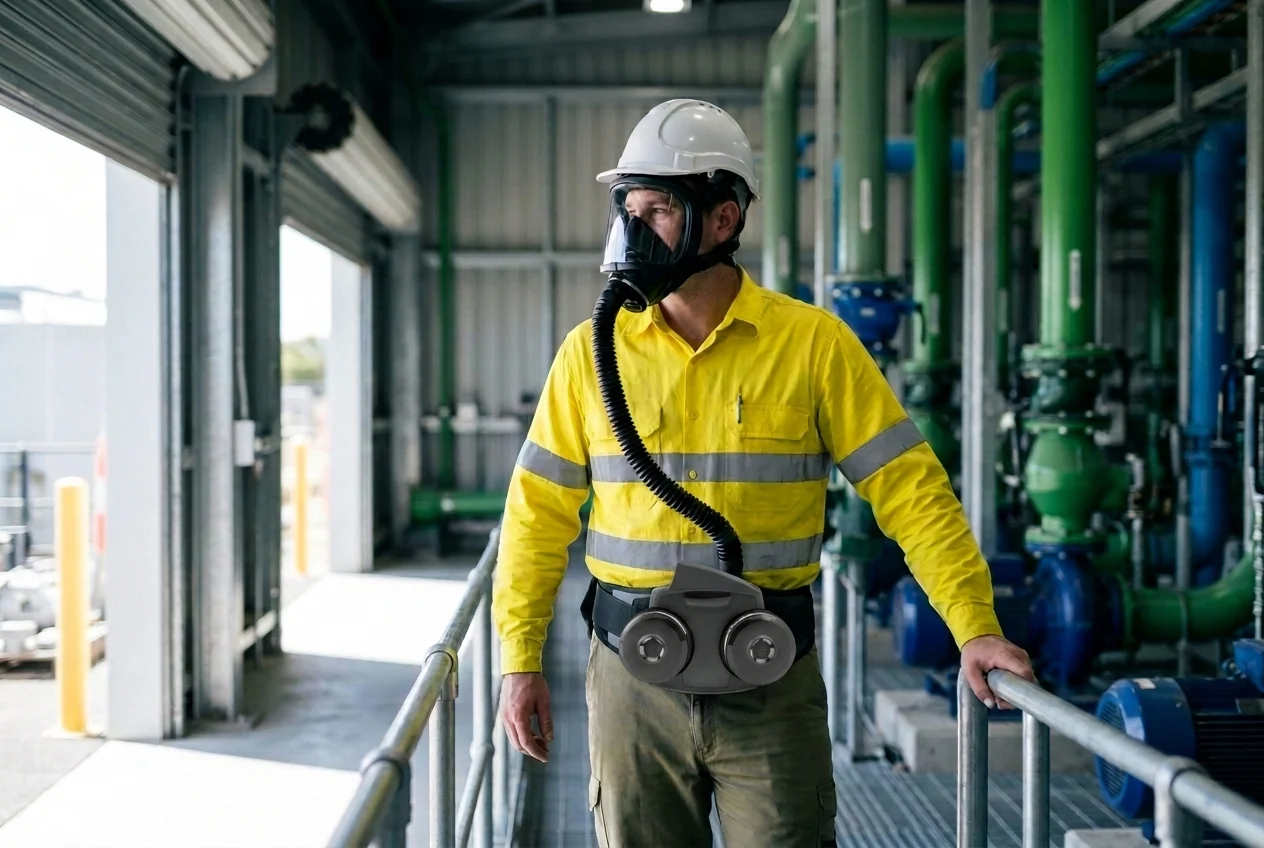
Hose and belt, with a facepiece On the waist, hose to the mask The hose attaches to the mask and affects work and vision; limits mobility; difficult in confined spaces; troublesome to don and doff
Hose and belt, with a hood or helmet On the waist, hose to the head top Head and eye protection included, but the same tethering, plus loose-fitting only, not feasible on a half facepiece, and a compulsory hood or helmet

The same complaints repeat down that column: mass in the wrong place, a tether, a head covering the wearer did not choose, and — in every single row — trouble in confined spaces. None of them appear in a protection class.

They appear on site. A formwork worker looking down at a deck fights a top-heavy helmet all day. A fitter entering a vessel plans where the hose runs before they plan the task. A welder lifting a visor twenty times a shift judges the respirator on don-and-doff time, not just inward leakage.

Illustration of a generic waist-mounted powered respirator with a breathing hose running across the chest to a full facepiece, worn by a maintenance fitter in a plant room

Around-the-Neck PAPR: An Alternative to Belt-Mounted Systems

Unlike traditional belt-mounted PAPR systems, an around-the-neck PAPR positions the powered air supply close to the facepiece, eliminating the need for a waist-mounted blower and external breathing hose in the AYO WX configuration.

An around-the-neck unit sits low on the face, so downward vision stays clear. Mobility is unaffected, because nothing crosses the chest or shoulders. Don and doff is a single movement. It runs a half facepiece or a full facepiece, which the in-helmet and hood layouts cannot offer. A hard hat can be added when the job calls for one and left off when it does not. In-helmet and hood systems bundle head protection in permanently, which is useful on some worksites and a nuisance in a tight roof space.

Our systems are designed for high exertion, substantial body movement and confined spaces — see what makes the AYO WX around-neck design work in practice.

How Breath-Responsive Technology Supports a Compact PAPR Design

A conventional PAPR runs its blower at a constant flow, whether the wearer is breathing in, breathing out or standing still. A breath-responsive unit matches delivery to the breathing cycle instead.

The consequence is physical, and large. The air source on our system is a 437 g power unit and a 126 g filter, worn on the neck with no belt and no hose. 3M’s own published technical data sheet puts a Versaflo TR-300+ at approximately 1,135 g including its high-capacity battery, belt and filter, before the breathing tube.

That is not a comfort statistic. It is the whole chain. Less energy moved means a smaller battery, and less mass is what lets the blower sit on the neck instead of a belt — which is what removes the hose. It saves carbon in a gas filter as well, because carbon is consumed by airflow the wearer never inhaled: less waste and lower running cost over the life of the system.

On our own platform this sits on the certificate record rather than in the brochure. Every certified system in the AYO™ WX around-neck PAPR range is described as controlled by a breath-responsive flow control algorithm. The numbers that follow: no hose and no belt, up to 205 L/min peak flow in P-Boost, and 8 to 16 hours on particulate duty from a user-replaceable battery. The blower is rated for over ten years and runs under 65 dB in typical use.

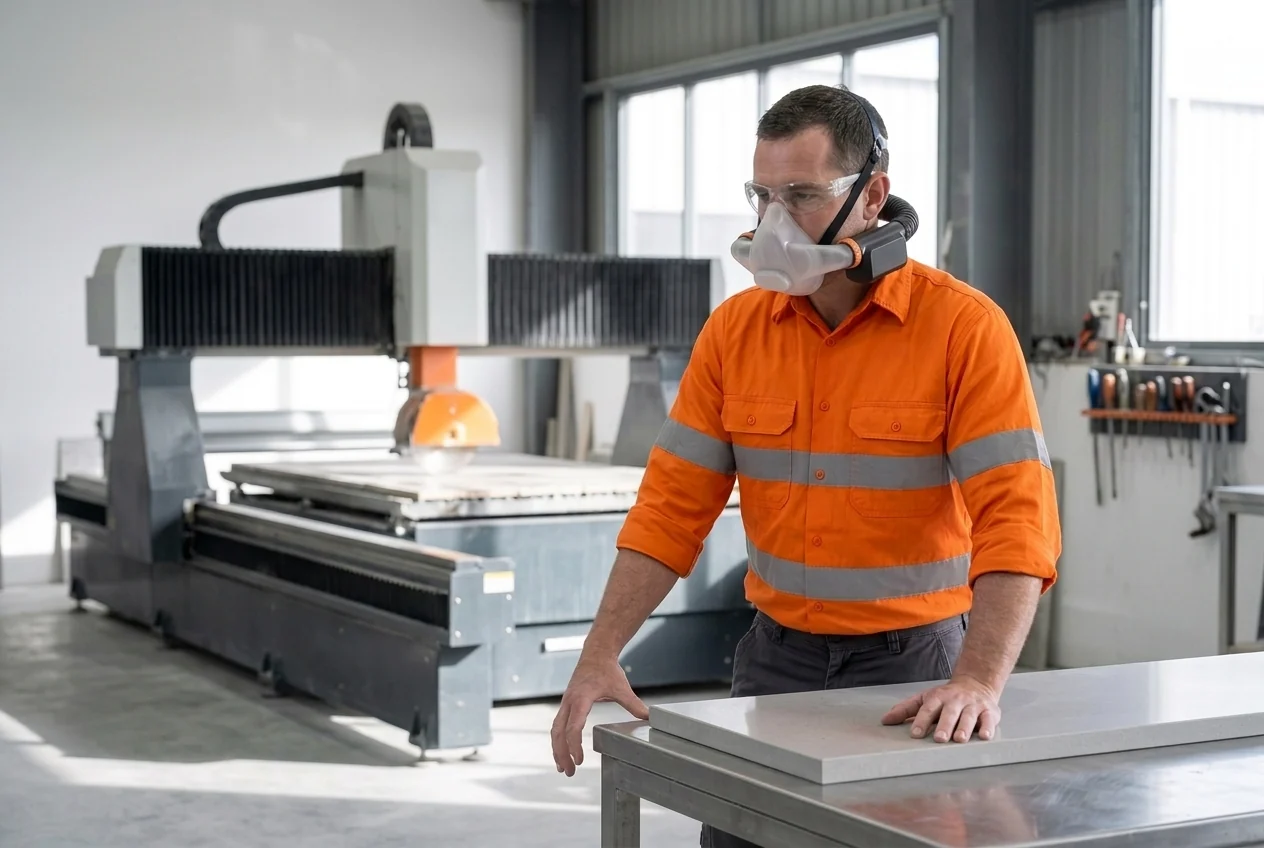
Illustration of a stone benchtop fabricator inspecting a finished cut in a clean, well-lit workshop while wearing an around-the-neck half-face powered air purifying respirator

Loose-Fitting vs Tight-Fitting PAPR: What Is the Difference?

The choice between a loose-fitting and tight-fitting PAPR depends on the required protection, facepiece design, wearer characteristics and site respiratory protection program.

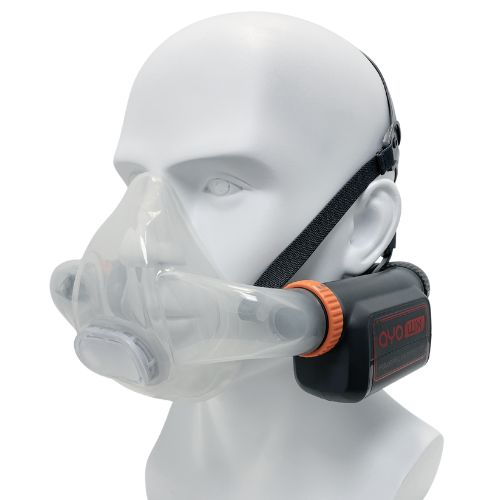
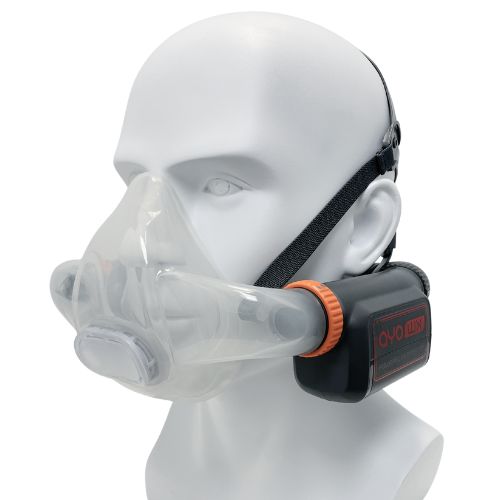
A dual-fitting facepiece is certified to both the loose-fitting and the tight-fitting standard. Used loose-fitting it does not depend on a seal against skin, so there is no need to shave and no fit testing is required. Used tight-fitting and fitted properly, it achieves the increased protection the tight-fitting standard measures. One purchase therefore covers a clean-shaven fitter and a bearded one, and covers a site whose answer changes between jobs.

The AYO™ WX HFM Standard Half-Face Mask PAPR Systems and the welding and double-seal variants sit on that platform, certified to EN 12941:2023 as TH3 and EN 12942:2023 as TM3. In our own framing, TM3 represents four times the protection of TH3 — the two classes come from different test regimes, so the raw numbers are not comparable.

Two add-ons fit the same platform rather than needing a second system: a Face Seal Kit for workers with longer beards, and a Shower Kit for sites that run decontamination showers.

Before selecting any PAPR respirator type, confirm that the complete respirator configuration, filter and applicable protection level are suitable for the identified airborne hazards, exposure concentrations and working conditions.

A qualified occupational hygienist can assist with exposure assessment and respirator selection. The Australian Institute of Occupational Hygienists provides resources for identifying appropriately qualified professionals.

Not sure which type of PAPR respirator is right for your workplace?

Whether you are comparing belt-mounted PAPR systems, evaluating loose-fitting respirators or looking for a hose-free alternative, Aimwell can help you explore the available AYO WX configurations.

Explore the AYO™ WX FFM-LF Loose-Fitting Full-Face Mask

Contact Aimwell to discuss your respiratory protection requirements, request product specifications and certification documents, or compare available PAPR respirator configurations with your occupational hygienist.

About the Author

Eric Fu is Managing Director of Aimwell Pty Ltd (ABN 68 652 924 957). He has twenty-seven years in the respiratory device industry — CPAP, industrial powered respirators and breathing measurement devices — and holds multiple international patents. Aimwell designs the AYO™ WX range in Sydney.

How Does Aimwell™ AYO™ WX HFM P-Boost Standard Half Face Mask PAPR System Compare with Other Half Face Mask PAPR Brands?

PAPR Type Brand/Model Key Comparison
Face-mounted Tight-fitting

SHIGEMATSU

Sync11VP3

Shigematsu Sync11VP3 face-mounted PAPR

Protection level: AS/NZS 1716 PAPR P3
Peak flow:  only 138 L/min (Breath responsive)
Weight: 0.45 kg (particulate filter)
Battery Time: 11 hours
Cost: $1293

Shortcoming:

  •  Low flow – not suitable for heavy work.
  • One Size only: may not be suitable for very small or very large faces.
  • Tight-fitting only: must be clean-shaven and fit tested.
  • Not easy to clean – The blower unit is not easily removable, and the mask can not be soaked for cleaning.
  • Expensive
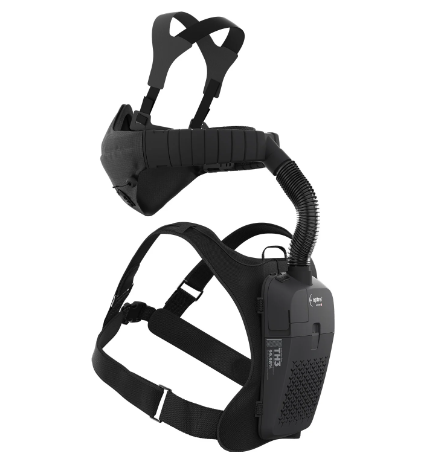
Belt-mounted Tight-fitting

Sundstrom SR700/SR900

Sundstrom SR700 belt-mounted PAPR with half mask and hose

Protection level: AS/NZS 1716 PAPR P3
Peak flow:  175 or 225 L/min
Weight: 1.24 kg (not including hoses)
Battery Time: 8 hours
Cost: $1899

Shortcoming:

  • Poor mobility – Bulky, heavy with long hose, troublesome to wear, not suitable in confined spaces.
  • Tight-fitting only: must be clean-shaven and fit tested.
  • Not easy to clean.
  • Expensive.

Back-mounted

Loose-fitting

Optrel Swiss Air System

Optrel Swiss Air back-mounted PAPR

Protection level: EN12941 TH3
Peak flow: only 130 L/min
Weight: 1.2 kg
Battery Time: 14 hours
Cost: $2122

Shortcoming:

  • P2 protection only.
  • Low flow – not suitable for heavy work.
  • Poor mobility and wearability – bulky, troublesome to wear at the back.
  • Not easy to clean.
  • Expensive.

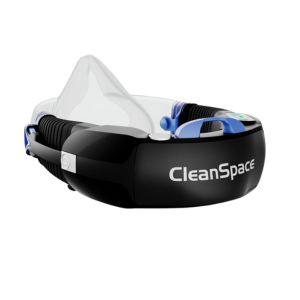
Around-neck

Tight-fitting

CleanSpace Works

CleanSpace around-neck PAPR

Protection level: AS/NZS 1716 PAPR P3
Peak flow: 200 L/min (Breath responsive)
Weight: 0.54 kg
Battery Time: 8 hours
Cost: $990

Shortcoming:

  • The battery is not replaceable – when the battery is dead, the system dies.
  • Head movement restrictions due to the rigid and bulky neck module.
  • Uncomfortable at the neck when raising the head.
  • Tight-fitting only: must be clean-shaven and fit tested.
  • Expensive, given the product life is limited by battery life.

Around-neck

Tight-fitting and loose-fitting configurable

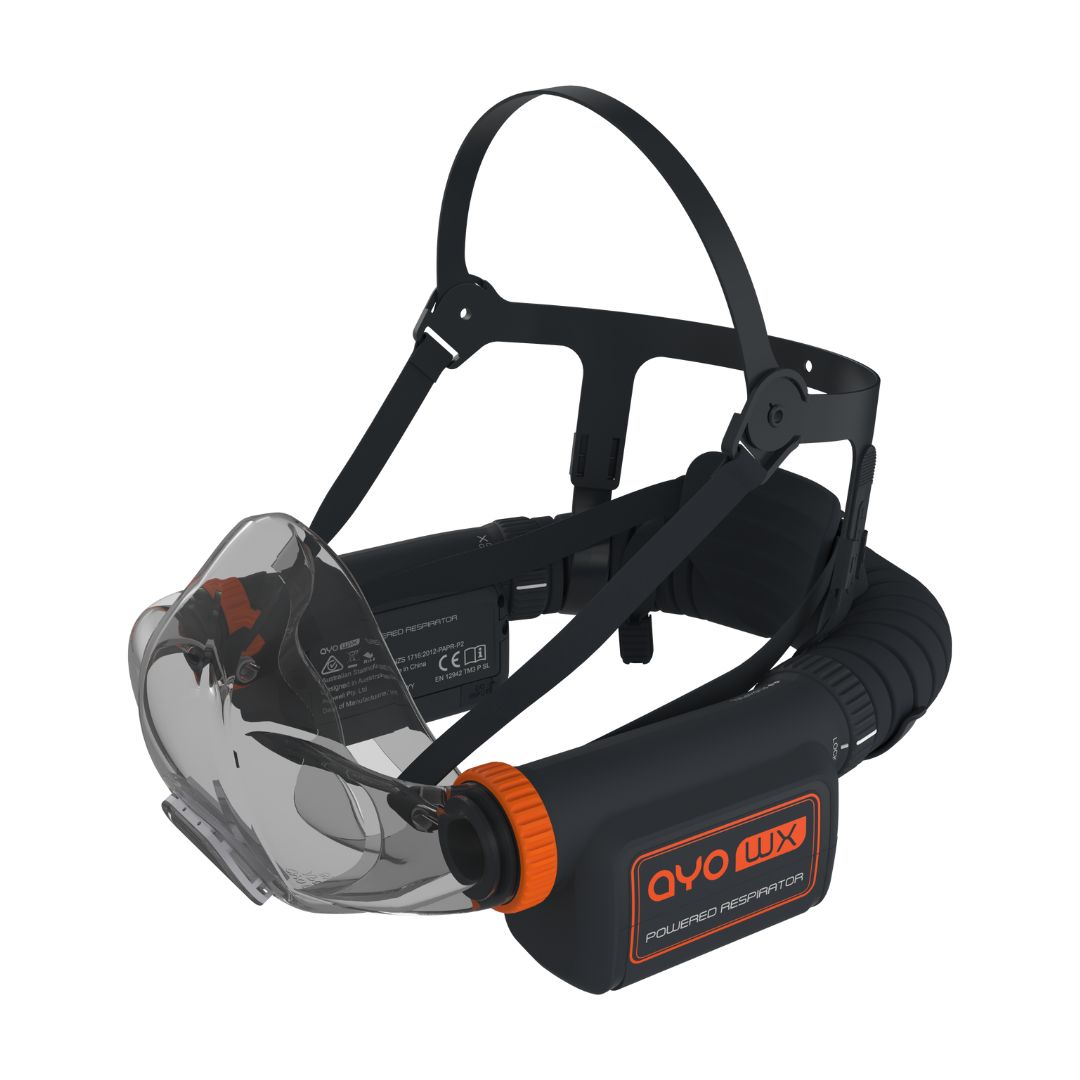
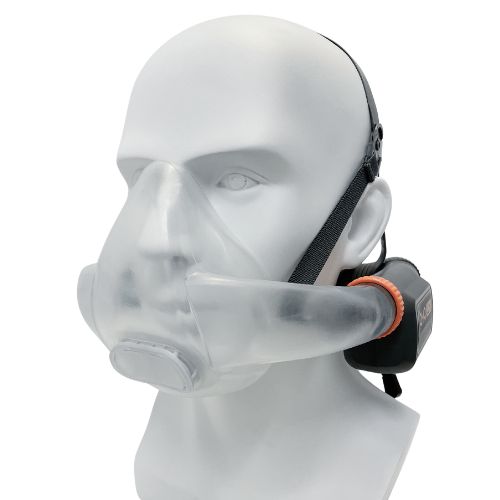
Aimwell™ AYO™ WX HFM P-Boost Standard Half-Face Mask PAPR System

AYO WX HFM P-Boost half-face mask PAPR system

Protection level: AS/NZS 1716 PAPR P3, EN 12942:2023 TM3, EN 12941:2023 TH3.
Peak flow: Up to 205 L/min (Breath responsive)
Weight: 0.70kg
Battery Time: 16 hours
Battery replaceable
Cost: $739

Best overall performance among all:

  • Best-in-class protection PAPR P3, TM3, TH3.
  • World’s only Dual-Fitting half-face mask PAPR – unprecedented usability and flexibility.
  • Great mobility – good head movement and comfort, no nuisance long hose and belt.
  • Very long battery hours, battery replaceable.
  • Very easy to clean and maintain.
  • Face Seal option for beard-covering.
  • The most value-for-money Half-face Mask PAPR in the world.
In summary, the AYO™ WX HFM P-Boost Standard Half-Face Mask PAPR System is on par or better than most other PAPR brands regarding peak flow performance, while it stands out in mobility, unique dual-fitting, ease of use, and value-for-money.

Buy AYO™ WX HFM P-Boost Standard Half-Face Mask PAPR System – the best all-rounder Half-Face Mask PAPR System in the world.

The AYO WX HFM Half-Face Mask PAPR P-Boost System is part of a wider range that also includes full face mask PAPR systems and PAPR Gas systems. See how the AYO WX PAPR respirator range compares, or shop all AYO WX PAPR systems.

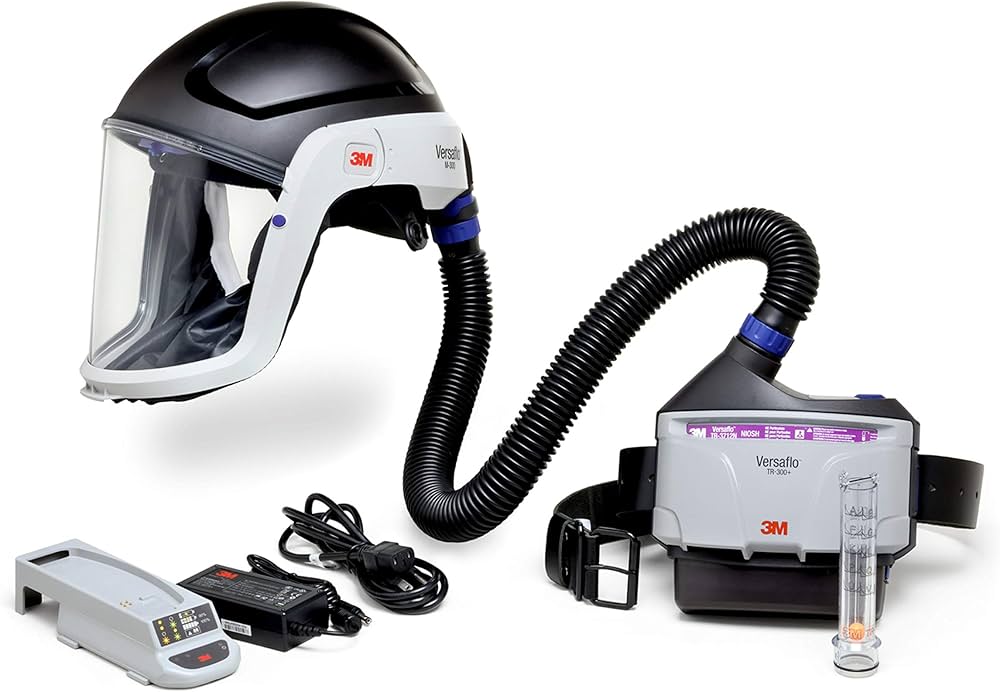
How Does the Aimwell™ AYO™ WX FFM-LF P-Boost PAPR System Compare with the 3M Versaflo System?


Key Comparison 3M Versaflo TR-315A+ PAPR Kit with M307C helmet

Aimwell AYO WX FFM-LF P-Boost PAPR System

Protection Class AS/NZS 1716: 2012 P3, EN12941 TH3 AS/NZS 1716: 2012 PAPR P3, EN 12941:2023 TH3
Wearability/Mobility

Heavy with hose and belt, troublesome to don and doff, and poor mobility


Lightweight and low-profile, no hose no belt, easy to don and doff, good mobility


Peak flow 170 – 205 L/min Up to 205 L/min (Breath responsive)
Battery Run-time 9-12 hours Up to 16 hours
Weight ~2kg (Including Power unit1139g with battery, belt, filter, and Helmet 832g, not including hose) 1.0 Kg (Full system)
Fit Testing Not Required Not Required
Fitting type Loose-fitting only, can not be converted to tight-fitting PAPR if needed. Loose-fitting but can be configured to AYO WX
FFM-DS tight-fitting PAPR for applications that demand heavy breathing.
Maintenance Difficult to maintain and clean Much easier to maintain and clean
Service life 5 years 10 years
Cost $2390 $921

In summary, AYO WX FFM-LF P-Boost PAPR can provide over 3M Versaflo TR-315A+ PAPR Kit with 307C helmet:

  • At least equivalent protection but with higher peak flow.
  • Half the weight.
  • Better mobility: No hose and belt.
  • Longer battery life.
  • Easier to clean and maintain.
  • Doubled service life.
  • Less than half of the cost.

When should AYO WX FFM-LF PAPR System be used instead of 3M Versaflo TR-315A+ PAPR Kit with a 307C helmet?

When doing work requiring frequent donning and doffing and large physical movements, especially in confined spaces, such as tunnelling or building work, instead of work just sitting or standing with minimum body movement most of the time:

  • The long hose and heavy belt-mounted power unit are troublesome to don and doff, and difficult to move around while doing highly physical work.

When you need to carry tools around your waist:

  • The belt-mounted power unit prevents you from carrying tools around your waist.

When doing work with heavy dust:

  • The bulky Versaflo system is difficult to clean, while the AYO WX FFM-LF PAPR system is much easier to clean and maintain.

When doing high-exertion work that causes very heavy breathing:

  • The Versaflo will not provide protection when you over-breathe the blower with a peak of 205 L/min. For example, you may well breathe over 250 L/min doing heavy work, which will cause negative pressure in the face shield at the initial phase of inhalation. Due to the loose-fitting nature of the 307 helmet, you will breathe in harmful dust or gas easily.

  • In this situation, for the AYO WX FFM-LF PAPR System, you can configure it into an AYO WX FFM-DS PAPR system, which provides a tight-fitting double-seal Full-face mask that can protect you well when the pressure in the mask goes negative briefly during very heavy inhalation.

When you are on a budget:

  • 3M Versaflo is over 2 times the cost of the AYO WX FFM-LF P-Boost PAPR system. Why pay more for a product that is less suitable for doing the same job?

How Does Aimwell™ AYO™ WX FFM-LF P-Boost Full-Face Mask PAPR System Compare with Other Full-Face PAPR Brands?

PAPR Type Brand/Model Key Comparison
Head-mounted
Loose-fitting

PureFlo Purelite

Protection level: AS/NZS 1716 PAPR P2

Peak flow: > 200 L/min
Weight: 1 kg
Battery Time: 8 hours
Cost: $1160

Shortcoming:

  • P2 protection only.
  • Loose-fitting only: not suitable for heavy breathing.
  • Poor mobility – Top-heavy, not suitable in confined spaces, or for work requiring lowering the head.
  • Not suitable for asbestos removal.
  • You are locked to the helmet plus a visor for respiratory protection when you prefer not to.
  • Not easy to clean.
Face-mounted Tight-fitting SHIGEMATSU
SYNC01VP3


Protection level: AS/NZS 1716 PAPR P3
Peak flow:  only 138 L/min
Weight: 0.8 kg
Battery Time: 9 hours
Cost: $1995


Shortcoming:

  • Low flow – not suitable for heavy work.
  • Tight-fitting only: must be clean-shaven and fit tested.
  • Poor mobility – The front of the mask is too bulky and heavy, not suitable in confined spaces.
  • The front unit blocks the downward view – not suitable for downward-looking work.
  • Not easy to clean.
  • Expensive.
Belt-mounted Tight-fitting

Sundstrom SR500/200

Protection level: AS/NZS 1716 PAPR P3
Peak flow:  240 L/min
Weight: 1.65 kg
Battery Time: 7 hours
Cost: $2903


Shortcoming:

  • Poor mobility – Bulky, heavy with long hose, troublesome to wear, not suitable in confined spaces.
  • Tight-fitting only: must be clean-shaven and fit tested.
  • Not easy to clean and maintain.
  • Very expensive
Belt- mounted
Loose-fitting

3M Versaflo TR-315A+ PAPR Kit with 307C helmet

Protection level: AS/NZS 1716 PAPR P3, EN12941 TH3
Peak flow:  200 L/min
Weight: ~2kg (Including Power unit with battery, belt, filter), and Helmet.
Battery Time: 9-12 hours
Cost: $2390


Shortcoming:

  • Poor mobility – Bulky, heavy with long hose, troublesome to wear, not suitable in confined spaces.
  • Loose-fitting only: not suitable for heavy breathing.
  • You are locked to the integrated helmet plus a visor for respiratory protection when you prefer not to.
  • Not easy to clean and maintain.
  • Expensive.
Belt- mounted
Loose-fitting

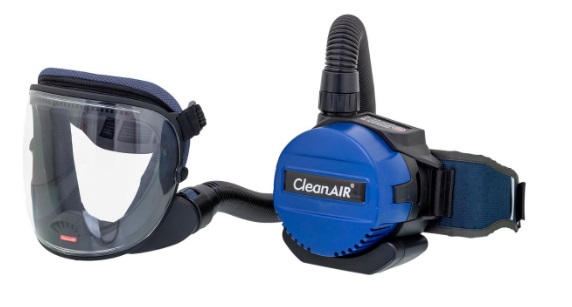
CleanAIR Unimask with Basic PAPR RFU837-CB

Protection level: EN12941 TH3
Peak flow:  170 – 240 L/min
Weight: 1.26kg (Including Power unit with battery, belt, filter, not including hose), and face shield.
Battery Time: 10 hours
Cost: $1650


Shortcoming:

  • Poor mobility – Bulky with long hose and belt, troublesome to wear, not suitable in confined spaces.
  • Loose-fitting only: not suitable for heavy breathing.
  • Not easy to clean and maintain.
  • Expensive.
Around-neck
Tight-fitting and loose-fitting configurable

AYO WX FFM-LF P-Boost Loose-Fitting Full-Face Mask PAPR System

Protection level: AN/NZS 1716 PAPR P3, EN 12941:2023 TH3
Peak flow: Up to 205 L/min (Breath responsive)
Weight: 1.0kg
Battery Time: 16 hours
Battery replaceable
Cost: $921


Best overall performance among all:

  • Loose-fitting by default.
  • Can be configured to be tight-fitting for applications that demand heavy breathing.
  • Great mobility – low profile and lightweight, no hose and belt.
  • Perfect for silica dust and asbestos protection.
  • Very easy to clean and maintain.
  • The most value-for-money Full-Face Mask PAPR System in the world.

In summary, AYO™ WX FFM-LF is on par with most PAPR brands regarding peak flow performance, while it stands out in mobility, configurable loose-fitting and tight-fitting, ease of use, and value-for-money.

Buy AYO™ WX FFM-LF P-Boost Full-Face Mask PAPR System – the best all-rounder Full-Face Mask PAPR System in the world.

How Does AYO WX HFM-W Welding Half-Face Mask PAPR System Compare with 3M Speedglas + Adflo System?

Key Comparison 3M Speedglas G5-01 TW Heavy-Duty Flip-Up Welding Helmet with Adflo PAPR (Loose-fitting) Aimwell AYO WX HFM-W P-Boost Welding Half-Face Mask PAPR (Tight-fitting or loose-fitting)
(Tight-fitting or loose-fitting)
Protection Class AS/NZS 1716 PAPR P3
EN12941 TH3
AS/NZS 1716 PAPR P3, EN 12942:2023 TM3,
EN 12941:2023 TH3
Wearability/Mobility

Heavy with hose and belt, troublesome to don and doff, and poor mobility

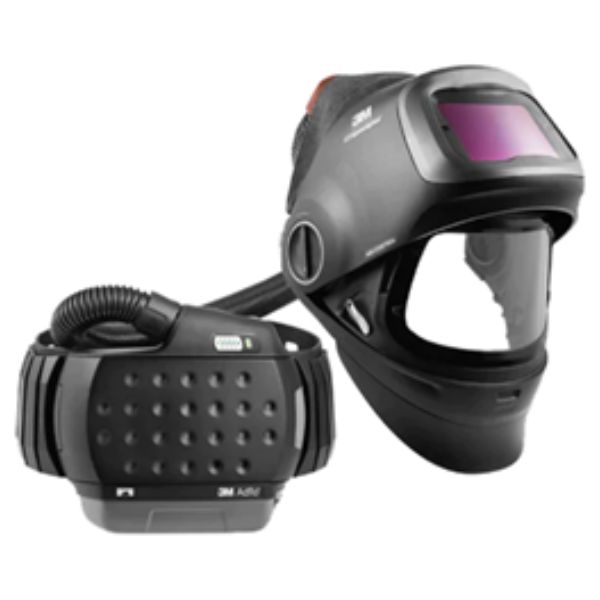
3M Speedglas welding helmet with Adflo belt-mounted powered air unit

Lightweight and low-profile, no hose no belt, easy to don and doff, good mobility

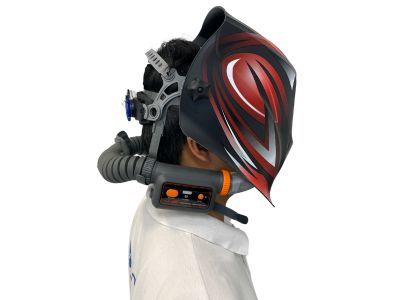
AYO WX HFM-W PAPR worn under a red welding helmet, side view

Welding Helmet Integrated Existing non-integrated
Don and Doff Difficult due to the hose and belt Easy, no hose and belt
Peak flow 170 – 200 L/min Up to 205 L/min (Breath responsive)
Battery Run-time 12 hours Up to 16 hours
Weight 2.13kg (Helmet 1kg, PAPR 1.1kg) – not including hose) 1.26kg (Helmet 0.54kg (typical), PAPR+half-face mask 0.72kg)
Fit Testing Not required Not generally required, but can be done if needed.
Fitting type Loose-fitting only, can not be converted to tight-fitting PAPR if needed. Dual-fitting, with optional Face Seal for beard covering.
Maintenance Difficult to maintain and clean Much easier to maintain and clean
Service life 5 years 10 years
Cost $2195 $739

In summary, AYO WX HFM-W P-Boost Welding PAPR can provide over 3M Adflo/Speedglas:

  • Easier to don and doff.
  • Dual-fitting, better usability and flexibility.
  • Higher protection in tight-fitting.
  • Longer battery run-time.
  • 40% lighter.
  • Easier maintenance.
  • At least 1/2 of the cost after combining a common welding helmet.


When to use the AYO WX HFM-W P-Boost Welding Half-Face Mask PAPR System instead of the 3M Speedglas/Adflo System?

When a better protection is needed:

  • The Versaflo can only be loose-fitting, while AYO WX HFM-W P-Boost PAPR provides dual-fitting, giving higher protection in tight-fitting.

When doing work requiring frequent donning and doffing:

  • The long hose and heavy belt-mounted power unit are a nuisance to don and doff.

When having an existing welding helmet:

  • AYO WX HFM-W Welding PAPR System allows you to use your existing welding helmet, enhancing protection and comfort over non-powered respirators while saving costs.

When you are on a budget:

  • The Speedglas/Adflo is over 2 times the cost of the AYO WX HFM-W P-Boost PAPR System. Why pay more for a product that is inferior in overall performance while doing the same job?

The AYO WX HFM-W Welding Half-Face Mask PAPR P-Boost System uses the same main unit as the AYO WX HFM Half-Face Mask PAPR P-Boost System. See how the AYO WX PAPR respirator range compares, or shop all AYO WX PAPR systems.

0
0
Your Cart
Your cart is emptyReturn to Shop