
Workplace Exposure Limits (WEL) 2026: What Changes in Australia on 1 December
On 1 December 2026, Australia's Workplace Exposure Standards (WES) become Workplace Exposure Limits (WEL). Limits for several common solvents and metals fall sharply, diesel particulate matter gets a limit for the first time, and respirable crystalline silica stays where it is for now. Here is what changes, what it means for your site, and where AYO WX powered respirators fit.
Current WES apply until 30 November 2026.
Styrene and toluene
Both fall from 50 ppm to 20 ppm (8-hour TWA). n-Butyl acetate, acetone and isopropyl alcohol also drop.
Diesel particulate matter
A new limit, measured as respirable elemental carbon. Relevant to mining, tunnelling and enclosed workshops.
Respirable crystalline silica
Stays at 0.05 mg/m³ on 1 December, but a proposed cut to 0.025 mg/m³ is still under review. WorkSafe Victoria already recommends keeping exposure below 0.02 mg/m³.
What is a workplace exposure limit?
A workplace exposure limit is the airborne concentration of a substance in a worker's breathing zone that must not be exceeded. Most are 8-hour time-weighted averages (TWA); some also have a 15-minute short-term limit (STEL) or a peak limit.
WES vs WEL: what is different?
The WEL is not just a new name. Safe Work Australia reviewed the list against current health evidence: some values fall, a few rise, some substances are added or removed, and 33 non-threshold carcinogens no longer carry a numerical value. Duties to eliminate or minimise exposure still apply to them.
Which workplace exposure limits change on 1 December 2026?
Selected substances common on Australian industrial sites. Values are 8-hour TWA / STEL unless stated.
| Substance | WEL (from 1 Dec 2026) | AYO WX protection | WES (until 30 Nov 2026) | Where you find it |
|---|---|---|---|---|
| Lower limits | ||||
| Styrene (monomer) | 20 / 40 ppm−60% | AYO WX HFM Gas A2-EU combined gas filter | 50 / 100 ppm | Fibreglass, composites, boat building |
| Toluene | 20 ppm−60% | AYO WX HFM Gas A2-EU combined gas filter | 50 / 150 ppm | Solvents, adhesives, printing |
| n-Butyl acetate | 50 / 100 ppm−67% | AYO WX HFM Gas A2-EU combined gas filter | 150 / 200 ppm | Lacquers, thinners, cleaning |
| Acetone | 250 / 500 ppm−50% | AYO WX HFM Gas AX combined gas filter Coming soon | 500 / 1000 ppm | Cleaning, thinners, composites |
| Isopropyl alcohol | 200 / 400 ppm−50% | AYO WX HFM Gas A2-EU combined gas filter | 400 / 500 ppm | Cleaning, printing |
| Manganese (as Mn) | 0.1 mg/m³ inhalable 0.02 mg/m³ respirable | AYO WX HFM-W P-Boost PAPR P3 Main Filter (TM3 / TH3) | 1 mg/m³ | Welding fume, steel fabrication |
| Portland cement | 1 mg/m³ (respirable dust) | AYO WX HFM P-Boost PAPR P3 Main Filter (TM3 / TH3) | 10 mg/m³ | Construction, concrete, precast |
| New limit | ||||
| Diesel particulate matter | 0.01 mg/m³ (as respirable elemental carbon) | AYO WX HFM Gas A2-EU combined gas filter (gas cartridge + HEPA filter) | — | Mining, tunnelling, enclosed workshops |
| No change on 1 December · still under review | ||||
| Respirable crystalline silica | 0.05 mg/m³ Proposed cut to 0.025 mg/m³ sent back for further review | AYO WX HFM P-Boost PAPR P3 Main Filter (TM3 / TH3) | 0.05 mg/m³ | Stone, concrete, tunnelling |
Cement: the WES covered total dust, the WEL covers the respirable fraction, so the two are not a like-for-like comparison. Source: Safe Work Australia, Changes to Workplace Exposure Limits and the WEL list (November 2025). Check the full list for every substance on your site.
Solvent vapours account for most of the limits falling on 1 December. Particulate filters do not capture vapours, so these exposures need respiratory protection fitted with gas filters. See AYO WX Gas PAPR Systems below.
Welding fume is already at 1 mg/m³ (down from 5 mg/m³). That change came before the WEL, so it is not a December deadline. Read more in Australia's welding fume exposure standard.
What the new limits mean for your site
A lower limit changes the answer for the same job. An exposure result that sat comfortably under 50 ppm of styrene can be well over 20 ppm. Review these three points before December.
Re-read your monitoring
Compare existing air-monitoring results against the new values, not the old ones. Retest where a process has changed.
Apply the hierarchy of controls
Eliminate, substitute, isolate and ventilate first. Respiratory protection covers the exposure that remains.
Choose RPE workers keep on
Lower limits leave less room for gaps. Protection only counts when it is worn correctly for the whole task.
Protect workers under lower limits with AYO WX PAPRs
AYO WX PAPR respirators, certified to the highest P3/TM3/TH3 Australian and EN Standards, can provide the best protection for all substances with WEL limits lowered.
More importantly, AYO WX can reliably ensure high protection due to its innovative technology, which does not rely on a tight seal of the mask on the face, as demonstrated by its TH3 certification to the loose-fitting PAPR Standard EN 12941:2023.
With no hose & belt, AYO WX PAPRs are worn similarly to negative-pressure masks but without the burden of breathing, making them the most practical and cost-effective PAPRs to date.
EN 12941:2023 TH3
EN 12942:2023 TM3
EN 12942:2023 TM3 A2
View AYO WX certificates
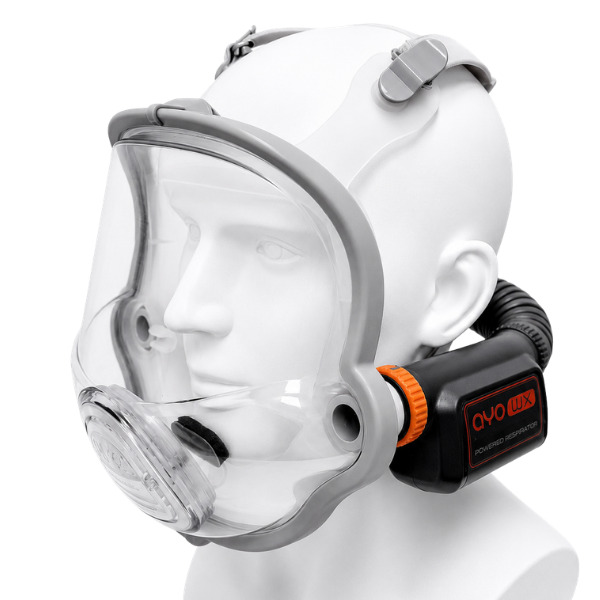
AYO WX FFM-LF P-Boost Loose-Fitting Full-Face Mask PAPR System
- Certified to AS/NZS 1716:2012 PAPR P3, EN 12941:2023 TH3.
- A loose-fitting full-face mask for workers with beards.
- Eye and face protection to AS/NZS 1337.1 Medium Impact.
- Up to 220 L/min strong flow for heavy exertion.
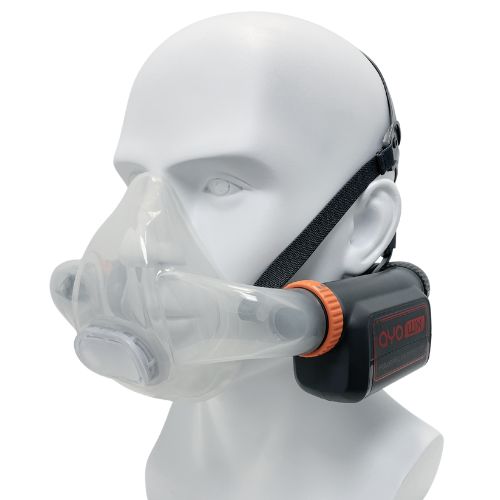
AYO WX HFM P-Boost Standard Dual-Fitting Half-Face Mask PAPR System
- Certified to both European powered-respirator standards: EN 12941 TH3 (loose-fitting) and EN 12942 TM3 (tight-fitting)
- As loose-fitting: no need to shave, no fit testing
- As tight-fitting: achieves increased protection once fitted properly
- Certified to AS/NZS 1716:2012 PAPR P3 · see certificates
- Silicone half facepiece in S, M and L
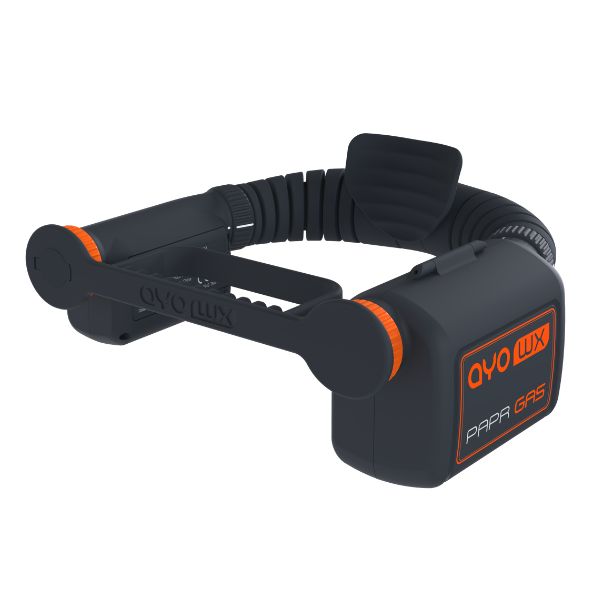
AYO WX Gas PAPR Systems
- For organic vapours such as styrene and toluene, the substances with the biggest cuts under the WEL
- Certified to AS/NZS 1716:2012 PAPR-A1P3, and EN 12942:2023 TM3A2
- A2-EU combined gas filter (gas cartridge + HEPA filter) on the same around-neck design: no hose, no belt pack
- Available with HFM, HFM-SP, HFM-W and FFM-DS masks
Match the AYO WX system to the exposure
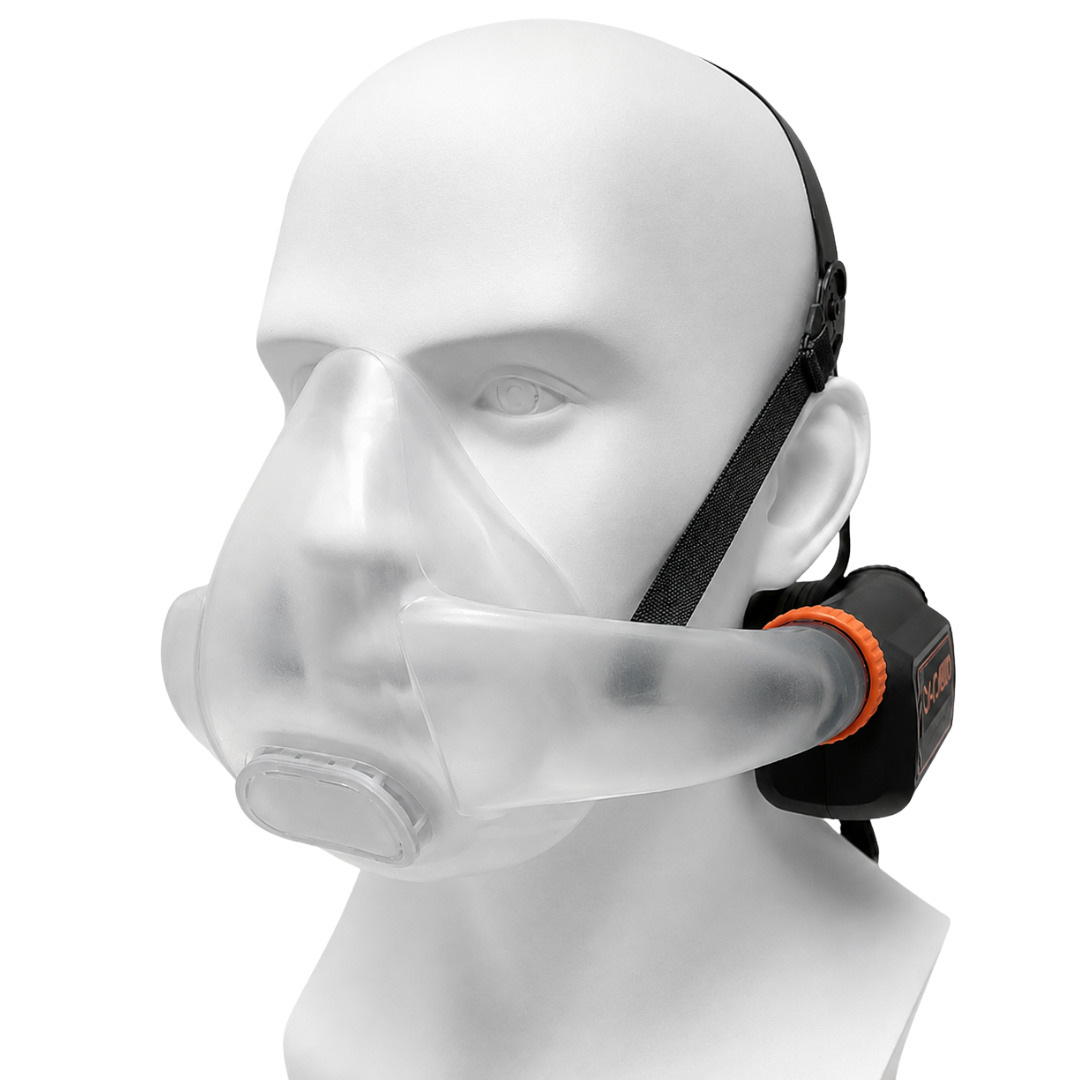
AYO WX HFM-W Welding Dual-Fitting Half-Face Mask PAPR System
Dual-fitting (tight-fitting & loose-fitting) half face that sits under a welding helmet.
View HFM-W welding PAPR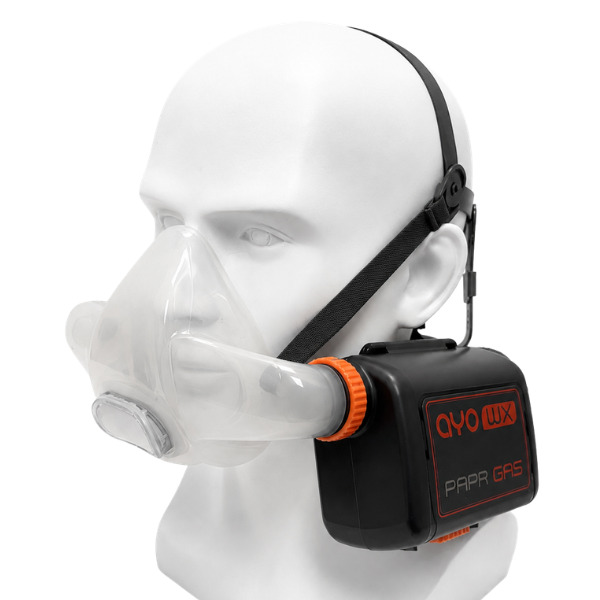
AYO WX Gas PAPR Systems
AS/NZS 1716 and EN 12942 TM3 certified, fitted with A2-EU combined gas filters for organic vapours and particles.
View AYO WX Gas systems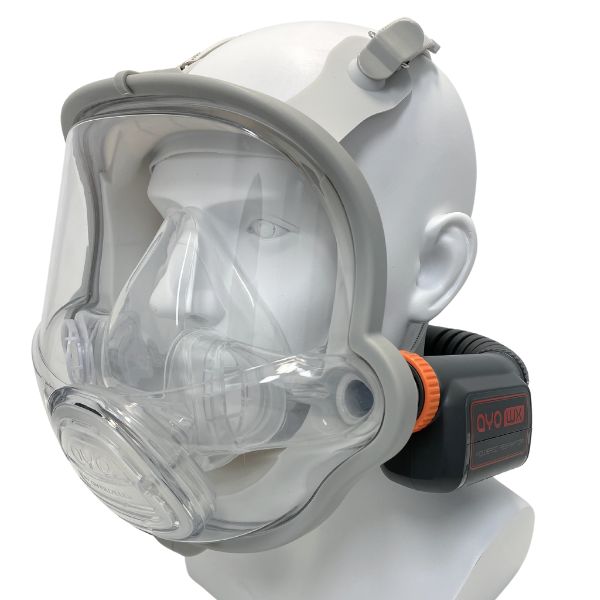
AYO WX P-Boost PAPR Systems
PAPR P3 particulate filters, in half-face and full-face options.
Compare the AYO WX rangeWorkplace Exposure Limits FAQ
When do the new workplace exposure limits start?
Is the silica exposure limit changing?
What is the new diesel particulate matter exposure limit?
Does a PAPR need fit testing?
Which AYO WX system is right for my site?
Reviewing your respiratory protection before 1 December?
Talk to the Aimwell team about your processes and exposure results.
Talk to the Aimwell team View the AYO WX rangeSources
- Safe Work Australia, New workplace exposure limits (WEL) to apply from 1 December 2026
- Safe Work Australia, Workplace exposure limits for airborne contaminants (November 2025)
- Safe Work Australia, Changes to Workplace Exposure Limits
- Safe Work Australia, Decision on workplace exposure limits for 9 chemicals
- Safe Work Australia, Welding fumes
- WorkSafe Victoria, Dust containing crystalline silica in construction work
- SafeWork NSW, Respiratory protective equipment and fit testing
Related reading
Last reviewed: 30 September 2026. Aimwell Pty Ltd, Macquarie Park NSW.