
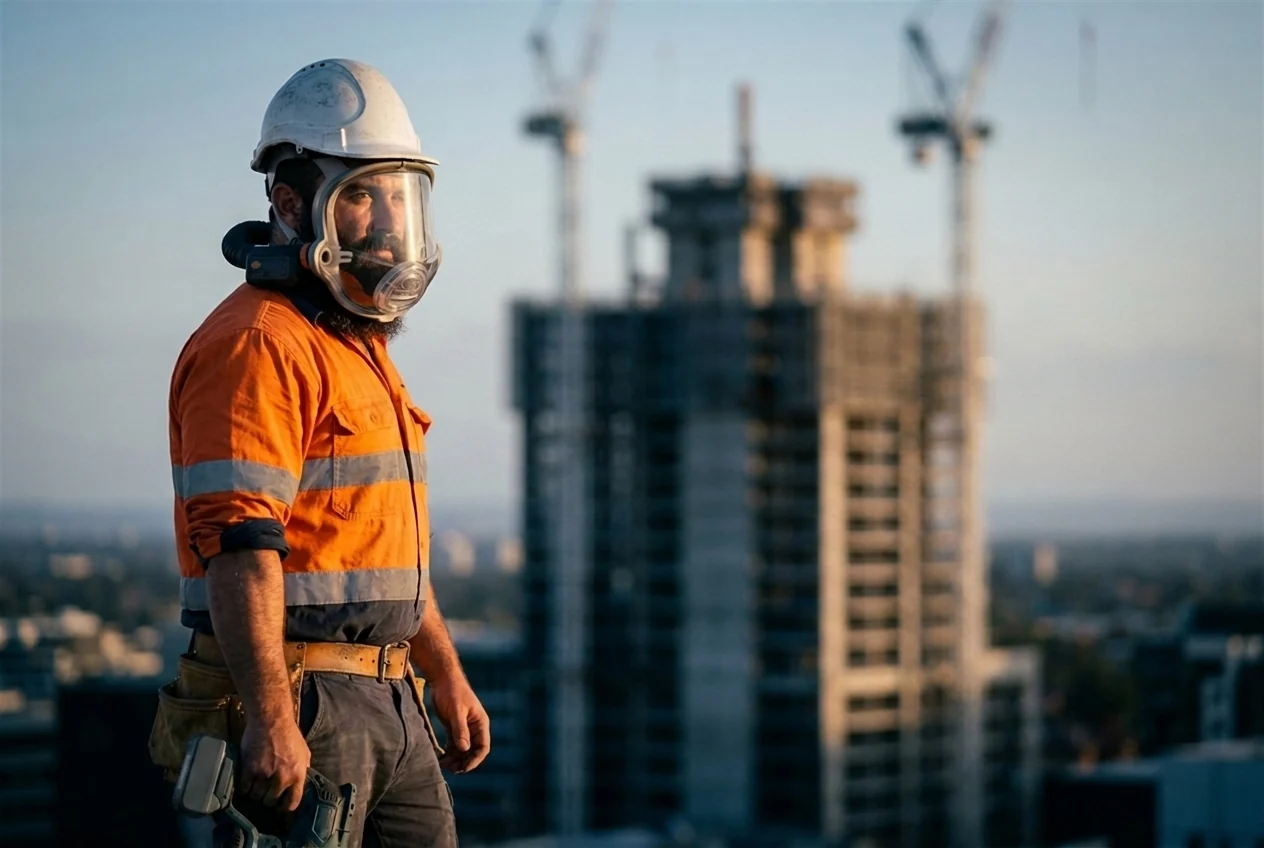
Different PAPR types place the powered air supply in different positions, and that design choice affects how comfortably a respirator can be worn during work. The four traditional types of PAPR respirators covered here include on-facepiece systems, helmet-mounted systems, belt-mounted systems with a facepiece, and belt-mounted systems with a hood or helmet.
Each PAPR design introduces different considerations, from weight on the face or head to breathing hoses that may restrict movement. Around-the-neck PAPR systems offer an alternative layout, keeping the air supply close to the wearer without a belt-mounted blower or external breathing hose.
When comparing different PAPR respirator types, protection class is only one part of the selection process. Comfort, mobility, compatibility with other PPE and the demands of the task also matter. A powered respirator that interferes with the work may be less likely to be worn consistently.
Key Takeaways
- Different PAPR types distribute weight differently. On-facepiece PAPR systems place the blower on the mask, while helmet-mounted PAPR designs add weight to the head. Belt-mounted PAPR systems use a breathing hose, which may affect mobility, visibility or ease of donning and doffing in certain working environments.
- Around-the-neck PAPR systems offer an alternative to traditional belt-mounted designs. The AYO WX configuration eliminates the external breathing hose and waist belt, supports compatible half-face and full-face respirator options, and can be used with suitable head protection where required. Its low-profile design may reduce interference during tasks involving frequent movement or limited clearance.
- Aimwell‘s breath-responsive around-the-neck PAPR design reduces reliance on bulky belt-mounted components. The AYO WX power unit weighs 437 g, with a 126 g filter. For comparison, 3M lists approximately 1,135 g for its Versaflo TR-300+ blower assembly, including a high-capacity battery, belt and filter. These figures describe different system configurations and do not represent a complete like-for-like worn-weight comparison.
-
The AYO WX powered air purifying respirator platform delivers up to 205 L/min peak airflow in P-Boost mode, with a user-replaceable battery offering a stated operating duration of 8 to 16 hours, depending on the configuration and operating conditions.
- A dual-fitting facepiece is certified to both the loose-fitting and the tight-fitting standard: no need to shave and no fit testing required as loose-fitting, higher protection when fitted tight.
-
Australian respiratory protection standards are transitioning. AS/NZS 1715:2009 and AS/NZS 1716:2012 are scheduled to be superseded by a suite of ISO-based standards from 1 January 2030, with a transition period allowing the existing and new frameworks to operate in parallel.
How PAPR Standards and Workplace Requirements Are Changing
Two changes are running at once.
The first change is regulatory. Australia and New Zealand are transitioning towards an ISO-based respiratory protection framework. According to Standards Australia, the new standards place greater emphasis on wearer performance, protection requirements, breathing rates and working conditions. This creates a more comprehensive framework for evaluating respiratory protective equipment, including different types of PAPR systems.
The second change is growing interest in powered respiratory protection for demanding industrial environments. Employers comparing negative-pressure respirators with different PAPR types are considering not only respiratory protection requirements, but also wearer comfort, work intensity, mobility, maintenance and total operating costs. Low-profile and loose-fitting PAPR options can be particularly relevant when conventional respirator designs interfere with everyday tasks.
Together, these changes reinforce the importance of selecting a PAPR respirator based on both certified protection and real-world usability. Understanding the different PAPR designs is an important first step.
4 Traditional Types of PAPR Respirators Compared
Powered air purifying respirators come in several configurations, distinguished by where the blower is positioned and how filtered air reaches the wearer. The four traditional PAPR designs below illustrate common approaches to integrating the blower, breathing hose and facepiece or headtop.
Each type of PAPR has advantages and limitations depending on the working environment, required protection, other personal protective equipment and wearer preferences.
| Layout | Where the mass sits | The cost to the wearer |
|---|---|---|
| On-facepiece — blower in the mask | On the face | Compact, but heavy on the face; affects downward vision and work; difficult in confined spaces; difficult to implement on a half facepiece |
| In-helmet — blower in a helmet | On top of the head | Head protection included by design, but top-heavy for downward work; difficult in confined spaces; loose-fitting only; not feasible on a half facepiece; the helmet is compulsory even when the job does not need one |
| Hose and belt, with a facepiece | On the waist, hose to the mask | The hose attaches to the mask and affects work and vision; limits mobility; difficult in confined spaces; troublesome to don and doff |
| Hose and belt, with a hood or helmet | On the waist, hose to the head top | Head and eye protection included, but the same tethering, plus loose-fitting only, not feasible on a half facepiece, and a compulsory hood or helmet |
The same complaints repeat down that column: mass in the wrong place, a tether, a head covering the wearer did not choose, and — in every single row — trouble in confined spaces. None of them appear in a protection class.
They appear on site. A formwork worker looking down at a deck fights a top-heavy helmet all day. A fitter entering a vessel plans where the hose runs before they plan the task. A welder lifting a visor twenty times a shift judges the respirator on don-and-doff time, not just inward leakage.
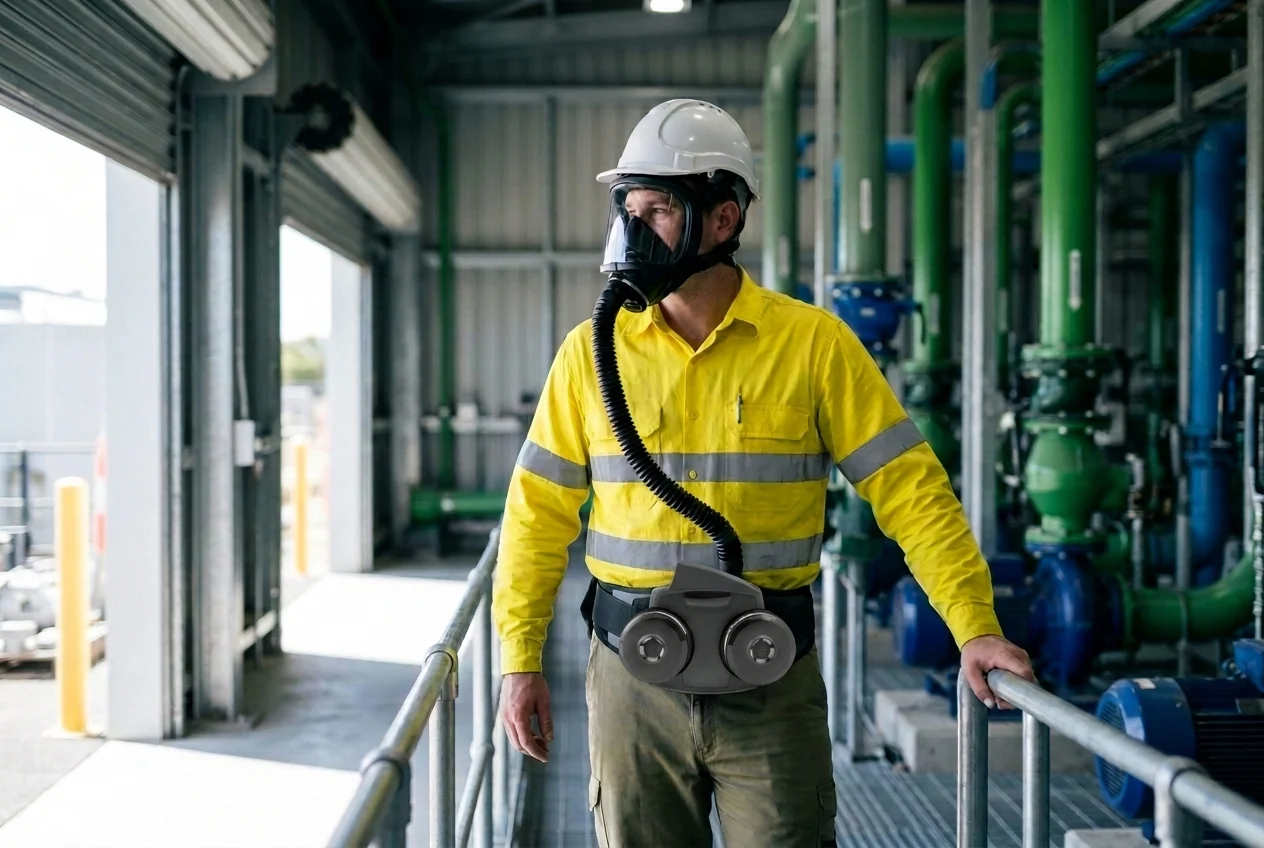
Around-the-Neck PAPR: An Alternative to Belt-Mounted Systems
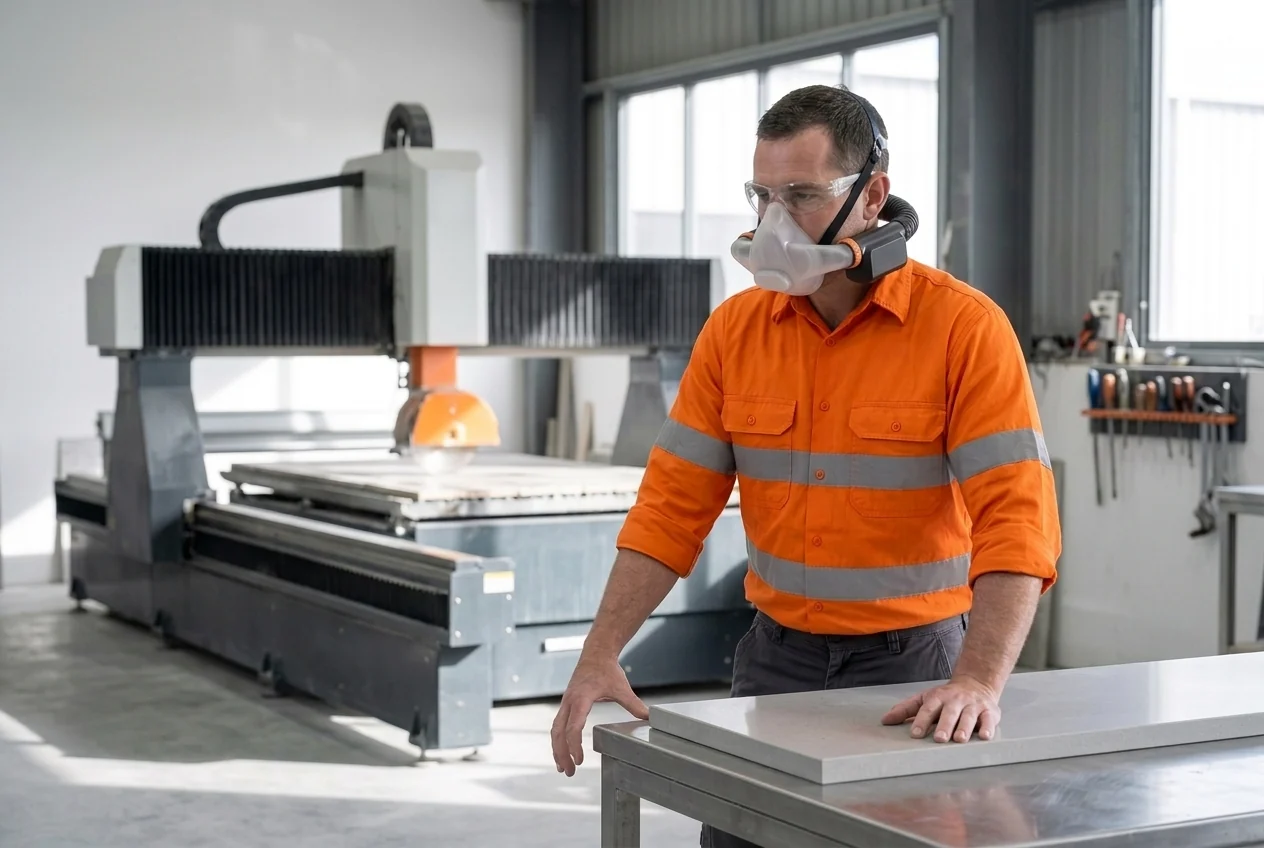
Unlike traditional belt-mounted PAPR systems, an around-the-neck PAPR positions the powered air supply close to the facepiece, eliminating the need for a waist-mounted blower and external breathing hose in the AYO WX configuration.
An around-the-neck unit sits low on the face, so downward vision stays clear. Mobility is unaffected, because nothing crosses the chest or shoulders. Don and doff is a single movement. It runs a half facepiece or a full facepiece, which the in-helmet and hood layouts cannot offer. A hard hat can be added when the job calls for one and left off when it does not. In-helmet and hood systems bundle head protection in permanently, which is useful on some worksites and a nuisance in a tight roof space.
Our systems are designed for high exertion, substantial body movement and confined spaces — see what makes the AYO WX around-neck design work in practice.
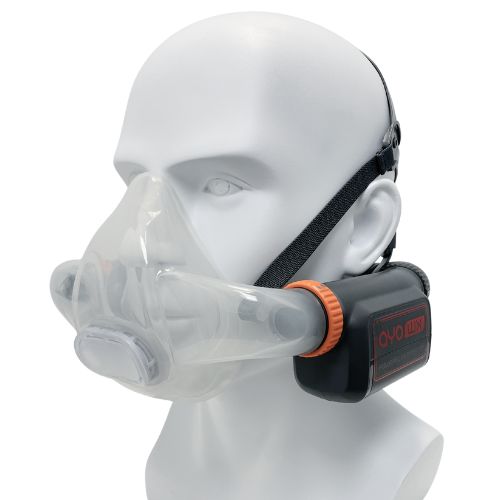
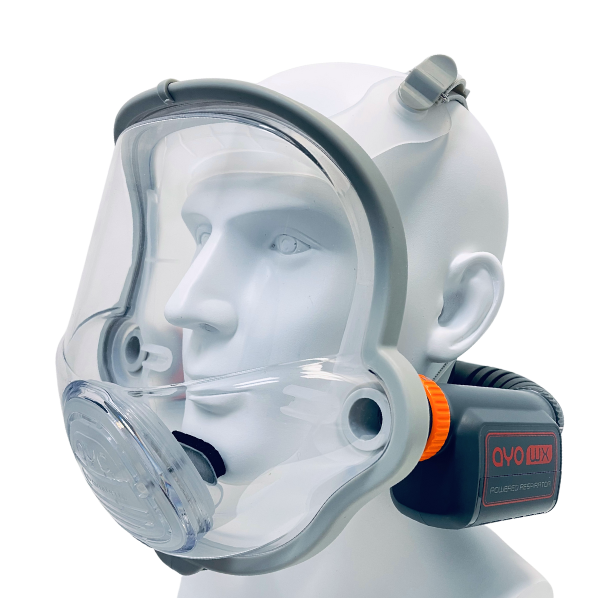
How Breath-Responsive Technology Supports a Compact PAPR Design
A conventional PAPR runs its blower at a constant flow, whether the wearer is breathing in, breathing out or standing still. A breath-responsive unit matches delivery to the breathing cycle instead.
The consequence is physical, and large. The air source on our system is a 437 g power unit and a 126 g filter, worn on the neck with no belt and no hose. 3M’s own published technical data sheet puts a Versaflo TR-300+ at approximately 1,135 g including its high-capacity battery, belt and filter, before the breathing tube.
That is not a comfort statistic. It is the whole chain. Less energy moved means a smaller battery, and less mass is what lets the blower sit on the neck instead of a belt — which is what removes the hose. It saves carbon in a gas filter as well, because carbon is consumed by airflow the wearer never inhaled: less waste and lower running cost over the life of the system.
On our own platform this sits on the certificate record rather than in the brochure. Every certified system in the AYO™ WX around-neck PAPR range is described as controlled by a breath-responsive flow control algorithm. The numbers that follow: no hose and no belt, up to 205 L/min peak flow in P-Boost, and 8 to 16 hours on particulate duty from a user-replaceable battery. The blower is rated for over ten years and runs under 65 dB in typical use.
Loose-Fitting vs Tight-Fitting PAPR: What Is the Difference?
The choice between a loose-fitting and tight-fitting PAPR depends on the required protection, facepiece design, wearer characteristics and site respiratory protection program.
A dual-fitting facepiece is certified to both the loose-fitting and the tight-fitting standard. Used loose-fitting it does not depend on a seal against skin, so there is no need to shave and no fit testing is required. Used tight-fitting and fitted properly, it achieves the increased protection the tight-fitting standard measures. One purchase therefore covers a clean-shaven fitter and a bearded one, and covers a site whose answer changes between jobs.
The AYO™ WX HFM Standard Half-Face Mask PAPR Systems and the welding and double-seal variants sit on that platform, certified to EN 12941:2023 as TH3 and EN 12942:2023 as TM3. In our own framing, TM3 represents four times the protection of TH3 — the two classes come from different test regimes, so the raw numbers are not comparable.
Two add-ons fit the same platform rather than needing a second system: a Face Seal Kit for workers with longer beards, and a Shower Kit for sites that run decontamination showers.
Before selecting any PAPR respirator type, confirm that the complete respirator configuration, filter and applicable protection level are suitable for the identified airborne hazards, exposure concentrations and working conditions.
A qualified occupational hygienist can assist with exposure assessment and respirator selection. The Australian Institute of Occupational Hygienists provides resources for identifying appropriately qualified professionals.
Not sure which type of PAPR respirator is right for your workplace?
Whether you are comparing belt-mounted PAPR systems, evaluating loose-fitting respirators or looking for a hose-free alternative, Aimwell can help you explore the available AYO WX configurations.
Explore the AYO™ WX FFM-LF Loose-Fitting Full-Face Mask
Contact Aimwell to discuss your respiratory protection requirements, request product specifications and certification documents, or compare available PAPR respirator configurations with your occupational hygienist.
About the Author
Eric Fu is Managing Director of Aimwell Pty Ltd (ABN 68 652 924 957). He has twenty-seven years in the respiratory device industry — CPAP, industrial powered respirators and breathing measurement devices — and holds multiple international patents. Aimwell designs the AYO™ WX range in Sydney.