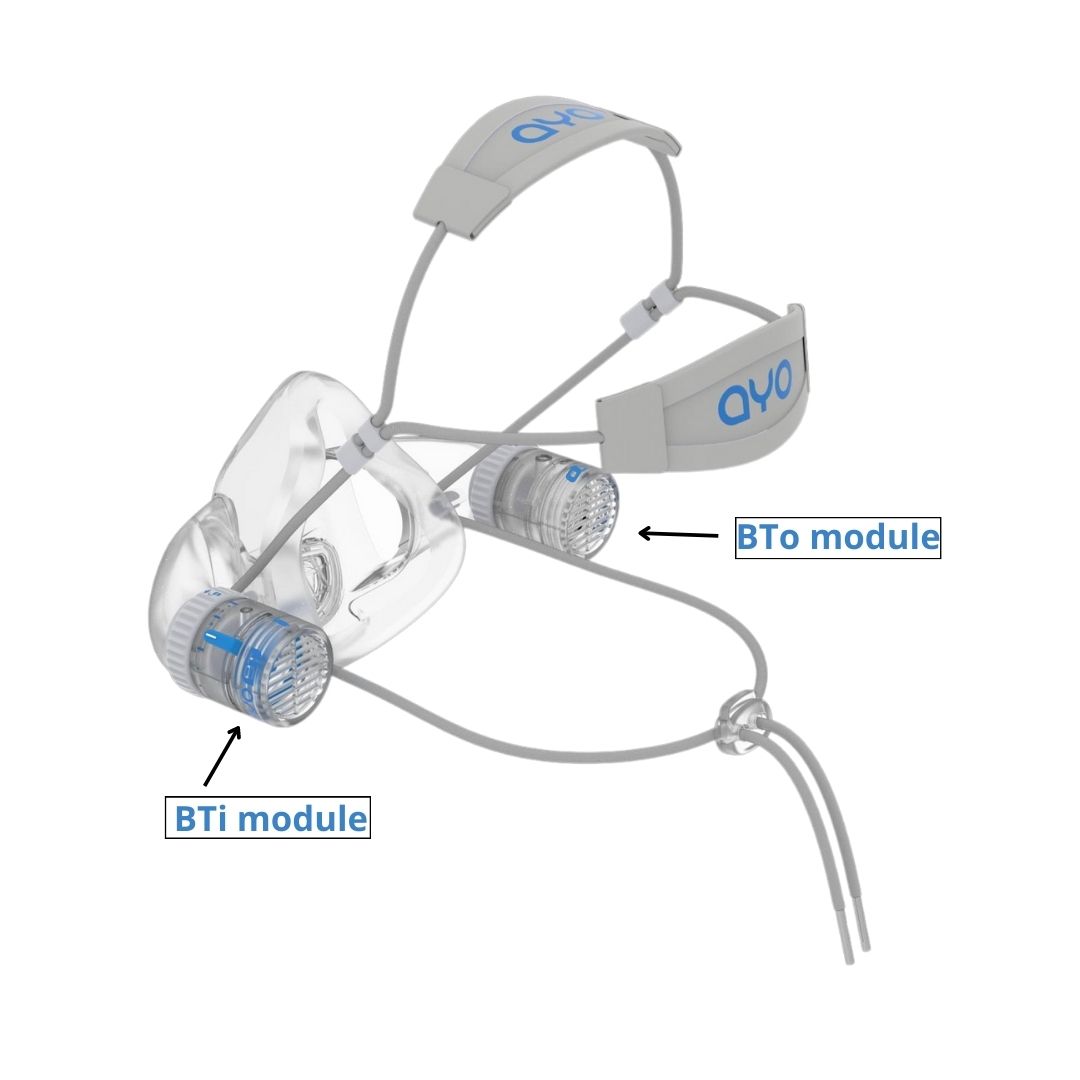
Introducing AYO BT and BT+ Breathing Trainers

The Tools to Help Your Breathing Training Easier

Do you know that a large portion of modern people has a chronic over-breathing habit, which is at least in part responsible for a range of harmful chronic diseases, such as asthma, high blood pressure, heart disease, diabetes, cancer, etc.?

Buteyko Breathing is a science-based systematic breathing method that has been proven to help reduce over-breathing and achieve normal breathing, thus it has been a popular choice by ever-increasing followers. However, changing the over-breathing habit formed over many years may not be easy, especially if the habit has been consolidated by your every breath since a very young age! So if you are one of the people who want to normalise your breathing, are you frustrated sometimes by your slow progress in breathing training feeling not going anywhere?

Don’t worry, try our exciting training respirators to enjoy the much-needed assistance to elevate your breathing to the next level!

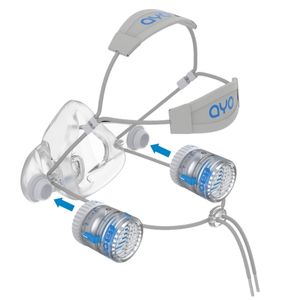
AYO BT is an entry-level breathing trainer, and it works by controlling the air inlet to add resistance to reduce your breathing, such that it makes your inhalation slow and long and activates your diaphragm which is the main breathing muscle you must use to achieve normal breathing. Using AYO BT over a period of time will train you to use your diaphragm naturally without having to focus on your breathing all the time, thus allowing you to normalise your breathing easier.

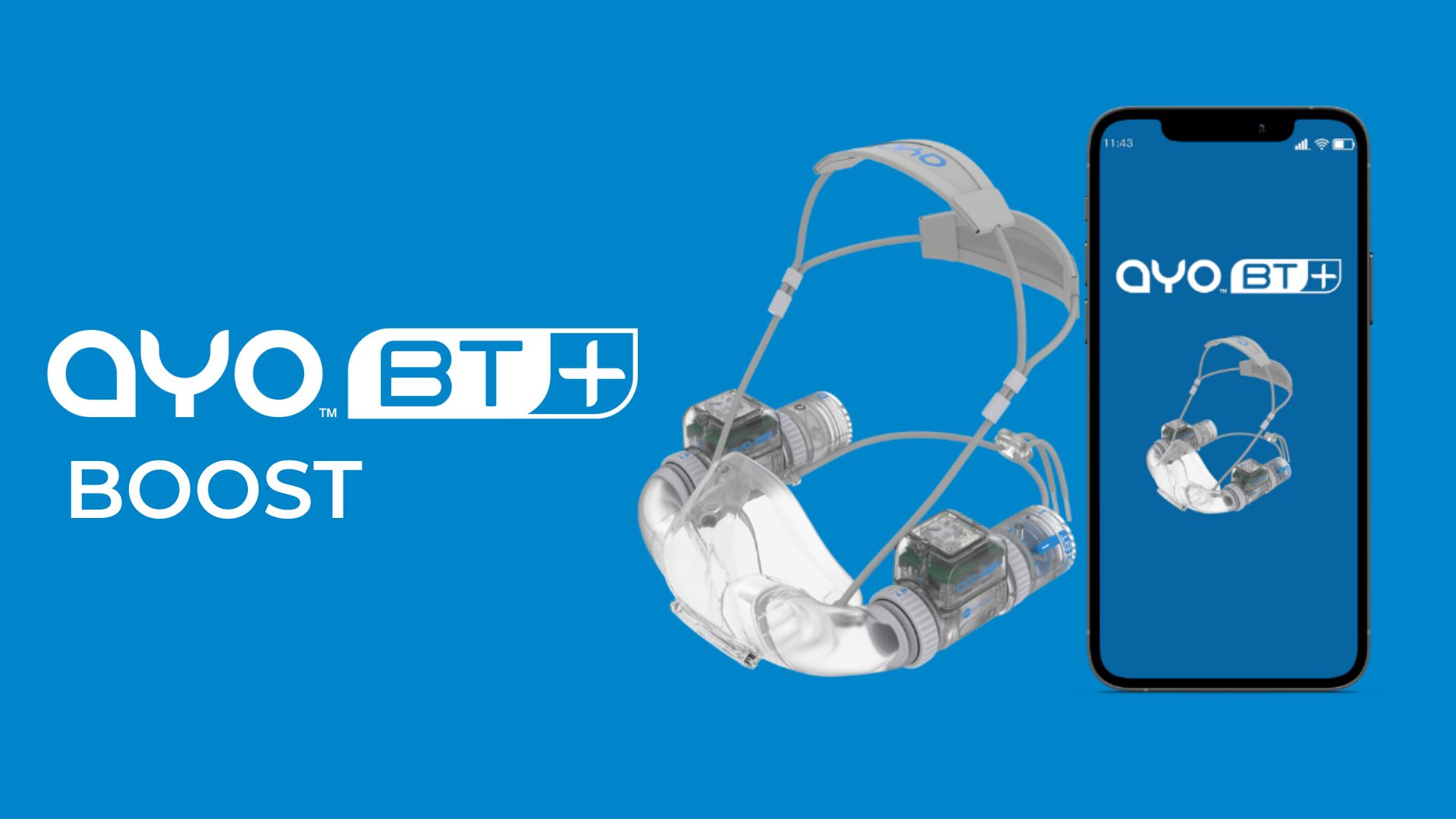
AYO BT+ is an advanced breathing trainer consisting of an AYO BT plus two breathing measurement modules to work in conjunction with a mobile phone. It is the world’s first training respirator that combines resistance breathing training with breathing measurement – a major innovation in breathing training.

What Separates AYO BT from other breathing training tools

Designed with a flair for medical respiratory products, AYO BT is easy, comfortable, and enjoyable to use. The silicone mask has a skin-friendly cushion that greatly reduces the red mark on the face after each long use, and it is also suitable for quick daily washes – a must if frequent use of the mask involves high-intensity sports training or exercises. The mask is also highly transparent, providing a cool and futuristic looking.
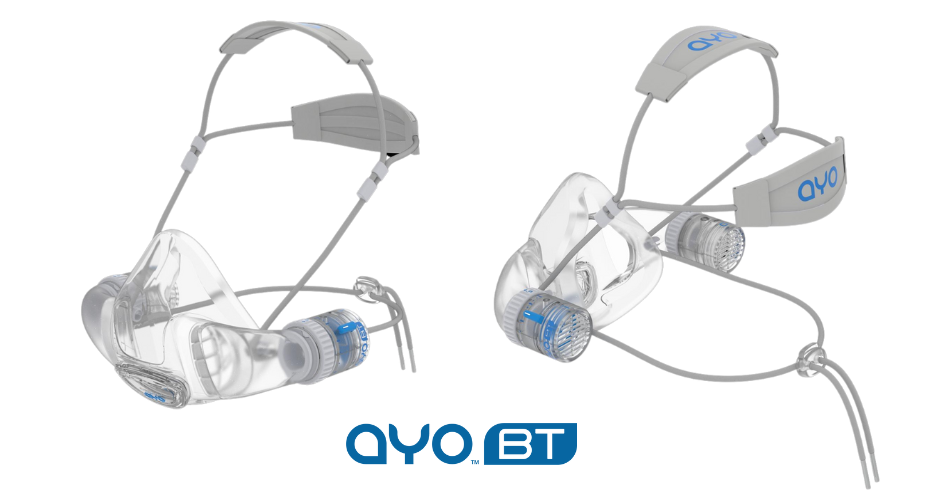
AYO BT Key benefits includes:

  • Develop diaphragmatic breathing naturally.
  • Prevent exercise-induced Asthma.
  • Limit hyperventilation.
  • Strengthen breathing muscles.
  • More natural, healthy and user-friendly to train breathing through the nose than a ‘Bite-on’ alternative through mouth breathing.

The Highlights and Benefits of Using AYO BT+

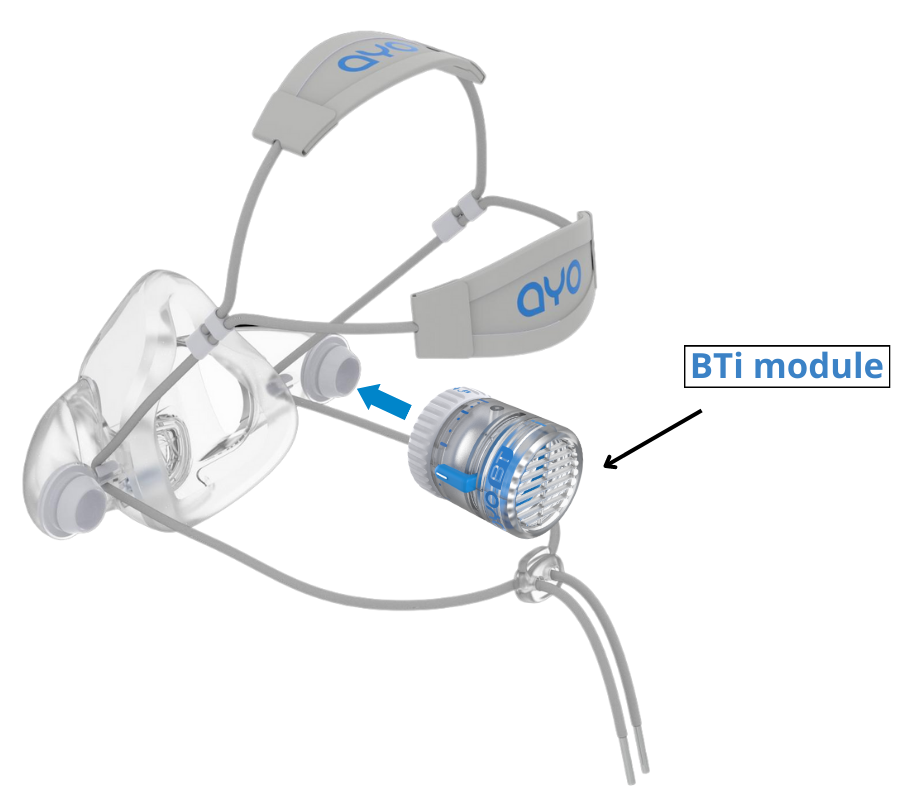
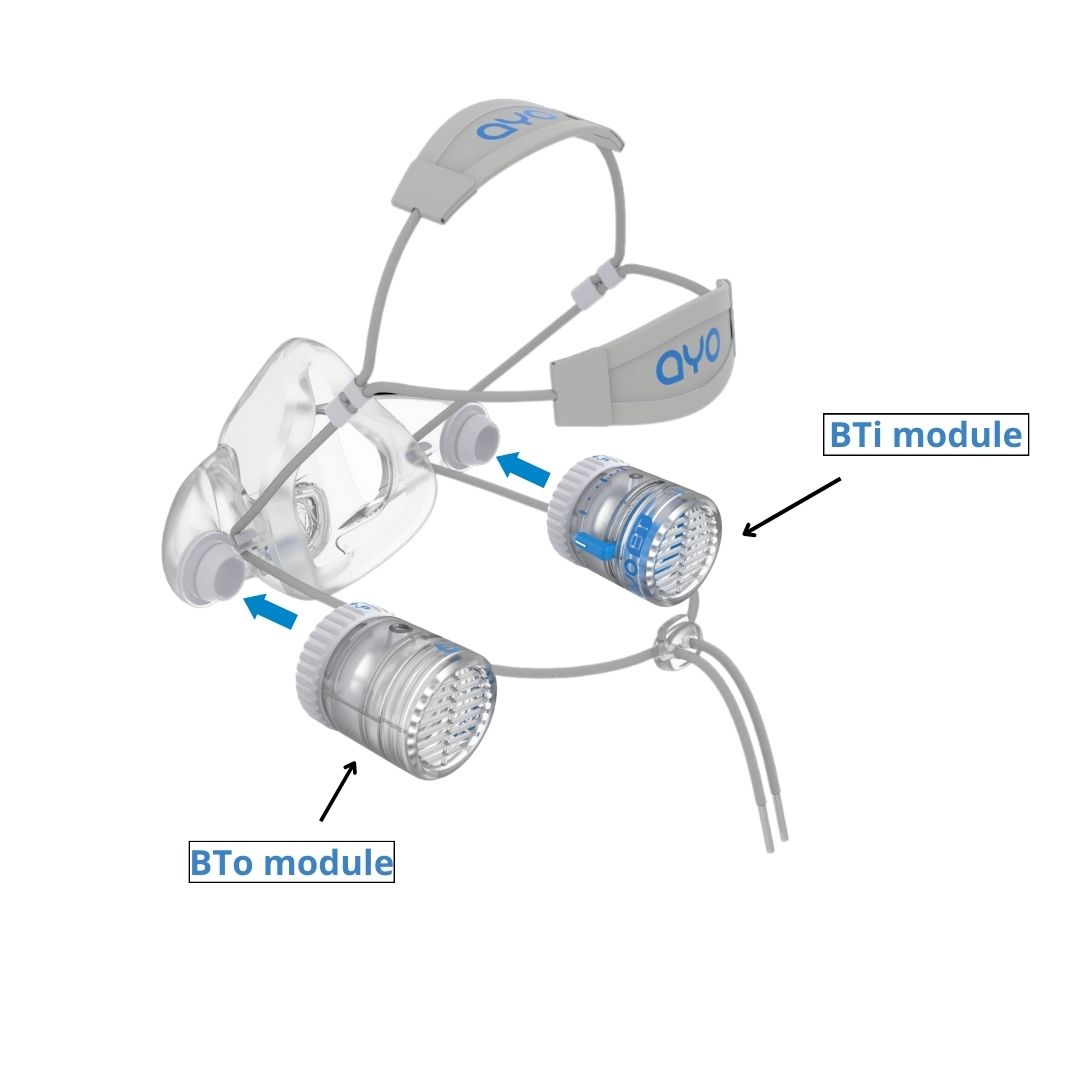
A modular structure equipped with Aimwell patent-pending Push-fit & Twist-release connection allows the AYO BT+ to reuse the entire AYO BT, a cost-effective and user-friendly approach for users who wish to upgrade from their existing AYO BT bought earlier. It also allows AYO BT+ to AYO BT frequent changeover very easily according to the user’s need. The Clip-on electronics within the breathing measurement modules allow connecting to and detaching from the breathing measurement airpath hassle-free with crisp precision, thus facilitating easy washing of the airpath. AYO BT+ is beautifully designed – a delightful engineering masterpiece to own for your breathing health. More details of AYO BT+ here.
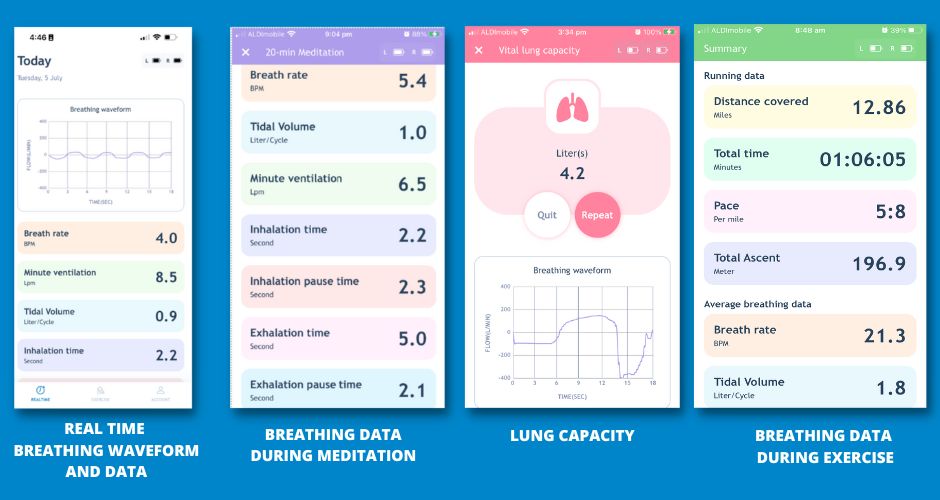
Key measurements include:

  • Breath per minute
  • Minute ventilation
  • Tidal volume
  • Inhalation and exhalation time
  • Power of breathing and work of breathing (data to show how efficient or how hard your breathing is)
  • Vital lung capacity
  • Breath-hold time (Control Pause)
  • Realtime breathing waveforms
AYO BT+ Key benefits include:

  • Provide measured insights on your breathing health and capacity.
  • Add depth and effectiveness to your breathing training.
  • Allows you to see your progress like never before and motivates you to work towards your optimal breathing – a great tool for Buteyko breathing.
  • Help shorten the time and effort to improve your breathing more effectively.
  • Wearable while doing your sports training.


About Us

Aimwell has years of experience in breathing product design and manufacturing. This expertise combined with our passion for sports and breathing health inspired the creation of AYO BT and BT+.

We strive to deliver world-class and affordable breathing products through continuous innovation in design and manufacturing while providing uncompromising customer service.

Please visit www.aimwellbreathing.com for more information.
How to Use AYO BT as an Alternative to Alternate Nostril Breathing

Alternate Nostril Breathing and its Benefits

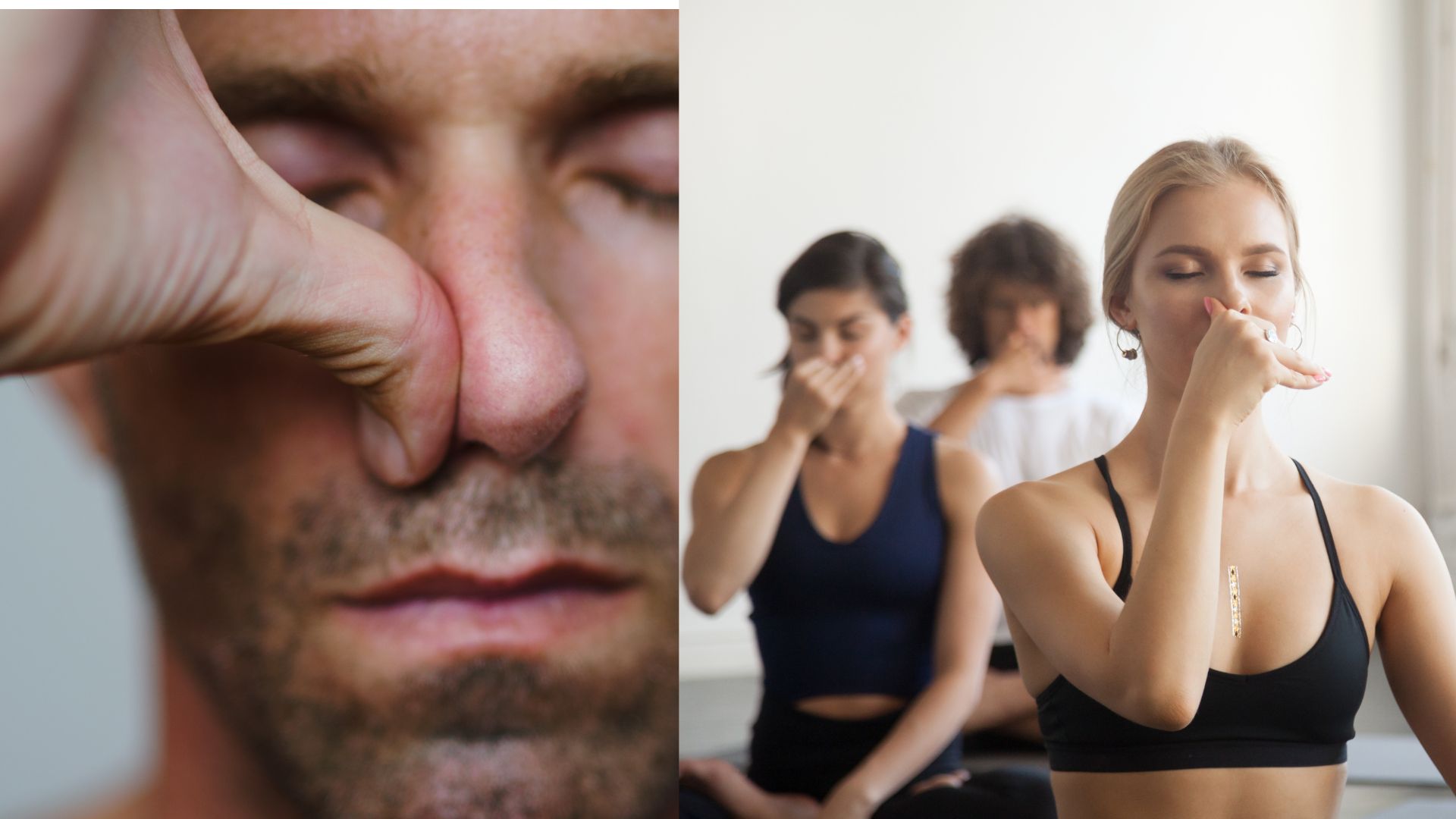
Alternate Nostril Breathing is a type of breathing exercise where one nostril is used to breathe at any one time before changing to the other nostril in a cycle, and this cycle is to be repeated for a few minutes or longer.

Originally, alternate nostril breathing is a yogic breath control or pranayama practice and can be practised as part of a yoga or meditation session.

Key benefits include:
• relax your body and mind
• reduce anxiety
• promote overall well-being

Typical Steps of Practice

Typical steps of practice may look like follows:
• use right thumb to close right nostril.
• Inhale through left nostril and then close left nostril with your ring finger.
• Open right nostril and exhale through it.
• Inhale through right nostril and then close it.
• Open left nostril and exhale through it.
• This is one cycle.
• Repeat the cycle to the duration of your choice, typically a few minutes.

Alternate Nostril Breathing

AYO BT Alternative

There are a number of variations for alternate nostril breathing, most require using fingers to pinch the nostrils alternately.
In a nutshell, alternate nostril breathing is a type of reduced breathing exercise where instead of using two nostrils to breathe, it uses one nostril only at any one time.

From an engineering point of view, there are easier and better ways to achieve the effect of reduced breathing from alternate nostril breathing.

AYO BT is essentially a reduced breathing training tool and thus lends itself perfectly to provide a much better solution than nose pinching.
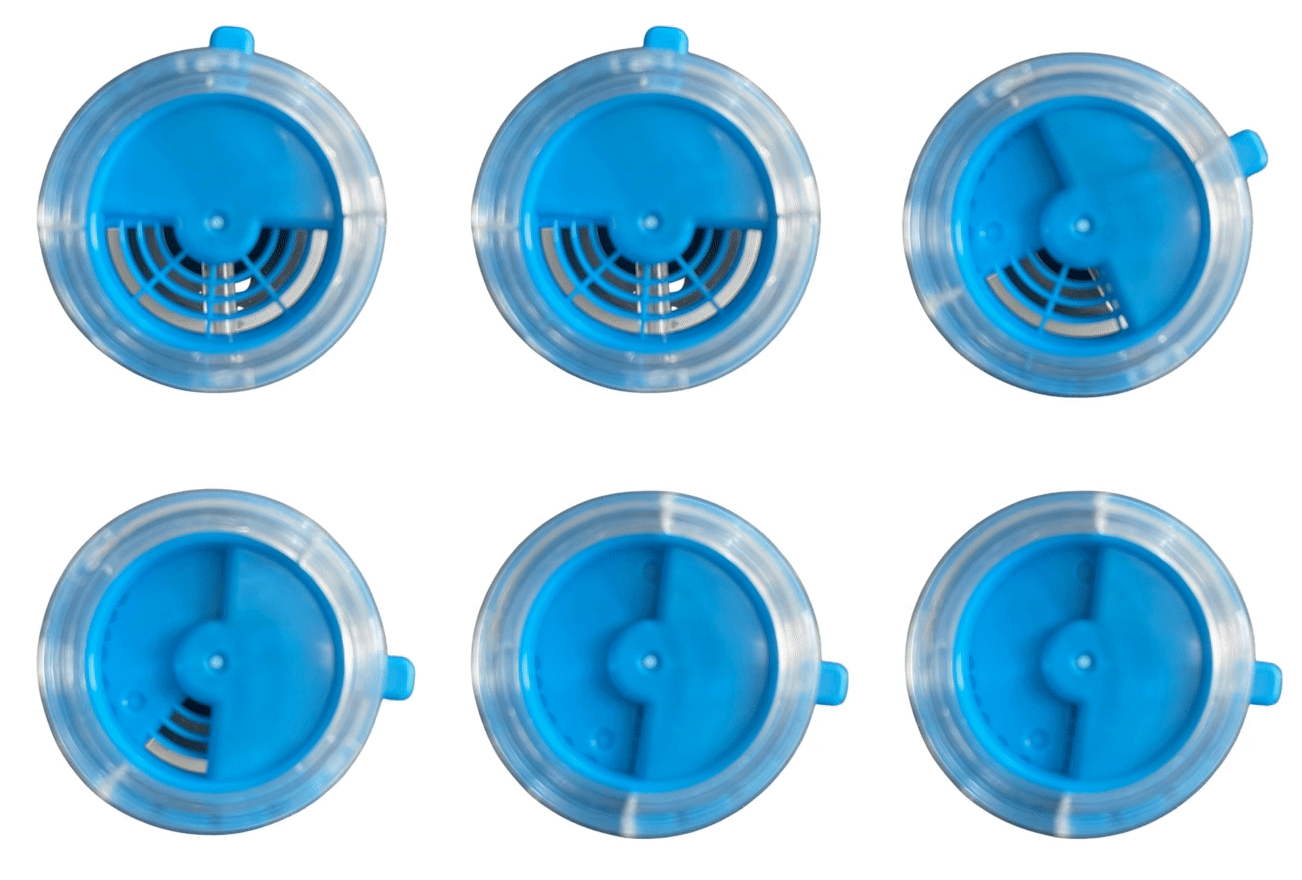
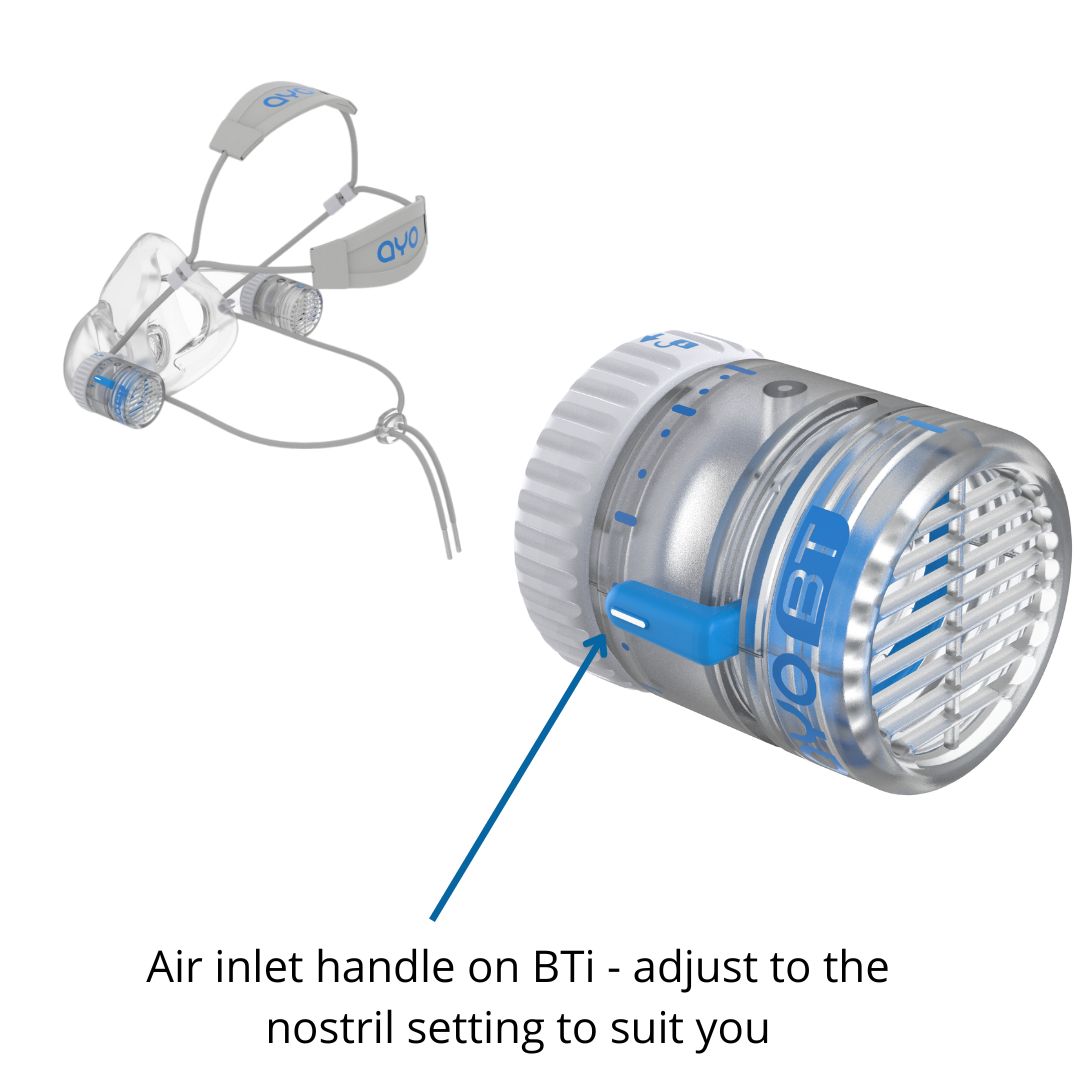
The adjustment module BTi of AYO BT has 11 adjustable settings, and the following table shows each setting’s opening in relation to the size of a typical nostril:


Setting 0 1 2 3 4 5 6 7 8 9 10 11
Equivalent Nostrils 1/6 1/3 1/2 2/3 1 1+1/3 1+1/2 2 2+1/2 3 3+1/2 4
It can be seen that setting 4 is equivalent to one nostril. So once Setting 4 is selected, put on AYO BT then just breathe, and you will breathe in a similar way as in alternate nostril breathing, as far as air volume is concerned.

Furthermore, it can achieve even less reduced breathing down to 1/6 of a nostril consistently and effortlessly!

The benefits of practicing reduced breathing with AYO BT include:

• Free up your hand, just breathe effortlessly.
• Achieve even less reduced breathing than alternate nostril breathing.
• Improve CO2 tolerance, reduce breathlessness and enhance calmness.

How to Boost the Quality and Benefits of Meditation with AYO BT+

Typical Benefits of Meditation


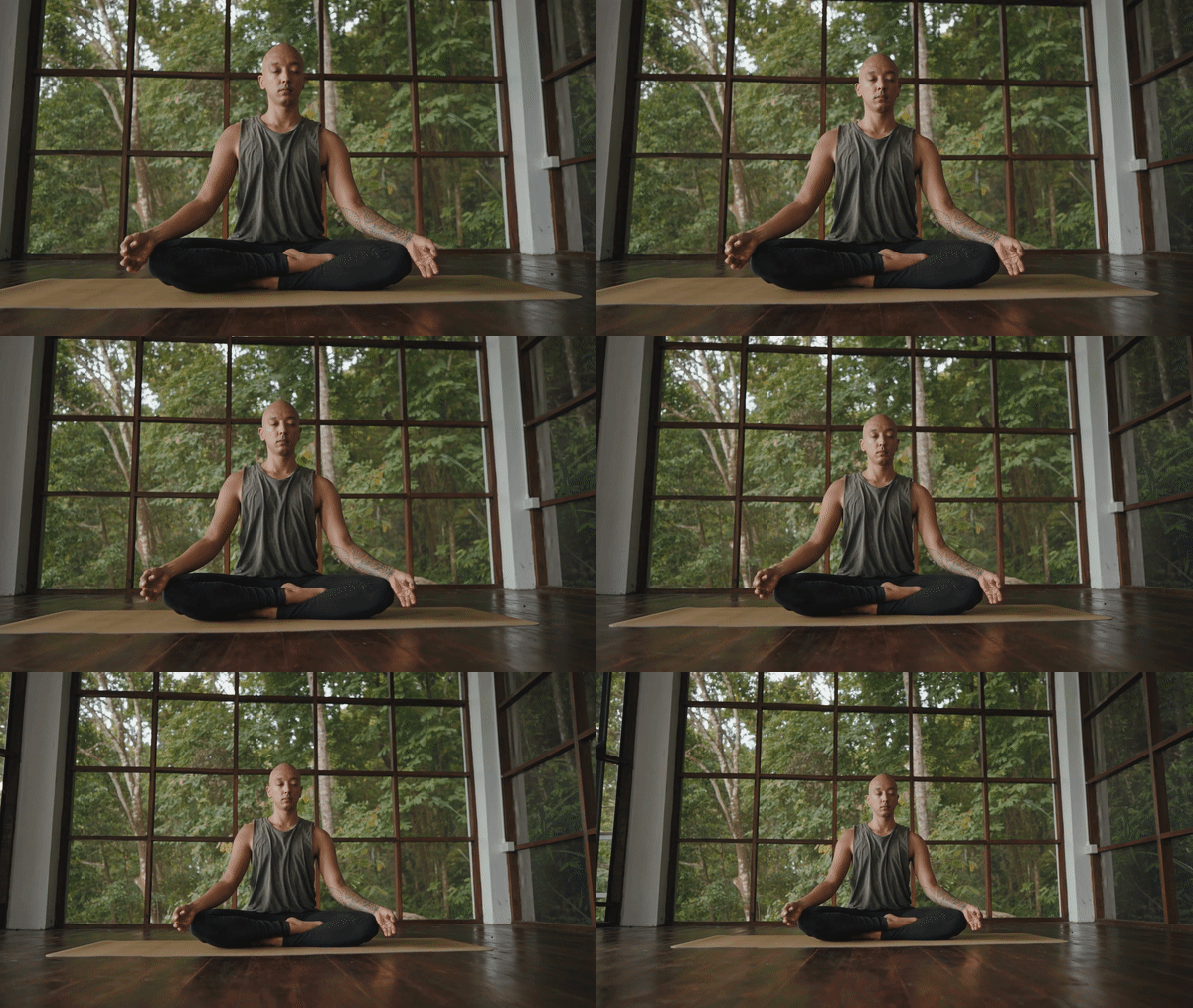
Breathing Meditation is a popular health exercise that many of us enjoy doing regularly.

Typical benefits include:

• Stress release.
• Restoring calm and inner peace.
• Focusing on the present.
• Reliving anxiety.
• Reducing negative emotions.
• Lowering resting heart rate.
• Lowering resting blood pressure.
• Improving sleep quality.

benefits of meditation

Breathing and Meditation

Breathing is one of the key elements in meditation, as slow breathing stimulates the parasympathetic nervous system which is responsible to relax the mind and body.

Good breathing during meditation would also help your mind to concentrate on breathing and shut down those stressful thoughts you might have, thus resulting in a better quality of meditation.

Better still, if you practice diaphragmatic breathing, it will further enhance the health benefits such as:

  • Makes you calm and relaxed.
  • Lower your heart rate.
  • Lower your blood pressure.
  • Maintain a good posture and core stability.
  • Help achieve effective lymphatic drainage for improving your immune system.

AYO BT+ is particularly suited to help achieve advanced diaphragmatic breathing in meditation.

Here is a summary of the reasons:


  • To gain more benefits from diaphragmatic breathing, one would need to drive the diaphragm in a reasonably large movement. However, in the meditation state when the body’s energy consumption is very low, a large diaphragm movement would normally result in hyperventilation, which would reduce the benefits of the meditation. The air inlet adjustment function of AYO BT+ from the BTi of the device will limit the air intake while allowing a larger beneficial diaphragm movement without you suffering from hyperventilation.
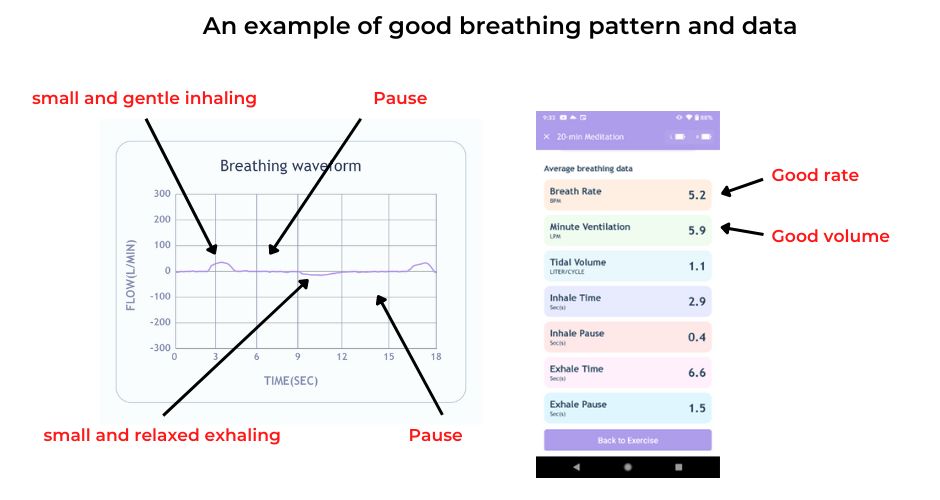
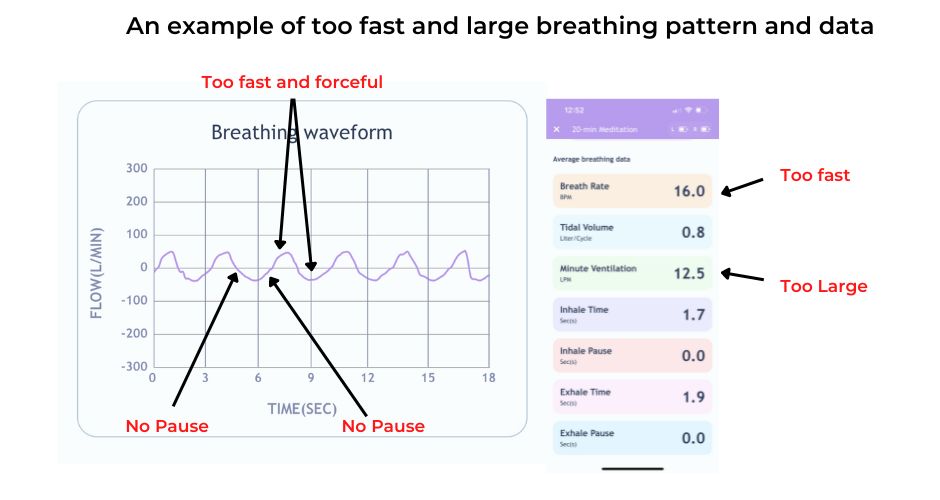
  • The breathing measurement function of the AYO BT+ from the BT+ L and BT+ E modules can capture your real-time breathing waveform while you are doing the meditation, and the waveform can be used as a constant checkpoint about how well your breathing is in terms of cycle time, flow amplitude, inhalation flow shape and pause, and exhalation flow shape and pause.
  • The breathing measurement function of the AYO BT+ from the BT+ L and BT+ E modules can provide a summary of breathing data, such as Breath Per Minute (BPM) and Minute Ventilation (MV), which are critical metrics to guide you to breathe towards your optimal breathing.

A Reference Breathing Pattern for Meditation

From an energy consumption point of view, meditation is a consistent resting state, where the body’s energy consumption is kept to a minimum so that the variations of breathing patterns for adults, such as BPM and MV could be minimum among age, gender, height, and weight than otherwise if we do physical exercises. Therefore, a common breathing pattern reference could be used by most people as a guide to practice.

A reference breathing pattern is shown below:

  • BPM: 5-6 L/Min.
  • MV: 5-6 Litres.
  • Small and gentle inhalation with a pause.
  • Small and relaxed exhalation with a pause.
  • The Ratio between Inhalation to Exhalation: 1:>=2.

Note:

  • If you can comfortably achieve the above, your breathing is regarded as in line with the physiological norm.
  • Both the Inhalation and the Exhalation include pause time.
  • Lower BPM and MV are even better, such as BPM of 2-3, and MV of 2-3. However, only a small number of advanced breathers could achieve them.

AYO BT+ Assisted Breathing During Meditation

To boost the quality and benefits of your meditation, here is a sequence of steps you may follow or use as a reference:

  • Find a quiet and comfortable place.
  • Ideally, do meditation before your sleep each night.
  • Sit with a straight back, either sit on a floor with legs crossed on each other or sit on a chair, with both feet flat on the floor.
  • Get your AYO BT+ respirator and adjust the BTi to a low setting, such as 2 to 4.
  • Wake up the BT+ modules and run the App.
  • Run the Meditation exercise.
  • Place your mobile phone in front of you at a height that allows you to look straight ahead and maintain a straight back.
  • When inhaling, push the diaphragm down then hold it still until you feel like exhaling.
  • At the start of exhaling, simply relax the diaphragm and let it return to its resting position by itself without you driving it.
  • Keep in that position until you have a slight air hunger and feel like inhaling.
  • Repeat the breathing cycle, pay attention to the following:
    • Relax your full body all the time, especially keep your shoulder low and relaxed.
    • Observe your breathing waveform periodically, and try to make each inhalation small and gentle, and exhalation small and relaxed.
  • Repeat the breathing cycle, imaging the following:
    • Let go of everything except your calm and relaxing breathing, in and out.
    • No more responsibility whatsoever, just enjoy the moment alone by yourself.
    • You are so free, so relaxed, think nothing, do nothing, just breathe lightly and gently, in and out.
    • You are so free, free as a bird and soaring in the sky.
    • You are so free, no worries, weightless, floating in the universe, just breathe lightly and gently, in and out.

Wishing you a satisfactory meditation with AYO BT+ every day and getting the most out of it!

Diaphragmatic Breathing Training in Jogging with AYO BT – Part 2

Continued from Diaphragmatic Breathing Training in Jogging with AYO BT – Part 1 

In Part 1, we introduced training in the Default configuration which focuses on training and activating Inspiratory muscles. 

In Part 2, we will introduce training in 3 optional configurations.  

Training with AYO BT in Option 1 configuration – Expiratory Focus  

Diaphragmatic Breathing Training in Jogging -Training with AYO BT in Option 1 configuration – Expiratory Focus

In Option 1 configuration, the BTi in the Default configuration is fitted to the right side of the mask, and no module is fitted to the left side of the mask.

In this configuration, the BTi on the right side will independently limit the exhalation by adjusting the air opening so that, the exhaled air is restricted thus increasing the resistance to exhale.

AYO BT in this configuration will train and activate exhalatory muscles.

When properly adjusted, the training will promote the following to your breathing:

  • A slower and longer exhalation.
  • When you breathe slower and longer, you could easily breathe through your nose, and more importantly, expiratory diaphragm muscles are more engaged.
  • When the exhalation is slowed, depending on the exercise intensity and the BTi setting, it can create some air hunger, so even if you perform a full stroke of diaphragm movements, hyperventilation can be avoided.

Reference Training Program

1. Adjust the BTi setting to the level suitable for easy jogging and your current fitness.

As a general guide:

  • For advanced Nose-breather, set to Level2 to level4.
  • For novice Nose-breather, set around level4 to 6.

2. Jog between 15 to 25 minutes.

  • Exhale slowly and steadily.
  • Press the belly slightly feeling the pressure it works against.
  • At the end of the exhalation, simply relax the belly and let go of it.
  • This starts the inhalation.
  • Keep the belly relaxed until it is around the neutral position.
  • Without pushing it further outward, pause the breath a bit, and then time to start the slow exhalation again.
  • This training is meant to have a shorter inhalation and a much longer exhalation.
  • When finishing the exercise, keep wearing it for at least 5 minutes while doing some stretches.

Training with AYO BT in Option 2 configuration – Inspiratory + Expiratory

In Option 2 configuration, the BTi in the Default configuration is fitted to the right side of the mask, and the BTo to the left side of the mask.

In this configuration, no air will enter from the left side of the mask, and both inhalation and exhalation will go through the BTi on the right side of the mask. Therefore, by adjusting the air opening at BTi, both the inhalation and the exhalation will be restricted to the same amount, thus increasing the resistance to both inhalation and exhalation.

AYO BT in this configuration will train and activate both Inspiratory and exhalatory muscles.

When properly adjusted, the training will promote the following to your breathing:

  • A slower and longer inhalation and exhalation.
  • When you breathe slower and longer, you could easily breathe through your nose, and more importantly, both your inspiratory and expiratory diaphragm muscles are engaged.
  • When the breath is reduced, depending on the exercise intensity and the BTi setting, it can create some air hunger, so even if you perform a full stroke of diaphragm movements, hyperventilation can be avoided.
  • This training can create deep and symmetric diaphragm movement that trains both inspiratory and expiratory muscles at the same time.

Note:

No independent control for inhalation and exhalation in this configuration.

Reference Training Program

1. Adjust the BTi setting to the level suitable for easy jogging and your current fitness.

As a general guide:

  • For advanced Nose-breather, set to Level3 to level4.
  • For novice Nose-breather, set around level5 to 6.

2. Jog between 10 to 20 minutes.

  • Inhale and exhale slowly and steadily.
  • Press the belly slightly feeling the pressure it works against.
  • At the end of the exhalation, simply relax the belly and let go of it.
  • This starts the inhalation.
  • Keep the belly relaxed until it is around the neutral position.
  • Then push the belly further outward to extend the inhalation further.
  • Try to pause a bit at the end of the inhalation to allow time for the inhaled air to reach the lungs fully.
  • This training is meant to have a balanced inhalation and exhalation.
  • This exercise may put a higher load on the diaphragm, so listen to your body and slow down the run or even walk when the load becomes unbearable.
  • Alternatively, go one level up on the adjustment.
  • When finishing the exercise, keep wearing it for at least 5 minutes while doing some stretches.

Training with AYO BT in Option 3 configuration – Inspiratory* + Expiratory   

In Option 3 configuration, one BTi is fitted to the left side of the mask, and another BTi is fitted to the right side of the mask (not included in the standard AYO BT package).

In this configuration, inspiratory air will enter from both BTi on the left side and right side of the mask, and the expiratory air will still go only through the BTi on the right side of the mask. Therefore, adjusting the air opening on the right side will independently restrict the expiratory air, while adjusting the air opening on the left side will partially adjust the inspiratory air, and the other part is affected by the adjustment at the BTi on the right side of mask.

AYO BT in this configuration will focus on training and activating the exhalatory muscles while providing some degree of control on the inspiratory muscles.

When properly adjusted, the training will promote the following to your breathing:

  • A slower and longer inhalation and exhalation.
  • When you breathe slower and longer, you could easily breathe through your nose, and more importantly, both your inspiratory and expiratory diaphragm muscles are engaged.
  • When the breath is reduced, depending on the exercise intensity and the BTi setting, it can create some air hunger, so even if you perform a full stroke of diaphragm movements, hyperventilation can be avoided.
  • This training can create deep and semi-symmetric diaphragm movement that trains both inspiratory and expiratory muscles at the same time.

Note:

Independent control for Expiration but semi-independent control for inhalation in this configuration.

Reference Training Program

1. Adjust the BTi setting to the level suitable for easy jogging and your current fitness.

As a general guide:

  • For advanced Nose-breather, set to Level3 to level4.
  • For novice Nose-breather, set around level5 to 6.

2. Jog between 10 to 20 minutes.

  • Inhale and exhale slowly and steadily.
  • Press the belly slightly feeling the pressure it works against.
  • At the end of the exhalation, simply relax the belly and let go of it.
  • This starts the inhalation.
  • Keep the belly relaxed until it is around the neutral position.
  • Then push the belly further outward to extend the inhalation further.
  • Try to pause a bit at the end of the inhalation to allow time for the inhaled air to reach the lungs fully.
  • This training is meant to have a suitable inhalation resistance while focusing on the expiratory training.
  • When finishing the exercise, keep wearing it for at least 5 minutes while doing some stretches.

Diaphragmatic Breathing Training for Jogging – Part 1

Why Diaphragmatic Breathing?

The diaphragm is one of the main breathing muscles that should be used for our breathing by default. Diaphragmatic breathing training helps utilize the lower parts of the lungs that are more efficient to transport oxygen than chest (thoracic) breathing.

Efficient breathing helps better oxygen consumption by cells and tissues in the body, thus producing better sports performance as well as promoting better general health.

However, most modern people have predominant chest breathing where the lower parts of the lungs are less used, and as a result, breathing becomes inefficient, leading to less competitiveness in sports, or chronic hyperventilation in a lifetime that compromises people’s wellbeing.

In addition, diaphragmatic breathing can also achieve efficient lymphatic drainage of abdominal organs which is beneficial for your long-term health.

diaphragmatic breathing training

Here are some more general benefits this type of breathing can bring:

  • It helps you relax, lowering the harmful effects of the stress hormone cortisol on your body.
  • It lowers your heart rate.
  • It helps lower your blood pressure.
  • It helps you cope with the symptoms of post-traumatic stress disorder (PTSD).
  • It improves your core muscle stability.
  • It improves your body’s ability to tolerate intense exercise.
  • It lowers your chances of injuring or wearing out your muscles.
  • It slows your rate of breathing so that it expends less energy.

Mastering diaphragmatic breathing has a profound impact on your sports performance or your well-being in general.

Diaphragmatic Breathing Training with AYO BT in Jogging


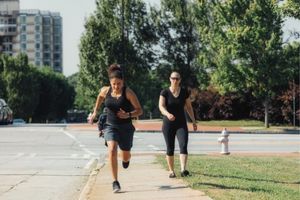
While there are many ways to train for diaphragmatic breathing, most require dedicated time and focus to train properly. For many people with a busy lifestyle, it may be difficult to find time regularly for doing this specific training. Further, commonly recommended training for the diaphragm requires you to lie on the floor with a book on the belly, or in a still position placing your hand on the belly. The main issue with this type of training is a lack of linkage to real-life day-to-day activities, let alone physical exercises and sports training. The good news is that, with AYO BT, one can combine this breathing training with one of the routine exercises shared by many – jogging, either as a warm-up before a serious training section, or using jogging as a cross-training / general fitness exercise.

The goal of diaphragmatic breathing is to move your belly outward to make space for the diaphragm to go downward when you inhale, and to move the belly inward for the diaphragm to move upward to squeeze out the air at the bottom of the lungs when you exhale.

However, even with nasal breathing, one could cause hyperventilation during diaphragmatic breathing, especially when practising a full stroke of deep diaphragmatic muscle movement aggressively and repetitively which could result in breathing too much air that exceeds the need for metabolic rate the jogging exercise imposes on the body leading to over-breathing, thus compromising the benefits offered from the exercise.

In order to achieve the full benefits of diaphragmatic breathing training while at the same time avoiding hyperventilation, the key is to control the air intake according to the intensity of the exercise, and this is exactly what AYO BT is designed for.

Training with AYO BT in Default configuration – Inspiratory Focus

In the default configuration, where the BTi is fitted to the left side of the mask, and the BTo to the right side of the mask, the BTi can limit the air intake by adjusting the air inlet so that, the air is restricted thus increasing the resistance to breathe.

AYO BT in this configuration will focus on training and activating Inspiratory muscles.

When properly adjusted, the training will promote the following to your breathing:

  • A slower and longer inhalation: if you try to breathe very hard, you wouldn’t get enough air as you would normally expect without wearing the respirator, and this is because the inhalation resistance through the small inlet at a high flow rate will be too big to breathe, thus leading you to breathe slower and longer.
  • When you breathe slower and longer, you could easily breathe through your nose, and more importantly, your diaphragm is more engaged.
  • When the air intake is reduced, depending on the exercise intensity and the BTi inlet setting, it can create some air hunger, so even if you perform a full stroke of diaphragm movements, hyperventilation can be avoided.

Diaphragmatic breathing Patterns

In comparison with Chest breathing, diaphragmatic breathing is generally slower and longer. However, it doesn’t mean that both inhalation and exhalation are equally slow and long, this is particularly true when doing certain breathing exercises.

The following training programs outline two of many possible options, and once mastered the techniques, you can make an adaptation to tailor to your specific needs and situations at ease.

Overtime with this training, you would expect the following distinctive benefits:

  • Be able to use the diaphragm to breathe naturally.
  • Stronger breathing muscles.
  • Less breathlessness in high-intensity exercise.
  • Improved breathing efficiency.
  • Improved stamina and fitness.

Reference Diaphragmatic Breathing Training Program

Diaphragmatic breathing pattern focusing on Inspiration timing: Diaphragmatic breathing pattern focusing on Expiration timing:
1. Use nasal breathing only during the entire exercise. 1. Use nasal breathing only during the entire exercise.

2. Adjust the BTi Setting to the level suitable for easy jogging and your current fitness. As a general guide:

  • For advanced Nose-breather, set to Level2 to level4.
  • For novice Nose-breather, set around level4 to 6.

2. Adjust the Inlet Setting 1 – 2 settings above the Inspiratory timing focused training.


3. Jog between 15 to 30 minutes.

  • As a general guide, try to breathe slower and longer during inhalation and exhalation.
  • Try to make the Inhalation constantly in 4 running steps while 6 steps for exhalation.
  • You may exhale quicker down to 4 steps if the jogging intensity varies, such as running up a hill, but try not to exhale shorter than 4-steps while keeping inhalation constant at 4-steps.
  • At the start of each inhalation, try to soften the urge to breathe hard.
  • Simply let your abs relax to utilize the changeover momentum from the end of Exhalation followed by a slow and long inhalation. You should feel a ‘dropping’ diaphragm sensation and this is a good sign of you are doing it right.
  • From the start to 2/3 of each exhalation, relax your abs to let the air out effortlessly.
  • At the last 1/3 of each exhalation, press the abs inward to squeeze out the remaining air in the bottom of the lungs.
  • Try to pause a bit at the end of the inhalation to allow time for the inhaled air to reach the lungs fully.
  • If the Setting doesn’t give you sufficient resistance, that probably means that your fitness level is higher, or the intensity is not sufficient which requires a lower Inlet Setting to further reduce the air intake until your breathing is nicely slow and long.
  • The BTi should be adjusted to lead you to breathe slower and longer in order to breathe in enough air to sustain the training intensity, in the process your diaphragm is engaged while it cooperates naturally and accordingly to your breathing.


3. Jog between 15 to 30 minutes.

  • As a general guide, try to breathe slower and longer during inhalation and exhalation.
  • Try to make the Exhalation constantly in 6 running steps or longer while 2 steps for Inhalation.
  • You may inhale longer up to 3 steps if the jogging intensity varies, such as running up a hill, but try not to inhale longer than 3-steps while keeping Exhalation constant at 6-steps or longer.
  • At the start of each inhalation, try to soften the urge to breathe hard..
  • Simply let your abs relax to utilize the changeover momentum from the end of Exhalation followed by a slow and long inhalation. You should feel a ‘dropping’ diaphragm sensation and this is a good sign of you are doing it right.
  • From the start to 2/3 of each exhalation, relax your abs to let the air out effortlessly.
  • At the last 1/3 of each exhalation, press the abs inward to squeeze out the remaining air in the bottom of the lungs.
  • Try to pause a bit at the end of the inhalation to allow time for the inhaled air to reach the lungs fully.
  • If the Setting doesn’t give you sufficient resistance, that probably means that your fitness level is higher, or the intensity is not sufficient which requires a lower Inlet Setting to further reduce the air intake until your breathing is nicely slow and long.
  • The BTi should be adjusted according to the exercise intensity so that your exhalation is maintained at 6-steps or longer, while your inhalation is maximum 3-steps or shorter.


Pursed-lip Breathing Replacement with AYO BT

What is Pursed-lip Breathing?

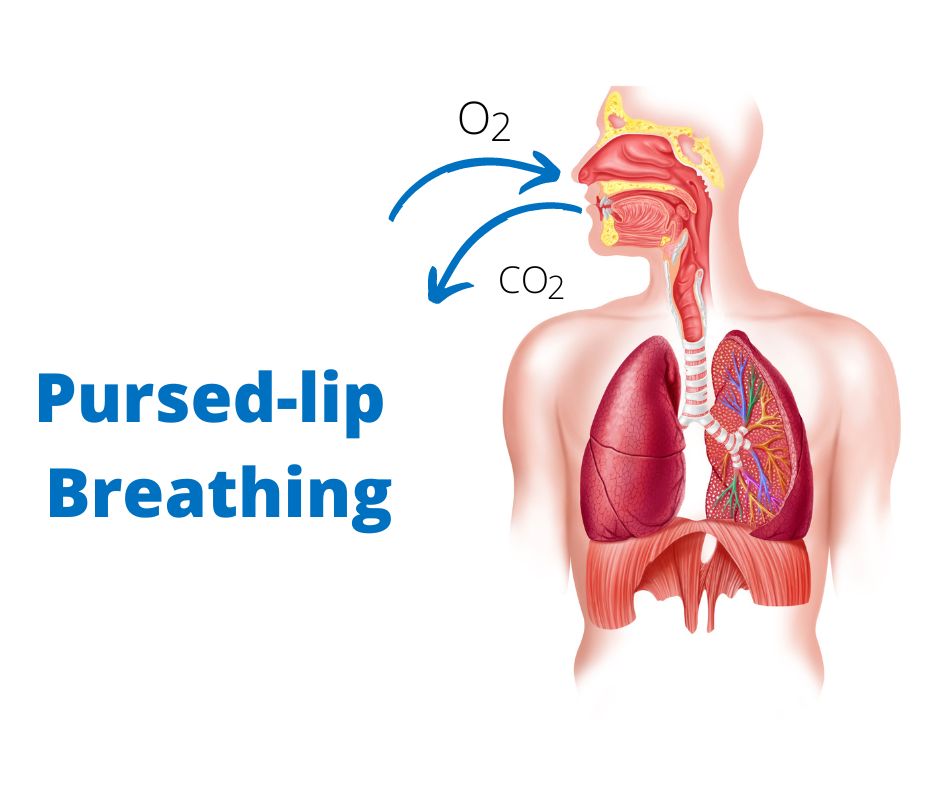
Pursed-lip breathing is a breathing technique where the lips are pursed to form a smaller airpath like a short straw which creates breathing resistance and back pressure during exhalation. This created back pressure helps keep the collapsed airways open so that carbon dioxide that’s trapped in the lungs can get out. This technique is particularly useful for COPD which usually causes the airway to collapse, and it is a common breathing technique as a part of pulmonary rehabilitation programs.

Pursed-lip Breathing

What is the common procedure to perform Pursed-lip Breathing?
  1. Breathe in through the nose using the diaphragm during inhalation.
  2. Purse the lips as if to whistle during exhalation.
  3. Slowly exhale through pursed lips. Some resistance should be felt.
  4. It should take about twice as long to exhale as it does to inhale.
What is the shortcoming of the Pursed-lip Breathing?

The key shortcoming of pursed-lip breathing is the repeated process of alternating from nose breathing to mouth breathing, where it requires constant effort on the part of the patient to control the pursed-lip which makes it a bit hard to adapt correctly and consistently over an extended time. Therefore, pursed-lip Breathing is not ideal if the exercise is long which may be needed for some COPD patients.

Normal Configuration of AYO BT Breathing Trainer

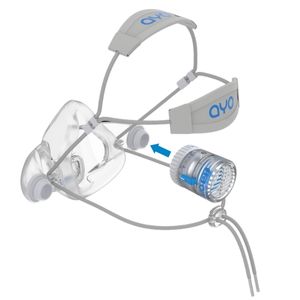
In the normal configuration, AYO BT consists of an Inhalation module BTi on the left side of the mask, and an Exhalation module BTo on the right side of the mask. In the configuration shown below, it trains inspiratory muscles when the air inlet in the BTi is adjusted small enough to create inhalation resistance while BTo provides an Exhalation valve to ease exhalation. In this configuration, the inspiratory resistance can be adjusted independently:

How to Use AYO BT to Improve Pursed-lip Breathing – Option 1

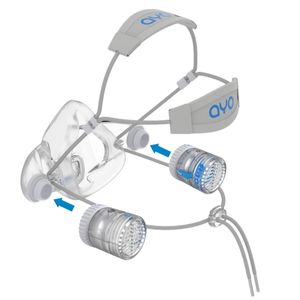
For COPD breathing training, where an increased exhalation resistance and pressure are needed, the normal BTo module can be replaced by another BTi module as shown below, so that an adjustable air outlet can be achieved to vary the back pressure of the lung during exhalation: 

In this configuration, the BTi on the right side will independently limit the exhalation by adjusting the air opening so that, the exhaled air is restricted thus increasing the resistance to exhale. 

AYO BT in this configuration will train and activate exhalatory muscles. 

How to Use AYO BT to Improve Pursed-lip Breathing – Option 2

For applications requiring symmetric adjustment of inhalation and exhalation, one can fit the BTi module on the Right side of the mask, and fit the BTo on the Left side of the mask as shown below:

Note: In this configuration, the inspiratory and expiratory resistance are adjusted at the same time and no independent adjustment is possible.

In summary, when configured and adjusted properly, AYO BT can be used as an improved method for Pursed-lip Breathing. In particular, it can be configured:

  • to train both the inspiratory and expiratory breathing muscles.
  • to provide exhalation resistance/back pressure for a long period without the control effort from the patient as for pursed-lip breathing.
  • to breathe in the entire exercise through the nose only, which also helps normalize breathing by using the diaphragm.

Related Article: How to Use AYO BT as an Alternative to Alternate Nostril Breathing

0
0
Your Cart
Your cart is emptyReturn to Shop