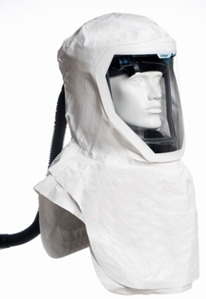
Why Paper Masks/Non-Powered Respirators Are Inadequate for High-Exertion Work?

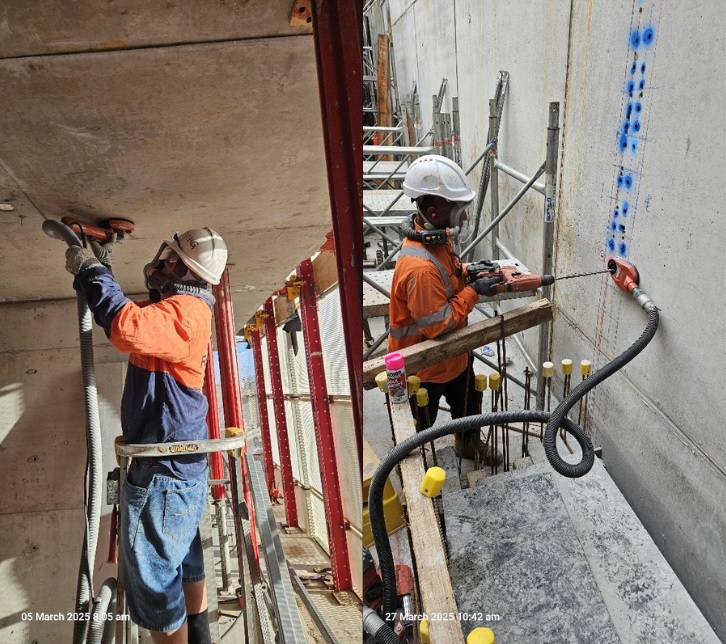
Q1: What are the works regarded as high exertion?

For examples: most construction/tunnelling work involving frequent bending and heavy lifting, operating an impacting drill on a concrete wall, sanding over a ceiling, etc.

Q2: Why aren’t paper masks or non-powered respirators sufficient for high-exertion work?

A: They rely on a tight seal to the face, which is hard to maintain during high-exertion tasks. They are also harder to breathe than powered respirators, especially when dust is loaded.

Q3: Why isn’t fit testing for non-powered respirators effective to ensure a good fit during high-exertion work?

A: Fit testing ensures a proper seal only in a controlled environment, such as in an office. However, even if having a good fit in the test, physical strain during heavy work causes sweating, facial shifts, and frequent head movements, which can shift the mask fit and make a good fit into a bad fit. Workers can’t readjust masks mid-task (e.g., while handling tools, or needing focus on complex or risky job), leading to gaps and rendering protection ineffective.
Relying on fit testing for good protection during high-exertion work is in reality just an act of Self-comfort or Self-deception.

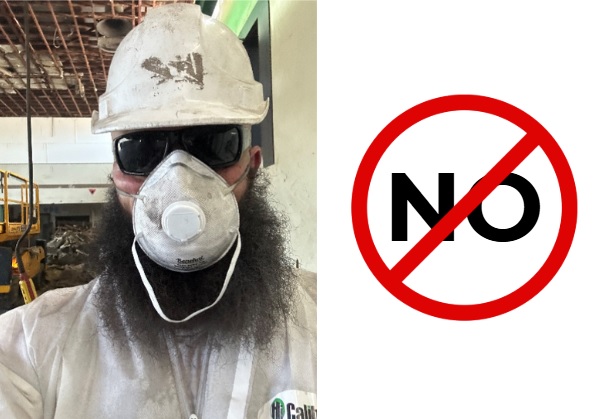
Q4: Why are beards a problem for non-powered respirators?

A: Facial hair prevents a secure seal, allowing contaminants to bypass the mask. Clean-shaven is required, but not always practical, e.g. due to strong personal preference or religion, stubble grows mid-day or late in a shift.

Q5: Why choose a loose-fitting PAPR instead?

A: Loose-fitting PAPRs don’t require a tight seal to work, the protection is ensured via positive pressure in the breathing zone.

They tolerate mask shifting during movement, no need for fit testing and adjustments, letting workers focus – ideal for high-exertion work or workers with beards.

They reduce breathing effort compared with a non-powered respirator, thus can improve comfort.

They also provide fresh airflow – reduces heat buildup and fogging.

Q6: Do Loose-fitting PAPRs provide better protection than well-fitted non-powered respirators?

A: Yes. Most certified loose-fitting PAPRs can provide at least 5 times better protection for a bearded worker than a well-fitting nonpowered respirator for a clean-shaven worker.

Q7: What type of Loose-fitting PAPRs are most suitable for High-Exertion work?

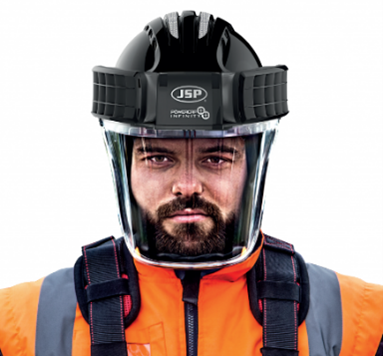
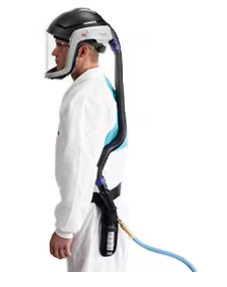
A: PAPRs that hinder the work: belt-mounted PAPRs with hoses, helmet mounted PAPRs (top heavy).

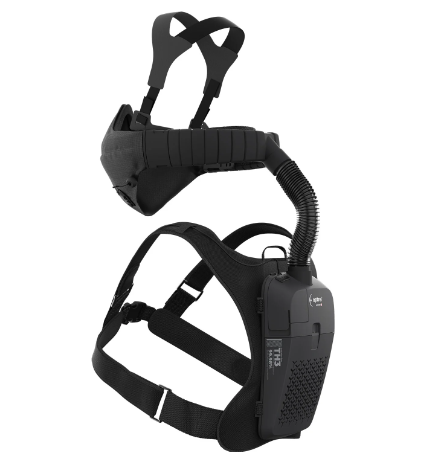
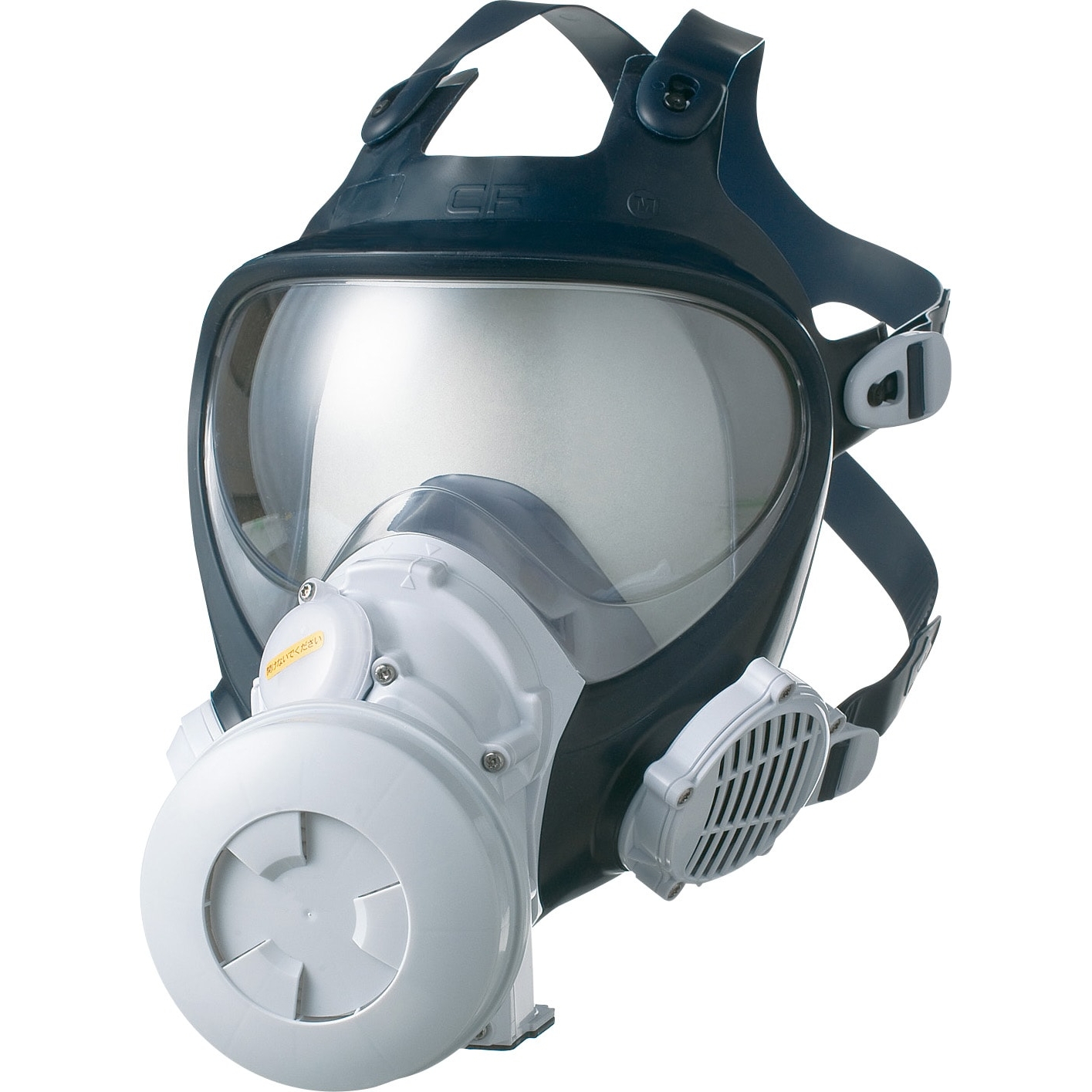
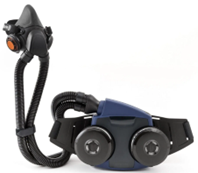
Around-neck Loose-fitting PAPRs are most suitable, as they offer best mobility, can be worn like a non-powered respirator, such as Aimwell® AYO™ WX FFM-LF Loose-Fitting Full-Face PAPR System.

Conclusion: For High-Exertion tough jobs, Loose-fitting PAPRs ensure safety, comfort, and focus. Non-powered masks risk failure when it matters most. Around-neck Loose-Fitting PAPRs are most suitable among all types of loose-fitting PAPRs.
Respirator use: to shave, or not to shave, that depends

Common Requirement on Facial Air

Powered Air Purifying Respirator (PAPR) for beards

The Question here refers to respiratory protection when wearing a mask or a respirator.

Here, the ‘respirator’ can be categorized as an Air Purifying Respirator (APR) and a Powered Air Purifying Respirator (PAPR).

Within PAPRs, we have Tight-fitting PAPRs and Loose-fitting PAPRs.

Here, ‘tight-fitting’ means a tight facial seal between the respirator and the skin as intended by design to prevent leaks; and ‘loose-fitting’ means a partial seal between the respirator and the skin as intended by design to relax the fitting allowing some leaks.

Typical tight-fitting respirators involve an elastomeric facial cushion, and typical loose-fitting respirators involve a helmet, a visor, or a hood.

Except for Loose-fitting PAPRs, clean-shaven is the common requirement for wearing a tight-fitting respirator, especially a paper mask or an APR.

The reason is simple:

We want all the hazardous contaminants to be blocked by the filter media with a mask or respirator. To ensure that, we want to ensure no gap between the mask/respirator and your facial skin. With facial hair, such as a beard, your mask or the respirator cushion will contact your beard first instead of your skin, leaving a gap for the contaminants to bypass the filter media to be sucked under negative pressure in the mask during inhalation.

So yes, with a negative pressure mask or respirator (APR), you must be clean-shaven to achieve the expected protection, and there is no question here, period.

Powered Air Purifying Respirator (PAPR) for bearded people

Loose-fitting PAPRs are suitable for bearded people, or are they?

Loose-fitting PAPRs are designed not to rely on a tight seal to ensure protection, instead, they rely on positive pressure generated by the PAPR in the breathing zone to block outside contaminants from getting through the gaps in the loose-fitting partial seal while the PAPR sucks air via a filter.

To get it to work properly, the blower needs to produce all the flow for the wearer to breathe, and yes, if the PAPR can achieve it, it is indeed suitable for the bearded wearer or the wearer with facial hair.

However, there may be a danger of misconception here that loose-fitting PAPRs are suitable for bearded wearers without considering the limitations. The fact is that the suitability is highly conditional and can be affected by several factors for a given application, such as:

  • How long is the facial hair and where is it located?
  • How powerful is the loose-fitting PAPR being used?
  • How is the airflow controlled? Will the flow get less when the built-in battery level is low?
  • How heavy is the physical work demanding on your breathing?
  • How dense are the contaminants?
  • What is the maximum exposure limit for the contaminants?

Most of these factors are related to the single most essential characteristic of PAPRs: Positive Pressure in the mask/breathing zone. As long as positive pressure is maintained all the time, there will be no leak issue from facial hair, as the air tends to be pushed out of the mask instead of being sucked in.

Now the question comes as to how positive pressure can be always maintained.

In a theoretical scenario, as long as the airflow generated from the blower in the PAPR is not less than the inhaled flow, positive pressure can be maintained. But in practice, for loose-fitting helmets, visors, or hoods, the leak paths can vary so that not all the flow from the blower can reach the breathing zone. Some may well leak out before reaching the breathing zone.

Therefore, the PAPR needs to be designed in such a way that it generates a flow more than what the wearer can breathe plus the flow leaked over the loose-fitting interface.

How much air can be generated from the PAPR is a matter of the blowing power of the PAPR; whereas, how much air you inhale depends on how hard you need to breathe to do your job.

The reality is that the maximum flow a PAPR can generate is limited and will also be reduced from its peak when the battery level becomes lower after a certain time of use.

Also, most loose-fitting PAPRs deliver constant flow. When the flow rate is high, so will the battery capacity, making the battery larger and heavier, and this will affect wearability and cost.

On the other hand, if your job is highly physical and causes heavy breathing, your inhaled air could outrun what the blower can deliver.

The other important factor to consider is the protection factor requirement of the PAPR for doing certain work. The concentration of the contaminants and the maximum exposure limit will determine the minimum protection factor of the PAPR. Typically, loose-fitting PAPRs have a lower protection factor than tight-fitting PAPRs. When the contaminant exposure limit demands a PAPR with a high protection factor, loose-fitting PAPRs may not be suitable, regardless of whether you have a beard or not.

So to make sure a given loose-fitting PAPR is suitable for any given application, especially for a bearded person, a careful assessment is needed case-by-case.  

Can Tight-fitting PAPRs be used for bearded people?

When the flow capacity of the blower, the filter used, and the system leak are equal, tight-fitting PAPRs generally have a higher protection factor than loose-fitting PAPRs.

This is because during a negative pressure condition, when the inhaled air outruns the air delivered from the blower, a tight-fitting mask will let in much less outside air compared with a partially sealed loose-fitting covering.

Typically, a tight-fitting mask is made of soft silicone rubber that contacts the front of the face, and it is elastic enough to adapt to the contour of the face to achieve a good seal. In contrast, a loose-fitting covering typically uses elasticized fabric at the contact interface, and it may cover a much larger area, such as the head, the face, and the neck, than only the front of the face.

A tight-fitting PAPR has a much better seal over a relatively small area, whereas a loose-fitting PAPR has a partial seal over a rather large area, resulting in the leak from tight-fitting PAPAs being much less than from the loose-fitting PAPRs, hence, the tight-fitting PAPRs have a higher protection factor.

Now, if the beard is short enough such that the silicone cushion from the tight-fitting PAPR can still achieve a better seal than loose-fitting PAPRs, there is no reason why the tight-fitting PAPR can’t work as effectively, if not better than a loose-fitting PAPR, given the loose-fitting covering has more leaks.

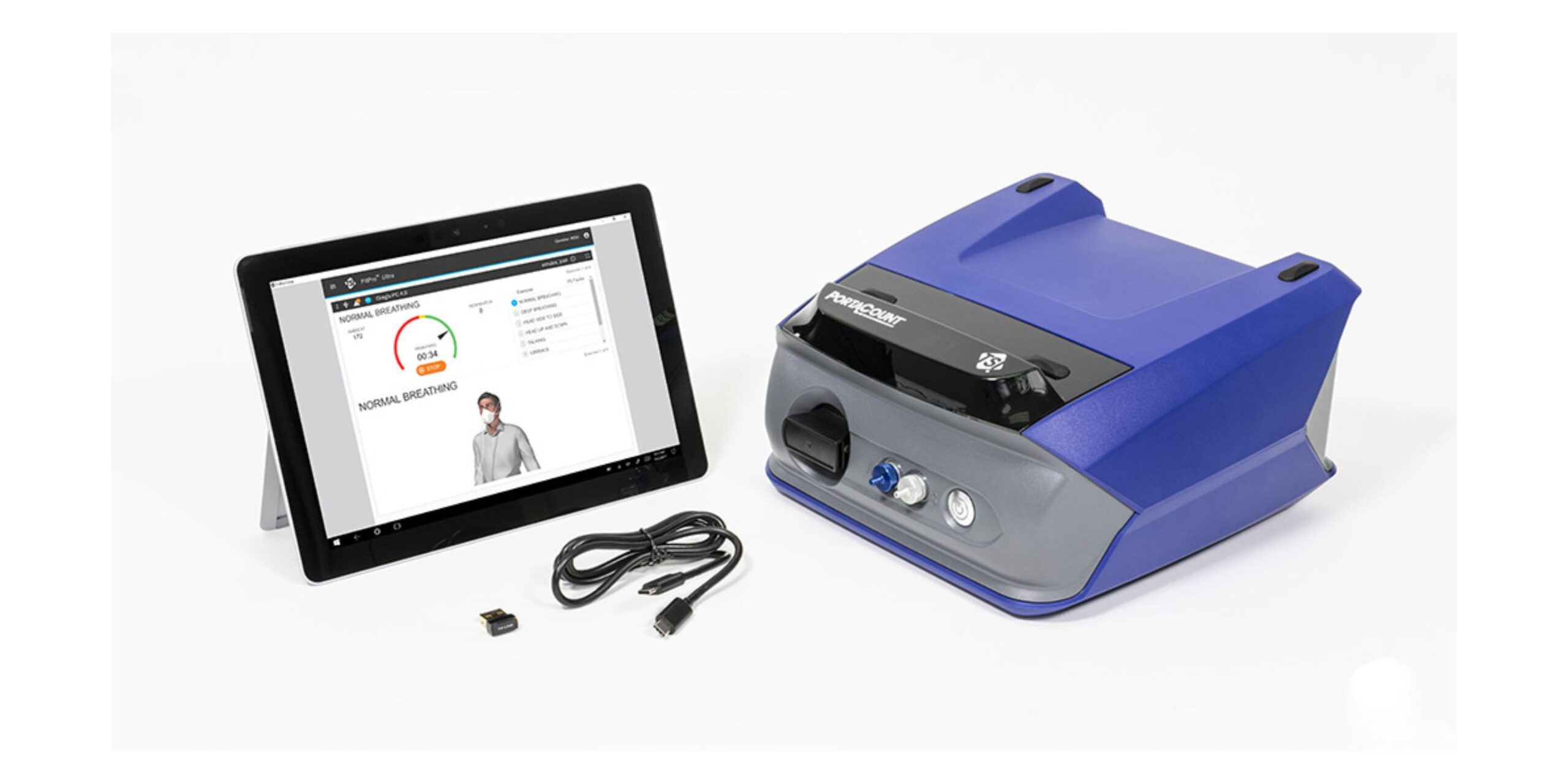
As an example, AYO WX HFM Standard Half-Face Mask PAPR System, which has a well-designed silicone facial cushion, was tested on a light-beard person achieving an average PortaCount fit factor over 2000 when powered on, similar to a clean-shave person under the same test conditions and far better than a non-powered respirator of typically only between 100 to 500. The key reasons AYO WX PAPR can achieve this are due to its powerful peak flow of over 200 L/min, which is similar to most loose-fitting PAPRs, and also due to its positive pressure ensured by the responsive flow control that can quickly accelerate the blower output anytime when the inhalation increases.

So to answer the question, yes, a tight-fitting PAPR can be used with a light-beard person similarly to a loose-fitting PAPR, provided the facial cushion is well designed, the beard is reasonably short, the flow generation is powerful enough, and most importantly, the ability to ensure positive pressure inside the mask.

Having said that, the EU highest class TH3 for loose-fitting is not ideal for work conditions that require a minimum protection factor of 1000 with heavy breathing, as once the breathing outruns the blower, negative pressure will be created in the breathing zone, causing leaks to contaminants. In this situation, a tight-fitting PAPR is more appropriate, and loose-fitting PAPRs are normally limited to light to moderate workloads for a protection factor of up to 500.

In Summary, here are our recommendations for bearded people

  • You must be clean-shaven when you wear a negative-pressure respirator.
  • You should be clean-shaven whenever you can, even if you wear a PAPR.
  • If you insist on keeping your beard, you must use a PAPR and make sure:
    • Trim your beard to a minimum.
    • Use for work with light to moderate exertion.
    • Charge the battery in full before using the PAPR.
    • Avoid using blocked filters – change filters frequently.
    • Try to use a PAPR that can produce more air.
    • Try to use a PAPR with a minimum leak path and an elastomeric mask cushion.
    • Try to use a PAPR with powerful and intelligent breath-responsive flow control like an Aimwell® AYO™ WX.

$1,000 SafeWork Small Business Rebate

Get $1,000 to Improve Workplace Safety: SafeWork Small Business Rebate & Powered Respirators

Workplace safety is a priority for any business, especially in high-risk industries where workers are exposed to hazardous air contaminants. If you are a small business owner in New South Wales, you may be eligible for the SafeWork NSW $1,000 Small Business Rebate, which can help cover the costs of safety improvements, including powered respirators.

What Is the SafeWork NSW Small Business Rebate?

The $1,000 SafeWork NSW Small Business Rebate is designed to support small businesses and sole traders in creating a safer work environment by subsidizing the cost of safety equipment. This initiative aims to prevent workplace injuries and illnesses by encouraging businesses to invest in high-quality protective gear.

Why Invest in a Powered Respirator?

A powered respirator generally provides better protection than a non-powered respirator, especially when you have facial hair, such as a beard.

How to Apply for the Rebate

If you’re considering purchasing a powered respirator for your workplace, follow these steps to apply for the SafeWork NSW $1,000 Small Business Rebate:

  1. Check Your Eligibility – You must be a small business owner or sole trader in NSW with a valid Australian Business Number (ABN).
  2. Complete a SafeWork NSW Safety Workshop – Participation in an eligible SafeWork NSW safety workshop or webinar is required.
  3. Purchase Eligible Safety Equipment – Invest in an approved powered respirator or other qualifying safety items.
  4. Submit Your Application – Provide proof of purchase and complete the application process online via the SafeWork NSW website.

Breathe Safer & Better with Aimwell

Protecting your employees from respiratory hazards is essential for their well-being and productivity. By utilizing the SafeWork NSW Small Business Rebate, you can invest in a high-quality powered respirator and ensure a safer workplace for your team.

Aimwell® AYO™ WX series powered respirators are world-leading around-neck PAPRs. Complied with AS/NZS 1716: 2012 as PAPR P3, the highest protection class, AYO™ WX is designed for demanding breathing protection in dusty or toxic industrial settings while providing unprecedented mobility and exceptional value for money.

Maximize your NSW SafeWork small business rebate with this carefully curated AS/NZS 1716 compliant PAPR bundle that can provide you with the best protection most practically and flexibly.

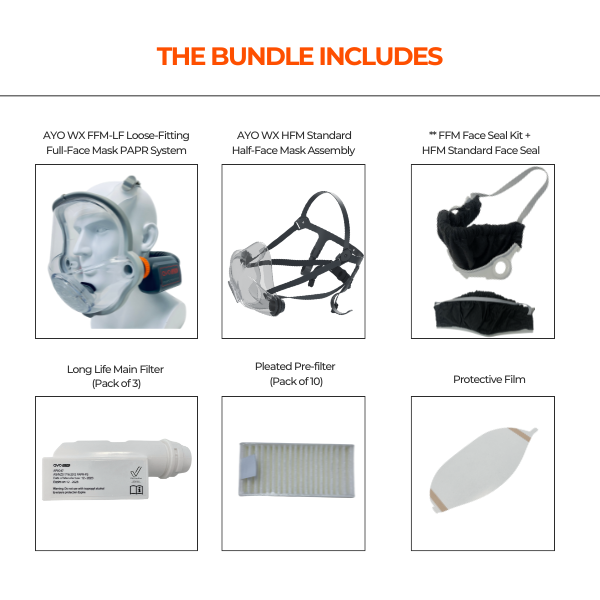
The bundle includes:

  • 1 x AYO WX FFM-LF Loose-Fitting Full-Face Mask PAPR System.
  • 1 x AYO WX HFM Standard Half-Face Mask Assembly.
  • 1 x Long Life Main Filter (Pack of 3)
  • 1 x Pleated Pre-filter (Pack of 10)
  • 1 x Protective Film (Pack of 10)
  • Either 1 x FFM Face Seal Kit + HFM Standard Face Seal (1 piece) OR One extra Long Life Main Filter (Pack of 3)

Is Fit Testing for Respirators a Flawed Practice?

Fit Testing is an industry practice to ensure that a respirator fits well to a wearer, aiming to achieve a good facial seal and protection.

Typically, a fit test is done in a controlled environment with scientific test equipment while performing a predefined test protocol, and it can effectively reveal how the respirator fits at the time of testing.

However, the real world of industrial work can be very different from and harsher than a short moment in a comfortable office, thinking about the following scenarios:

  • While doing tunnelling work, formwork in high-rise buildings, crawling under a roof, workers need to focus on the tough work itself or danger around them other than minding the fit of a respirator, which is prone to shift on the face in these works, compromising the fit.
  • Tasks associated with frequent moving around, high exertion, and sweating while using tools involving both hands can not ensure a good fit of the respirator once it shifts on the face.
  • For young male workers, even if they are clean-shaven in the morning, they may grow stubble enough to break a good seal, making a properly fit-tested respirator leak.
In the above scenarios, fit testing is ineffective and even flawed in ensuring a good fit and seal, even if it passed a fit test initially.

Having said that, fit testing has its unique place in controlling the effectiveness of respirators.

Compliance-wise, fit testing is a necessary industry practice, it ensures the respirator properly seals to the worker’s face under controlled conditions, verifying that the selected model and size provide adequate protection.

Fit Testing can also reveal respirator system leaks or Total Inward Leakage (TIL).

However, fit testing is primarily effective as a baseline for non-powered respirators. It also tends to be more effective in healthcare settings than in a harsh industrial environment, where in practice, workers’ activities in physical challenging conditions may reduce or even void its effectiveness.

We need solutions to balance regulatory requirements or intent with practical considerations.

Possible solutions:

  • Engineering controls (e.g., reducing airborne hazards).
  • Using respirators that are less prone to dislodging, like a full-face mask versus a half-mask.
  • Using a suitable PAPR which does not rely on a tight seal to work, such as a loose-fitting PAPR.

In most cases, a suitable PAPR is your best option to ensure good protection if you have been using non-powered respirators.

However, traditional PAPRs have the following practical issues:

  • Poor wearability and mobility associated with long hose waist-mount type, top-heavy helmet-mount type, and front-heavy face-mount type.
  • Difficult to clean and maintain.
  • Prohibiting high costs.

The great news is that, Aimwell® AYO™ WX series around-neck PAPRs have dramatically improved all these problems.

The series comprises a selection of low-profile half-face and full-face mask assemblies and a selection of easily detachable powered units worn around the neck, available in both tight-fitting and loose-fitting configurations, no hose, no belt, no hassles.

Certified by CMI ProdCert, this award-winning PAPR series offers the highest-in-class protection (PAPR P3), breakthrough mobility and flexibility, ease of use and maintenance, with exceptional value for money.

Can Facepieces be Loose-fitting?

In the area of WHS on respiratory protection, there are two common issues:

1. Workers with facial hairs, such as a beard, present an issue when selecting a proper respirator for respiratory protection, as tight-fitting PAPRs are not recommended, which limits the choice of selection.

2. Even if workers are clean-shaven, for many organizations, the annual fit-testing is a pain and burden, as it is time-consuming and costly, especially when the workforce is large or has a high turnover rate.

However, although loose-fitting PAPRs like 3M Versoflo are a good fit for some niche applications, it is by no means the most suitable solution for many other work conditions, such as:

  • Works that require frequent heavy physical exertions and movement, the headtop, hose and belt-mounted heavy Power unit are quite troublesome.
  • Works that need frequent donning and doffing, PAPRs with headtop+hose+belt-mounted Power units are pain and nonsense for productivity.
  • For very dusty works, such as stone cutting and grinding, bulky PAPRs like 3M Versaflo are difficult to clean daily.
  • Works that don’t need head protection, PAPRs that must work with a headtop are overkill or not convenient.
  • Work conditions that need higher protection that most loose-fitting PAPRs can’t provide.
  • PAPRs like 3M Versaflo are quite expensive and not an economical and value-for-money solution for many applications.

All the above shortcomings could be resolved by PAPRs with facepieces without helmets, hose, and belt-mounted Power units, provided the facepieces of either half-face or full-face can be both tight-fitting and loose-fitting, such that they don’t require a fit test when a lower level of protection can be accepted, but can provide higher protection when fit-tested.

Here comes the question of this article: Can Facepieces be loose-fitting?

If we refer to AS/NZS 1715-2009, it defines both half facepiece and full facepiece as tight-fitting devices.

The Standard also demands a suitable fit test to be carried out for RPE with a tight-fitting facepiece.

Note that, the definition of a fit test requires testing the fit during the Power Off mode of a PAPR. Surely, with hairs present between the facepiece and the facial skin, the fit test will fail miserably.

Therefore, the Standard goes further by stating that no one who requires respiratory protection shall wear either a full facepiece or half facepiece RPE over a beard.

Aimwell as a designer and manufacturer of respirators disagrees with the Standard in this overly general, absolute, and out-of-date statement.

Here is our rationale:

  • Facepieces don’t have to be tight-fitting to provide good protection. Powered respirators normally rely on generating positive pressure in the facepieces to achieve protection. Even AS/NZS 1715:2009 acknowledges that positive pressure RPE may diminish the effect of poor facial fit.
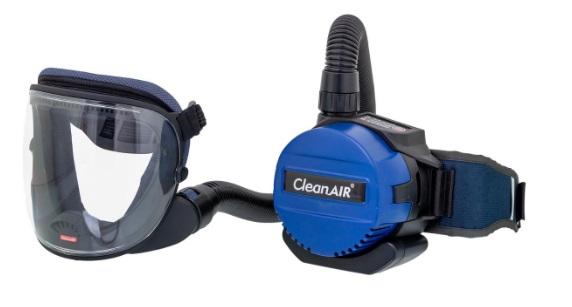
  • Recent products from Europe show both half facepieces and facepieces loose-fitting PAPRs. For example, Optrel Swiss Air System and CleanAIR Unimask for Basic PAPR.

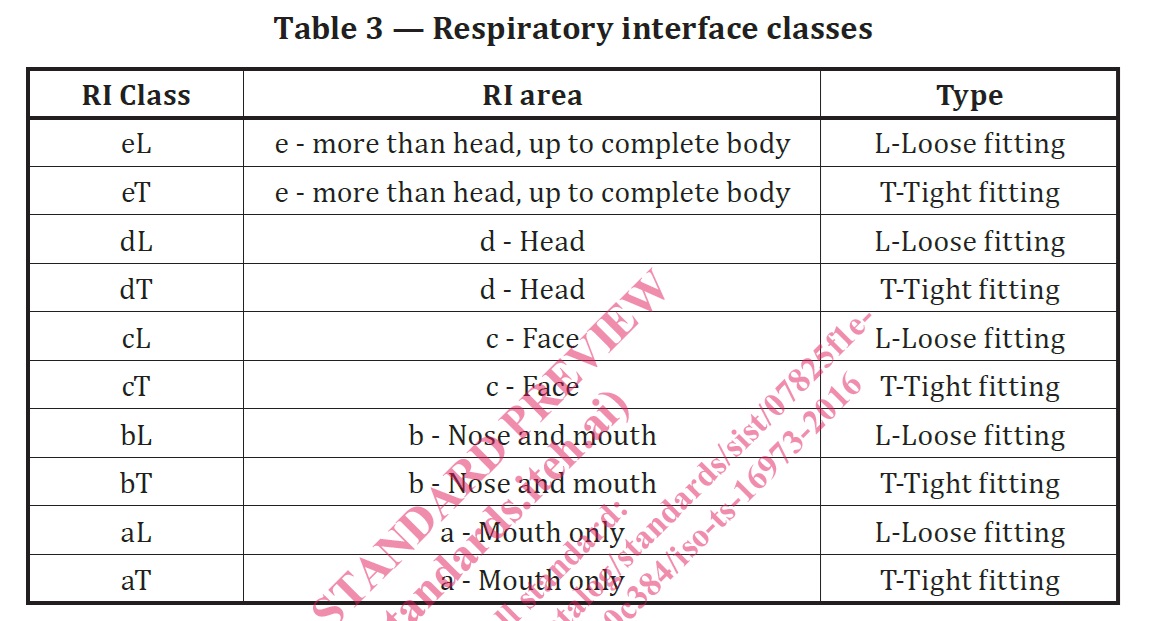
The new ISO respiratory standard ISO 16973-2023 specifies Respiratory Interface Classes with loose-fitting for a few types of facepieces as below:

  • We have repeatable fit test data at Power On mode for our facepiece-based PAPR AYO WX, and our data show a similar fit factor for a bearded person to a clean-shaven person, indicating good protection for our PAPR on a person with facial leaks, and demonstrating that PAPRs could provide good protection without a tight-fitting.
  • Therefore, we can expect a suitable PAPR with a loose-fitting facepiece to provide a good level of protection, although it may not provide the same protection as a tight-fitting PAPR when the pressure in the facepiece becomes negative.
  • Further, we have the view that a tight-fitting PAPR could be used as a loose-fitting PAPR provided that we accept the protection level is less than the PAPR with a user being clean-shaven and properly fit-tested.
The Total Inward Leakage (TIL) test clause specified in AS/NZS 1716:2012 for PAPRs doesn’t differentiate between loose-fitting and tight-fitting, as only Power On mode is used. As such, PAPRs with head covering, which are considered loose-fitting PAPRs, can achieve PAPR P3 protection class if the TIL result is within the PAPR P3 level, the highest level a tight-fitting PAPR can reach. This doesn’t sound right as we know loose-fitting PAPRs normally provide less protection than properly fit-tested tight-fitting PAPRs when the pressure goes negative in the breathing zone, and this is perhaps a key shortcoming of the Standard.

To this end, European Standards are written more appropriately by having EN 12942 for tight-fitting PAPRs and EN 12941 for loose-fitting PAPRs, where EN 12942 needs to test in Power On and Off modes, which makes sense for tight-fitting PAPRs, and EN 12941 tests in Power On mode only, which makes sense for loose-fitting PAPRs.

The highest class in EN 12942 is TM3, and the highest class in EN 12941 is TH3, where TM3 is 4 times better protection than TH3, this also makes sense.

So the ultimate issue/bottleneck in Australia is whether or not AS/NZS1715 and AS/NZS 1716 can be updated to recognize facepieces can be loose-fitting, and the protection level differences between tight-fitting and loose-fitting PAPRs.

Before this can happen, organizations with many bearded workers or high turnover rates have to rely on open minds and sound judgment from decision-makers, in particular, occupational hygienists in qualifying more suitable respirators that are otherwise not permitted to use if following the current Australian Standards dogmatically.

As a respirator designer and manufacturer, Aimwell believes AYO WX Around-neck PAPR series can normally work as both tight-fitting and loose-fitting and are better suited for a wide range of worksites and conditions than loose-fitting only PAPRs due to AYO WX unique practicality and flexibility by design.

About the author:

Eric Fu, founder and managing director of Aimwell, has over 25 years of experience in breathing device design and manufacture.

What is Around-neck AYO WX PAPR Series Good About

There are many kinds of PAPRs on the market, and if we categorize them based on their structural styles, we could have the following categories:

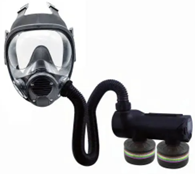
  • On-facepiece
  • In-helmet
  • Hose & Belt – Facepiece
  • Hose & Belt – Helmet/Hood
  • Around-neck

Here is a quick go-through of them.

On-facepiece

  • Compact
  • Heavy on the face
  • Affect downward vision and work
  • Difficult to use in confined spaces
  • Difficult to implement on half facepiece

In-helmet

  • Include head protection by design
  • Heavy on the top – difficult for downward work
  • Difficult to use in confined spaces
  • Loose-fitting only – lower protection
  • Not feasible to half-facepiece
  • No choice but to wear the helmet even if you don’t want to

Hose & Belt + Facepiece

  • Hose-on-face affects work and vision
  • Hose affects mobility
  • Difficult to use in confined spaces
  • Troublesome to don and doff

Hose & Belt + Helmet/Hood

  • Include head/eye protection
  • Hose affects mobility
  • Difficult to use in confined spaces
  • Troublesome to don and doff
  • Not feasible to half-facepiece
  • Loose-fitting only
  • No choice but to wear the helmet or hood even if you don’t want to

 Around-neck AYO WX PAPR Series

AYO WX FFM-LF
LOOSE-FITTING

AYO WX FFM-DS
DOUBLE-SEAL
AYO WX HFM
STANDARD

AYO WX HFM
SPEECH-ENHANCED

AYO WX HFM
WELDING
  • Low profile on the face
  • Good mobility
  • Easy to don and doff
  • Can work with half-facepiece and full-facepiece
  • Flexible to add other PPE

It can be appreciated that the Around-neck AYO WX PAPR series is more practical and flexible than all other styles:

  • With low-profile facepieces that matter most when doing challenging hard work including downward work and in confined spaces.
  • No top-heavy helmet-mount PAPR that affects downward work.
  • No hose & Belt that affect mobility and working in confined spaces.
  • As it is around the neck, it is compatible with most common helmets, earmuffs, etc.
  • It allows flexibility of half-facepiece, full-facepiece, with or without a helmet, use of common and non-integrated helmets, including common welding helmets, etc.

Equipped with a world-leading breath-responsive flow control technology, the AYO WX PAPR series is capable of producing over 200 L/min peak flow when needed, yet it can work efficiently for up to 16 hours with a much smaller and lighter battery than in those of constant flow PAPRs.

By using advanced and smart technologies, AYO WX can be fitted around the neck, which demonstrates the best location to fit a PAPR for doing a wide range of industrial works.

AYO WX Around-neck PAPR Series is proudly invented, designed, and optimized in Australia by Aimwell.                                                                                                                  

0
    0
    Your Cart
    Your cart is emptyReturn to Shop