
PAPR Types: Four Ways to Wear a Powered Respirator

PAPR Types: Four Ways to Wear a Powered Respirator
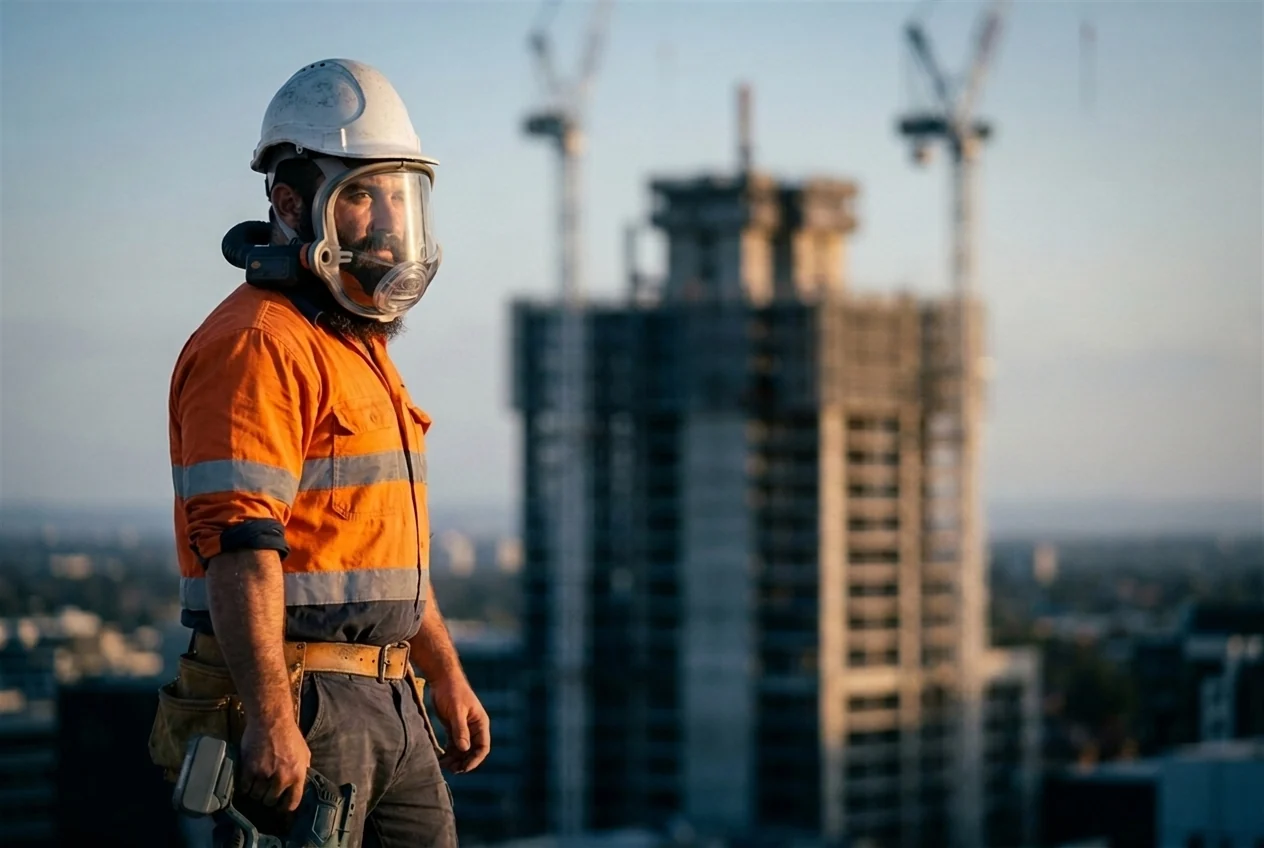
Illustration of a construction worker in hi-vis on a high-rise deck wearing an around-the-neck loose-fitting full-face powered air purifying respirator, with nothing crossing his chest

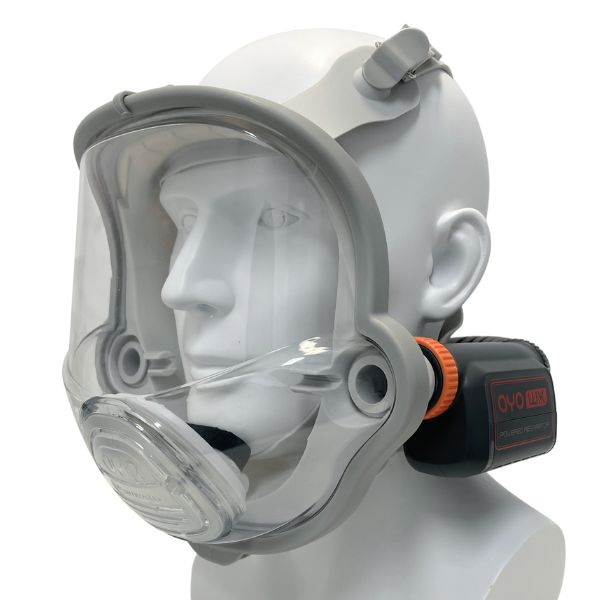
Where the blower sits on a powered air-purifying respirator decides how well you can do the work while wearing it — more than any number on the data sheet. Four layouts — the four main types of PAPR — dominate the market. Each imposes a cost the specification does not list — weight on the face, weight on the head, a hose that snags, or a helmet the job never asked for.

Protection class is the easy part of a purchase decision. A respirator that fights the work comes off during the work.

Key Takeaways

  • On-facepiece and in-helmet designs put the mass on the head, which fights downward work. Hose-and-belt designs tether the wearer, cross the field of view and are slow to don and doff. All four are difficult in confined spaces.
  • An around-the-neck layout keeps the profile low, allows fast don and doff, and runs either a half or a full facepiece. A hard hat becomes optional rather than compulsory, and confined spaces stop being a problem.
  • Aimwell Breath-responsive flow control lets the whole air source sit on the neck: a 437 g power unit and a 126 g filter, no belt and no hose. 3M’s published figure for a Versaflo TR-300+ with battery, belt and filter is 1,135 g. Less than half the weight, on both makers’ own figures — and that is what removes the hose and belt.
  • The same platform gives up to 220 L/min peak flow in P-Boost, and 8 to 16 hours on a user-replaceable battery.
  • A dual-fitting facepiece is certified to both the loose-fitting and the tight-fitting standard: no need to shave and no fit testing required as loose-fitting, higher protection when fitted tight.
  • AS/NZS 1715 and 1716 will be superseded by a suite of AS/NZS ISO standards by 1 January 2030. Both sets are valid in parallel until then.

The Ground Is Shifting Under the Whole Category

Two changes are running at once.

The first is regulatory. Australia and New Zealand are the first countries to adopt the ISO respiratory protection suite, a transition Standards Australia is running as a flagship project. Standards New Zealand states that by 1 January 2030 the two long-standing national standards will be superseded by more than thirty AS/NZS ISO standards, already adopted in parallel. What changes is what gets measured: the ISO framework describes performance by what the wearer needs — work rate and work of breathing — not by how the device was built.

The second is the trend. Employers are moving off negative-pressure respirators onto powered ones, and the market is growing in the order of 7 to 8 per cent a year to 2030. The demand is specific: low-profile, loose-fitting units that do not get in the way, at a price that lets a site fit out the whole crew rather than a few.

Both changes reward the same thing — a device judged by how it performs for a person doing work. That person notices the layout first.

Types of PAPR: Four Layouts, Four Different Costs

Layout Where the mass sits The cost to the wearer
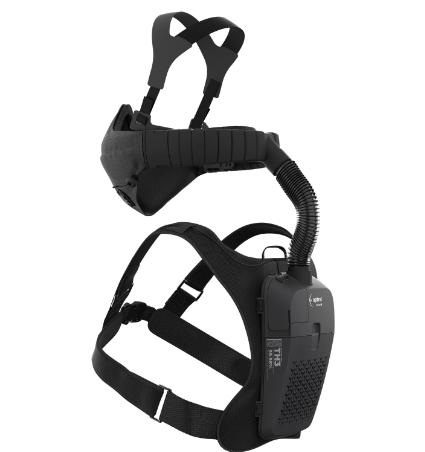
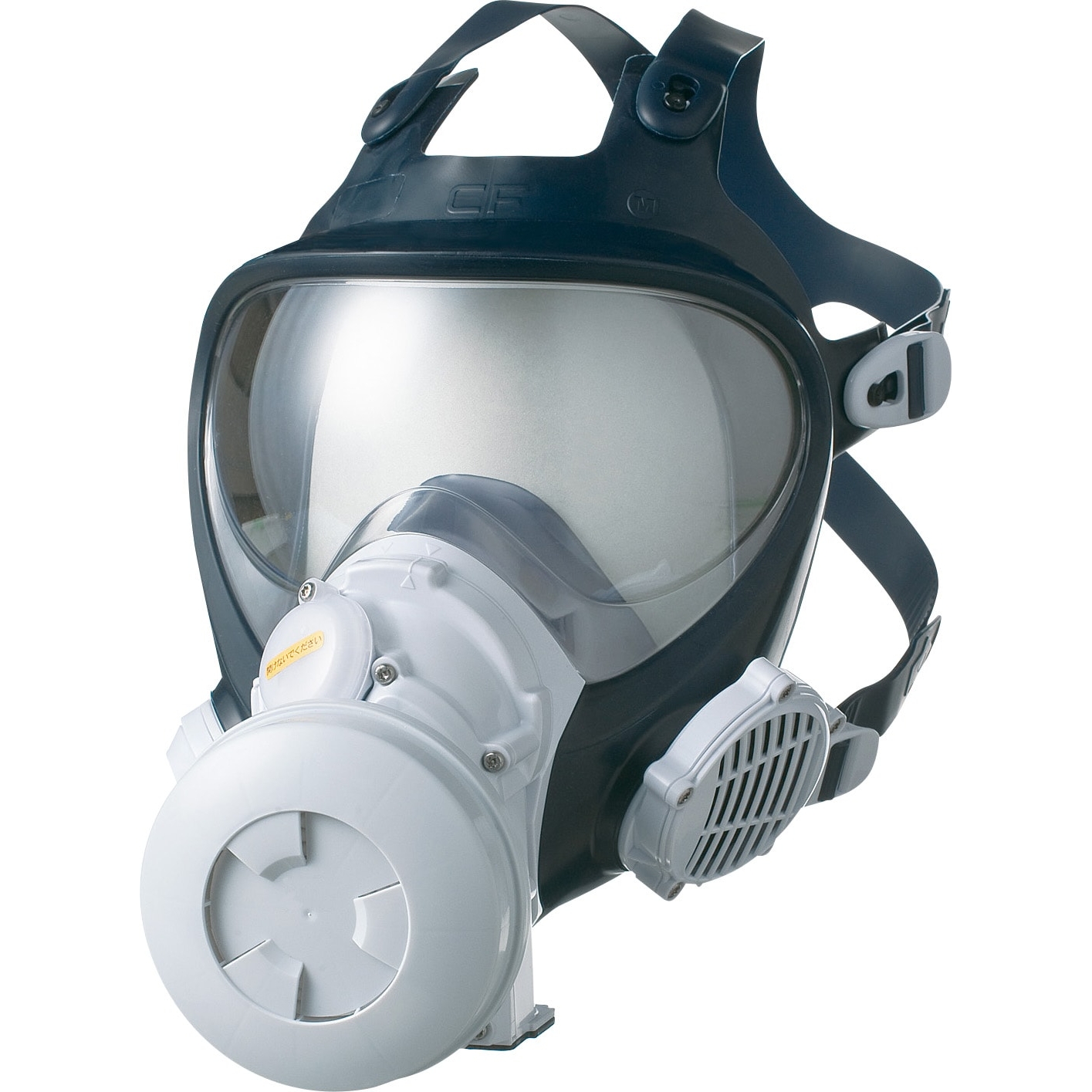
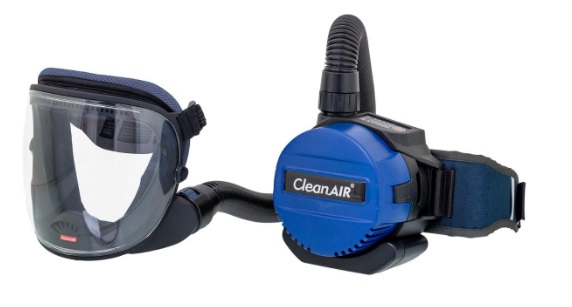
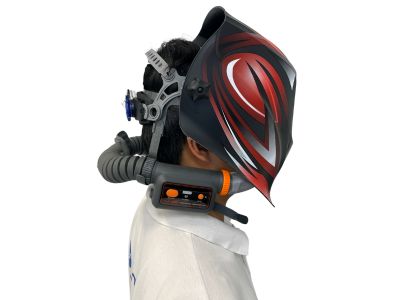
On-facepiece — blower in the mask On the face Compact, but heavy on the face; affects downward vision and work; difficult in confined spaces; difficult to implement on a half facepiece
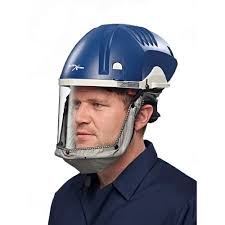
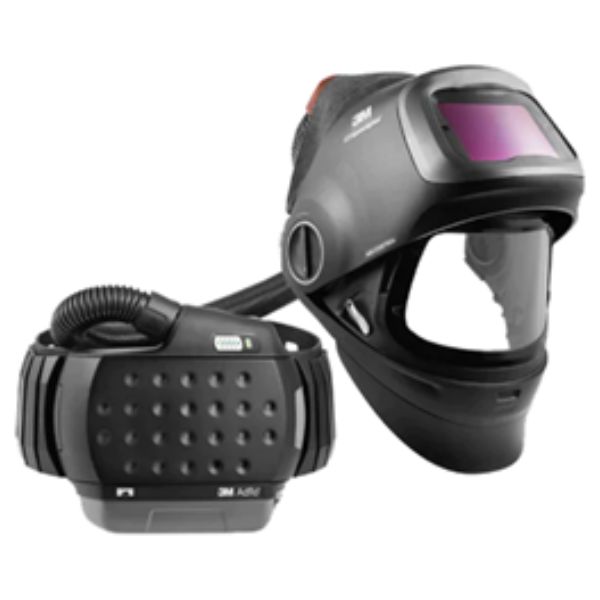
In-helmet — blower in a helmet On top of the head Head protection included by design, but top-heavy for downward work; difficult in confined spaces; loose-fitting only; not feasible on a half facepiece; the helmet is compulsory even when the job does not need one
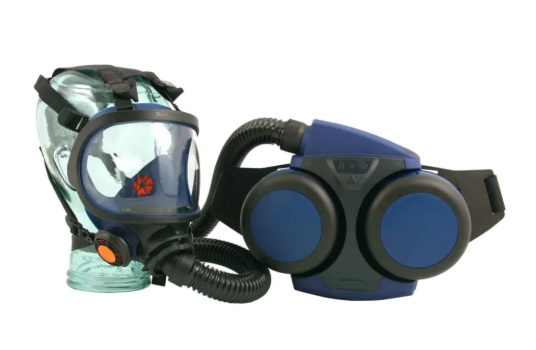
Hose and belt, with a facepiece On the waist, hose to the mask The hose attaches to the mask and affects work and vision; limits mobility; difficult in confined spaces; troublesome to don and doff
Hose and belt, with a hood or helmet On the waist, hose to the head top Head and eye protection included, but the same tethering, plus loose-fitting only, not feasible on a half facepiece, and a compulsory hood or helmet

The same complaints repeat down that column: mass in the wrong place, a tether, a head covering the wearer did not choose, and — in every single row — trouble in confined spaces. None of them appear in a protection class.

They appear on site. A formwork worker looking down at a deck fights a top-heavy helmet all day. A fitter entering a vessel plans where the hose runs before they plan the task. A welder lifting a visor twenty times a shift judges the respirator on don-and-doff time, not just inward leakage.
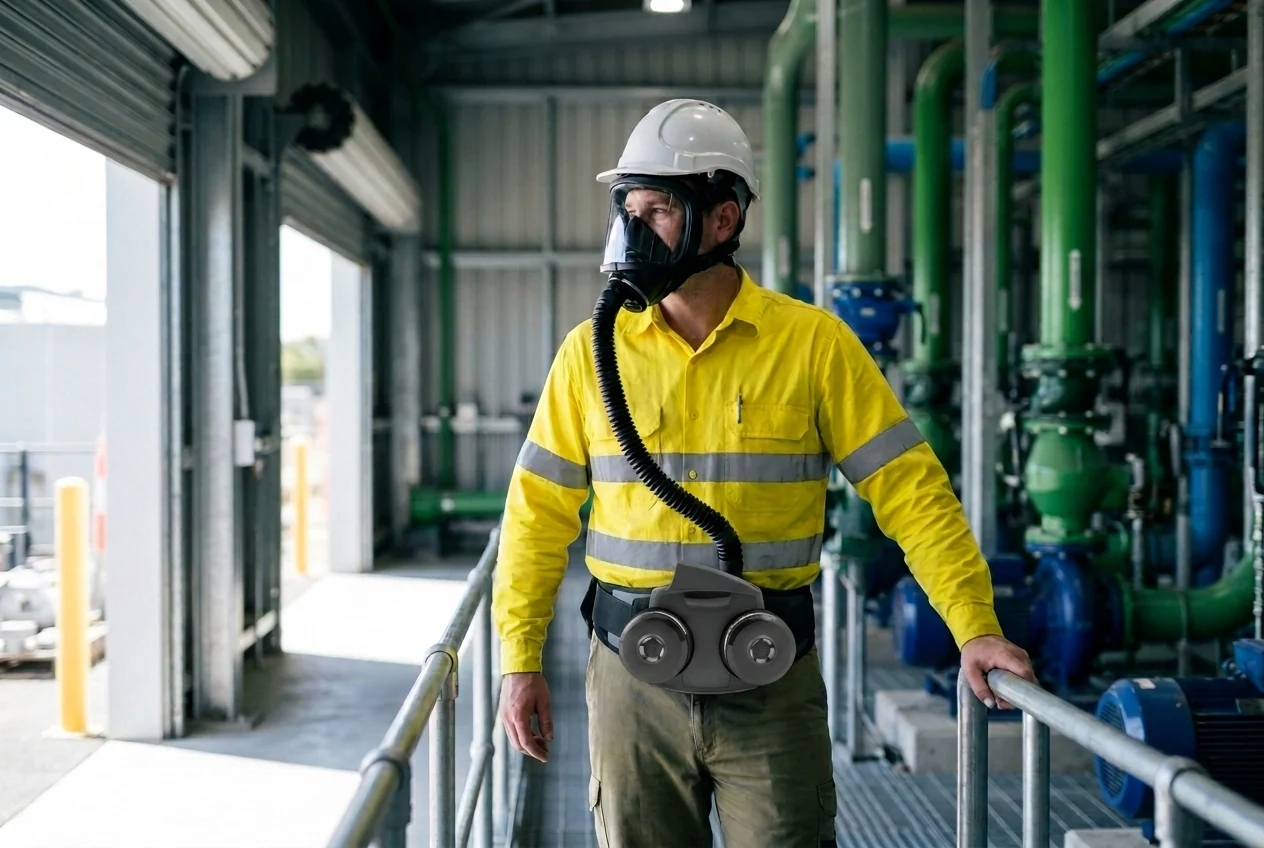
Illustration of a generic waist-mounted powered respirator with a breathing hose running across the chest to a full facepiece, worn by a maintenance fitter in a plant room

Why Does an Around-the-Neck Layout Remove Those Costs?

Because it moves the mass to one place on the body that is not doing the work.

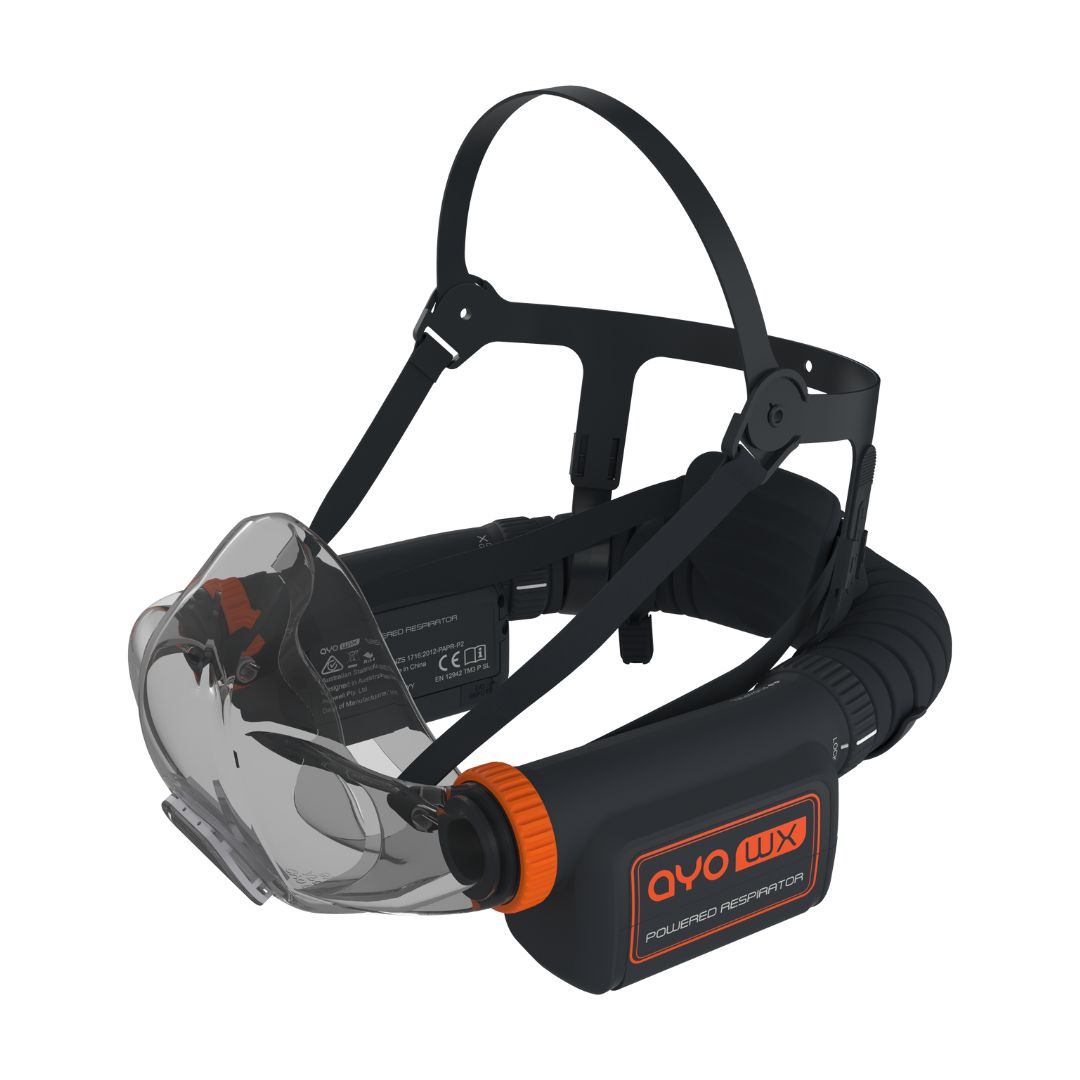
An around-the-neck unit sits low on the face, so downward vision stays clear. Mobility is unaffected, because nothing crosses the chest or shoulders. Don and doff is a single movement. It runs a half facepiece or a full facepiece, which the in-helmet and hood layouts cannot offer. A hard hat can be added when the job calls for one and left off when it does not. In-helmet and hood systems bundle head protection in permanently, which is useful on some worksites and a nuisance in a tight roof space.

Our systems are designed for high exertion, substantial body movement and confined spaces — see what makes the AYO WX around-neck design work in practice.
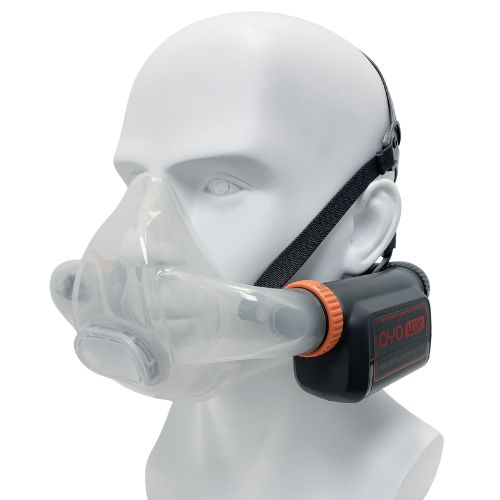
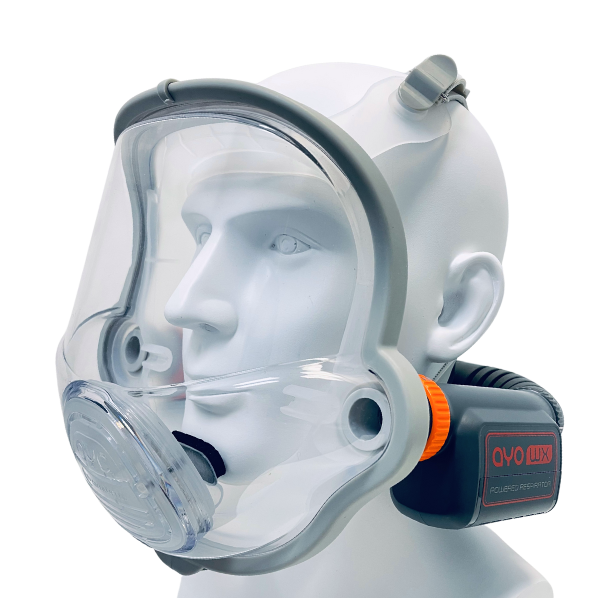
What Breath-Responsive Flow Control Actually Changes

A conventional PAPR runs its blower at a constant flow, whether the wearer is breathing in, breathing out or standing still. A breath-responsive unit matches delivery to the breathing cycle instead.

The consequence is physical, and large. The air source on our system is a 437 g power unit and a 126 g filter, worn on the neck with no belt and no hose. 3M’s own published technical data sheet puts a Versaflo TR-300+ at approximately 1,135 g including its high-capacity battery, belt and filter, before the breathing tube.

That is not a comfort statistic. It is the whole chain. Less energy moved means a smaller battery, and less mass is what lets the blower sit on the neck instead of a belt — which is what removes the hose. It saves carbon in a gas filter as well, because carbon is consumed by airflow the wearer never inhaled: less waste and lower running cost over the life of the system.

On our own platform this sits on the certificate record rather than in the brochure. Every certified system in the AYO™ WX around-neck PAPR range is described as controlled by a breath-responsive flow control algorithm. The numbers that follow: no hose and no belt, up to 220 L/min peak flow in P-Boost, and 8 to 16 hours on particulate duty from a user-replaceable battery. The blower is rated for over ten years and runs under 65 dB in typical use.
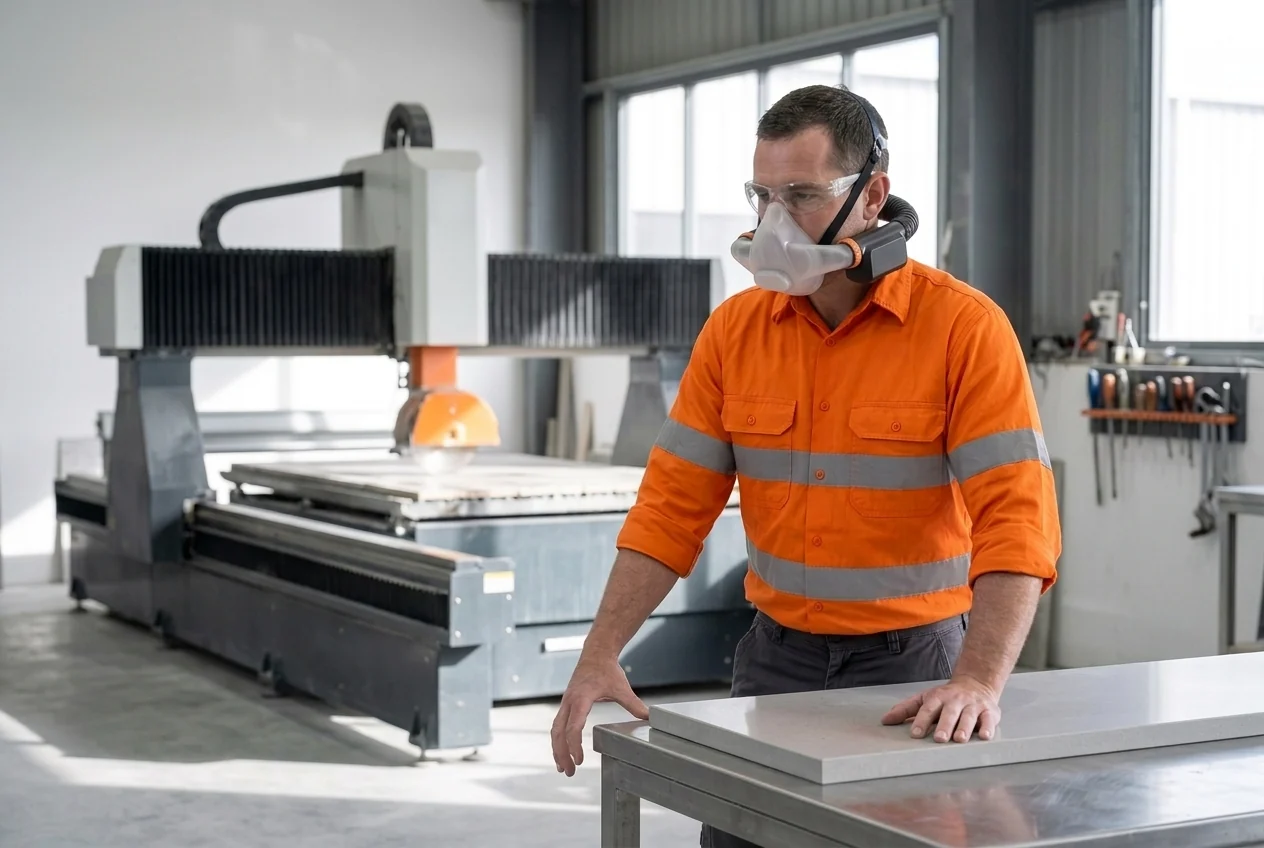
Illustration of a stone benchtop fabricator inspecting a finished cut in a clean, well-lit workshop while wearing an around-the-neck half-face powered air purifying respirator

Is Dual-Fitting Worth Specifying?

On a mixed site, yes.

A dual-fitting facepiece is certified to both the loose-fitting and the tight-fitting standard. Used loose-fitting it does not depend on a seal against skin, so there is no need to shave and no fit testing is required. Used tight-fitting and fitted properly, it achieves the increased protection the tight-fitting standard measures. One purchase therefore covers a clean-shaven fitter and a bearded one, and covers a site whose answer changes between jobs.

The AYO™ WX HFM Standard Half-Face Mask PAPR Systems and the welding and double-seal variants sit on that platform, certified to EN 12941:2023 as TH3 and EN 12942:2023 as TM3. In our own framing, TM3 represents four times the protection of TH3 — the two classes come from different test regimes, so the raw numbers are not comparable.

Two add-ons fit the same platform rather than needing a second system: a Face Seal Kit for workers with longer beards, and a Shower Kit for sites that run decontamination showers.

One thing to confirm before you specify: check that TH3 is adequate for the exposure limit of the contaminants in your application. That is a judgement for a certified occupational hygienist — the Australian Institute of Occupational Hygienists maintains the register.

Replacing a hose-and-belt fleet, or specifying a PAPR for a site where the work is downward, confined or bearded?

See the AYO™ WX FFM-LF Loose-Fitting Full-Face Mask

Happy to work through the selection with your hygienist, and to send the certificates and part number schedule before you compare prices.

About the Author

Eric Fu is Managing Director of Aimwell Pty Ltd (ABN 68 652 924 957). He has twenty-seven years in the respiratory device industry — CPAP, industrial powered respirators and breathing measurement devices — and holds multiple international patents. Aimwell designs the AYO™ WX range in Sydney.
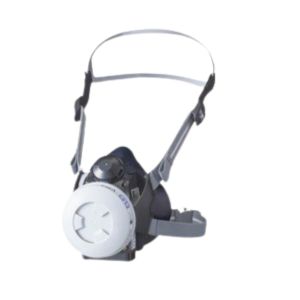
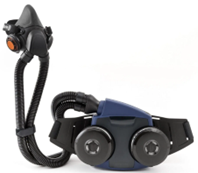
How Does Aimwell™ AYO™ WX HFM P-Boost Standard Half Face Mask PAPR System Compare with Other Half Face Mask PAPR Brands?

PAPR Type Brand/Model Key Comparison
Face-mounted Tight-fitting

SHIGEMATSU

Sync11VP3

Protection level: AS/NZS 1716 PAPR P3
Peak flow:  only 138 L/min (Breath responsive)
Weight: 0.45 kg (particulate filter)
Battery Time: 11 hours
Cost: $1293

Shortcoming:

  •  Low flow – not suitable for heavy work.
  • One Size only: may not be suitable for very small or very large faces.
  • Tight-fitting only: must be clean-shaven and fit tested.
  • Not easy to clean – The blower unit is not easily removable, and the mask can not be soaked for cleaning.
  • Expensive
Belt-mounted Tight-fitting

Sundstrom SR700/SR900

Protection level: AS/NZS 1716 PAPR P3
Peak flow:  175 or 225 L/min
Weight: 1.24 kg (not including hoses)
Battery Time: 8 hours
Cost: $1899

Shortcoming:

  • Poor mobility – Bulky, heavy with long hose, troublesome to wear, not suitable in confined spaces.
  • Tight-fitting only: must be clean-shaven and fit tested.
  • Not easy to clean.
  • Expensive.

Back-mounted

Loose-fitting

Optrel Swiss Air System

Protection level: EN12941 TH3
Peak flow: only 130 L/min
Weight: 1.2 kg
Battery Time: 14 hours
Cost: $2122

Shortcoming:

  • P2 protection only.
  • Low flow – not suitable for heavy work.
  • Poor mobility and wearability – bulky, troublesome to wear at the back.
  • Not easy to clean.
  • Expensive.

Around-neck

Tight-fitting

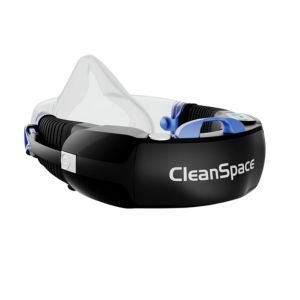
CleanSpace Works

Protection level: AS/NZS 1716 PAPR P3
Peak flow: 200 L/min (Breath responsive)
Weight: 0.54 kg
Battery Time: 8 hours
Cost: $990

Shortcoming:

  • The battery is not replaceable – when the battery is dead, the system dies.
  • Head movement restrictions due to the rigid and bulky neck module.
  • Uncomfortable at the neck when raising the head.
  • Tight-fitting only: must be clean-shaven and fit tested.
  • Expensive, given the product life is limited by battery life.

Around-neck

Tight-fitting and loose-fitting configurable

Aimwell™ AYO™ WX HFM P-Boost Standard Half-Face Mask PAPR System

Protection level: AS/NZS 1716 PAPR P3, EN 12942:2023 TM3, EN 12941:2023 TH3.
Peak flow: Up to 220 L/min (Breath responsive)
Weight: 0.70kg
Battery Time: 16 hours
Battery replaceable
Cost: $739

Best overall performance among all:

  • Best-in-class protection PAPR P3, TM3, TH3.
  • World’s only Dual-Fitting half-face mask PAPR – unprecedented usability and flexibility.
  • Great mobility – good head movement and comfort, no nuisance long hose and belt.
  • Very long battery hours, battery replaceable.
  • Very easy to clean and maintain.
  • Face Seal option for beard-covering.
  • The most value-for-money Half-face Mask PAPR in the world.
In summary, the AYO™ WX HFM P-Boost Standard Half-Face Mask PAPR System is on par or better than most other PAPR brands regarding peak flow performance, while it stands out in mobility, unique dual-fitting, ease of use, and value-for-money.

Buy AYO™ WX HFM P-Boost Standard Half-Face Mask PAPR System – the best all-rounder Half-Face Mask PAPR System in the world.

How Does the Aimwell™ AYO™ WX FFM-LF P-Boost PAPR System Compare with the 3M Versaflo System?


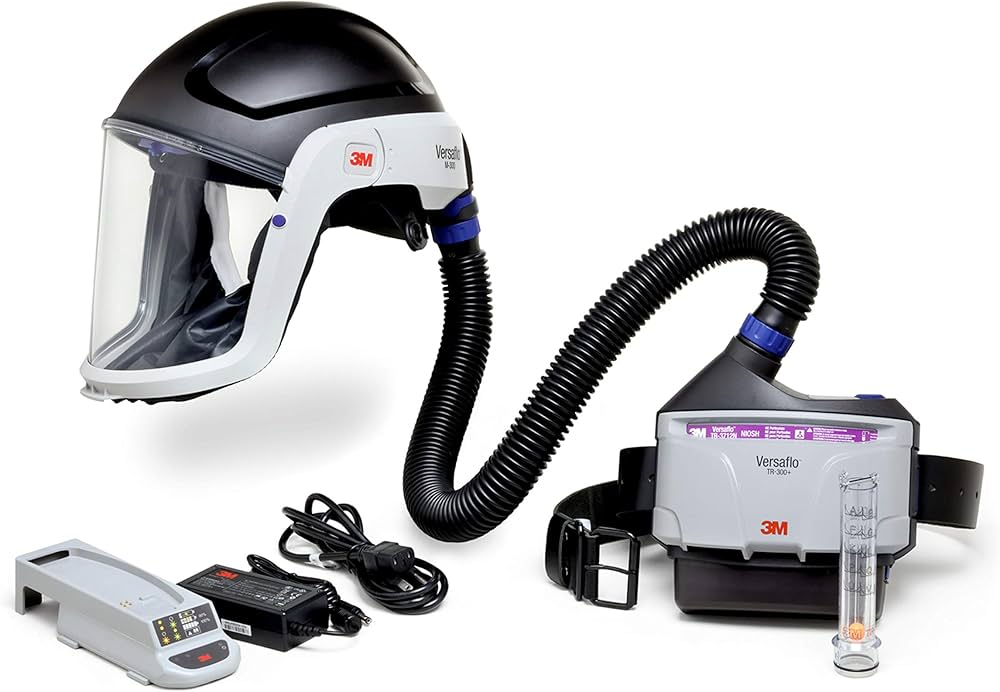
Key Comparison 3M Versaflo TR-315A+ PAPR Kit with M307C helmet

Aimwell AYO WX FFM-LF P-Boost PAPR System

Protection Class AS/NZS 1716: 2012 P3, EN12941 TH3 AS/NZS 1716: 2012 PAPR P3, EN 12941:2023 TH3
Wearability/Mobility

Heavy with hose and belt, troublesome to don and doff, and poor mobility


Lightweight and low-profile, no hose no belt, easy to don and doff, good mobility


Peak flow 170 – 205 L/min Up to 220 L/min (Breath responsive)
电池运行时间 9-12 hours 长达 16 小时
Weight ~2kg (Including Power unit1139g with battery, belt, filter, and Helmet 832g, not including hose) 1.0 Kg (Full system)
Fit Testing Not Required Not Required
Fitting type Loose-fitting only, can not be converted to tight-fitting PAPR if needed. Loose-fitting but can be configured to AYO WX
FFM-DS tight-fitting PAPR for applications that demand heavy breathing.
Maintenance Difficult to maintain and clean Much easier to maintain and clean
使用寿命 5年 10年
Cost $2390 $921

In summary, AYO WX FFM-LF P-Boost PAPR can provide over 3M Versaflo TR-315A+ PAPR Kit with 307C helmet:

  • At least equivalent protection but with higher peak flow.
  • Half the weight.
  • Better mobility: No hose and belt.
  • Longer battery life.
  • Easier to clean and maintain.
  • Doubled service life.
  • Less than half of the cost.

When should AYO WX FFM-LF PAPR System be used instead of 3M Versaflo TR-315A+ PAPR Kit with a 307C helmet?

When doing work requiring frequent donning and doffing and large physical movements, especially in confined spaces, such as tunnelling or building work, instead of work just sitting or standing with minimum body movement most of the time:

  • The long hose and heavy belt-mounted power unit are troublesome to don and doff, and difficult to move around while doing highly physical work.

When you need to carry tools around your waist:

  • The belt-mounted power unit prevents you from carrying tools around your waist.

When doing work with heavy dust:

  • The bulky Versaflo system is difficult to clean, while the AYO WX FFM-LF PAPR system is much easier to clean and maintain.

When doing high-exertion work that causes very heavy breathing:

  • The Versaflo will not provide protection when you over-breathe the blower with a peak of 205 L/min. For example, you may well breathe over 250 L/min doing heavy work, which will cause negative pressure in the face shield at the initial phase of inhalation. Due to the loose-fitting nature of the 307 helmet, you will breathe in harmful dust or gas easily.

  • In this situation, for the AYO WX FFM-LF PAPR System, you can configure it into an AYO WX FFM-DS PAPR system, which provides a tight-fitting double-seal Full-face mask that can protect you well when the pressure in the mask goes negative briefly during very heavy inhalation.

When you are on a budget:

  • 3M Versaflo is over 2 times the cost of the AYO WX FFM-LF P-Boost PAPR system. Why pay more for a product that is less suitable for doing the same job?

How Does Aimwell™ AYO™ WX FFM-LF P-Boost Full-Face Mask PAPR System Compare with Other Full-Face PAPR Brands?

PAPR Type Brand/Model Key Comparison
Head-mounted
Loose-fitting

PureFlo Purelite

Protection level: AS/NZS 1716 PAPR P2

Peak flow: > 200 L/min
Weight: 1 kg
Battery Time: 8 hours
Cost: $1160

Shortcoming:

  • P2 protection only.
  • Loose-fitting only: not suitable for heavy breathing.
  • Poor mobility – Top-heavy, not suitable in confined spaces, or for work requiring lowering the head.
  • Not suitable for asbestos removal.
  • You are locked to the helmet plus a visor for respiratory protection when you prefer not to.
  • Not easy to clean.
Face-mounted Tight-fitting SHIGEMATSU
SYNC01VP3


Protection level: AS/NZS 1716 PAPR P3
Peak flow:  only 138 L/min
Weight: 0.8 kg
Battery Time: 9 hours
Cost: $1995


Shortcoming:

  • Low flow – not suitable for heavy work.
  • Tight-fitting only: must be clean-shaven and fit tested.
  • Poor mobility – The front of the mask is too bulky and heavy, not suitable in confined spaces.
  • The front unit blocks the downward view – not suitable for downward-looking work.
  • Not easy to clean.
  • Expensive.
Belt-mounted Tight-fitting

Sundstrom SR500/200

Protection level: AS/NZS 1716 PAPR P3
Peak flow:  240 L/min
Weight: 1.65 kg
Battery Time: 7 hours
Cost: $2903


Shortcoming:

  • Poor mobility – Bulky, heavy with long hose, troublesome to wear, not suitable in confined spaces.
  • Tight-fitting only: must be clean-shaven and fit tested.
  • Not easy to clean and maintain.
  • Very expensive
Belt- mounted
Loose-fitting

3M Versaflo TR-315A+ PAPR Kit with 307C helmet

Protection level: AS/NZS 1716 PAPR P3, EN12941 TH3
Peak flow:  200 L/min
Weight: ~2kg (Including Power unit with battery, belt, filter), and Helmet.
Battery Time: 9-12 hours
Cost: $2390


Shortcoming:

  • Poor mobility – Bulky, heavy with long hose, troublesome to wear, not suitable in confined spaces.
  • Loose-fitting only: not suitable for heavy breathing.
  • You are locked to the integrated helmet plus a visor for respiratory protection when you prefer not to.
  • Not easy to clean and maintain.
  • Expensive.
Belt- mounted
Loose-fitting

CleanAIR Unimask with Basic PAPR RFU837-CB

Protection level: EN12941 TH3
Peak flow:  170 – 240 L/min
Weight: 1.26kg (Including Power unit with battery, belt, filter, not including hose), and face shield.
Battery Time: 10 hours
Cost: $1650


Shortcoming:

  • Poor mobility – Bulky with long hose and belt, troublesome to wear, not suitable in confined spaces.
  • Loose-fitting only: not suitable for heavy breathing.
  • Not easy to clean and maintain.
  • Expensive.
Around-neck
Tight-fitting and loose-fitting configurable

AYO WX FFM-LF P-Boost Loose-Fitting Full-Face Mask PAPR System

Protection level: AN/NZS 1716 PAPR P3, EN 12941:2023 TH3
Peak flow: Up to 220 L/min (Breath responsive)
Weight: 1.0kg
Battery Time: 16 hours
Battery replaceable
Cost: $921


Best overall performance among all:

  • Loose-fitting by default.
  • Can be configured to be tight-fitting for applications that demand heavy breathing.
  • Great mobility – low profile and lightweight, no hose and belt.
  • Perfect for silica dust and asbestos protection.
  • Very easy to clean and maintain.
  • The most value-for-money Full-Face Mask PAPR System in the world.

In summary, AYO™ WX FFM-LF is on par with most PAPR brands regarding peak flow performance, while it stands out in mobility, configurable loose-fitting and tight-fitting, ease of use, and value-for-money.

Buy AYO™ WX FFM-LF P-Boost Full-Face Mask PAPR System – the best all-rounder Full-Face Mask PAPR System in the world.

How Does AYO WX HFM-W Welding Half-Face Mask PAPR System Compare with 3M Speedglas + Adflo System?

Key Comparison 3M Speedglas G5-01 TW Heavy-Duty Flip-Up Welding Helmet with Adflo PAPR (Loose-fitting) Aimwell AYO WX HFM-W P-Boost Welding Half-Face Mask PAPR (Tight-fitting or loose-fitting)
(Tight-fitting or loose-fitting)
Protection Class AS/NZS 1716 PAPR P3
EN12941 TH3
AS/NZS 1716 PAPR P3, EN 12942:2023 TM3,
EN 12941:2023 TH3
Wearability/Mobility

Heavy with hose and belt, troublesome to don and doff, and poor mobility

Lightweight and low-profile, no hose no belt, easy to don and doff, good mobility

Welding Helmet Integrated Existing non-integrated
Don and Doff Difficult due to the hose and belt Easy, no hose and belt
Peak flow 170 – 200 L/min Up to 220 L/min (Breath responsive)
电池运行时间 12 hours 长达 16 小时
Weight 2.13kg (Helmet 1kg, PAPR 1.1kg) – not including hose) 1.26kg (Helmet 0.54kg (typical), PAPR+half-face mask 0.72kg)
Fit Testing Not required Not generally required, but can be done if needed.
Fitting type Loose-fitting only, can not be converted to tight-fitting PAPR if needed. Dual-fitting, with optional Face Seal for beard covering.
Maintenance Difficult to maintain and clean Much easier to maintain and clean
使用寿命 5年 10年
Cost $2195 $739

In summary, AYO WX HFM-W P-Boost Welding PAPR can provide over 3M Adflo/Speedglas:

  • Easier to don and doff.
  • Dual-fitting, better usability and flexibility.
  • Higher protection in tight-fitting.
  • Longer battery run-time.
  • 40% lighter.
  • Easier maintenance.
  • At least 1/2 of the cost after combining a common welding helmet.


When to use the AYO WX HFM-W P-Boost Welding Half-Face Mask PAPR System instead of the 3M Speedglas/Adflo System?

When a better protection is needed:

  • The Versaflo can only be loose-fitting, while AYO WX HFM-W P-Boost PAPR provides dual-fitting, giving higher protection in tight-fitting.

When doing work requiring frequent donning and doffing:

  • The long hose and heavy belt-mounted power unit are a nuisance to don and doff.

When having an existing welding helmet:

  • AYO WX HFM-W Welding PAPR System allows you to use your existing welding helmet, enhancing protection and comfort over non-powered respirators while saving costs.

When you are on a budget:

  • The Speedglas/Adflo is over 2 times the cost of the AYO WX HFM-W P-Boost PAPR System. Why pay more for a product that is inferior in overall performance while doing the same job?

Why Paper Masks/Non-Powered Respirators Are Inadequate for High-Exertion Work?

Q1: What are the works regarded as high exertion?

For examples: most construction/tunnelling work involving frequent bending and heavy lifting, operating an impacting drill on a concrete wall, sanding over a ceiling, etc.

Q2: Why aren’t paper masks or non-powered respirators sufficient for high-exertion work?

A: They rely on a tight seal to the face, which is hard to maintain during high-exertion tasks. They are also harder to breathe than powered respirators, especially when dust is loaded.

Q3: Why isn’t fit testing for non-powered respirators effective to ensure a good fit during high-exertion work?

A: Fit testing ensures a proper seal only in a controlled environment, such as in an office. However, even if having a good fit in the test, physical strain during heavy work causes sweating, facial shifts, and frequent head movements, which can shift the mask fit and make a good fit into a bad fit. Workers can’t readjust masks mid-task (e.g., while handling tools, or needing focus on complex or risky job), leading to gaps and rendering protection ineffective.
Relying on fit testing for good protection during high-exertion work is in reality just an act of Self-comfort or Self-deception.

Q4: Why are beards a problem for non-powered respirators?

A: Facial hair prevents a secure seal, allowing contaminants to bypass the mask. Clean-shaven is required, but not always practical, e.g. due to strong personal preference or religion, stubble grows mid-day or late in a shift.

Q5: Why choose a loose-fitting PAPR instead?

A: Loose-fitting PAPRs don’t require a tight seal to work, the protection is ensured via positive pressure in the breathing zone.

They tolerate mask shifting during movement, no need for fit testing and adjustments, letting workers focus – ideal for high-exertion work or workers with beards.

They reduce breathing effort compared with a non-powered respirator, thus can improve comfort.

They also provide fresh airflow – reduces heat buildup and fogging.

Q6: Do Loose-fitting PAPRs provide better protection than well-fitted non-powered respirators?

A: Yes. Most certified loose-fitting PAPRs can provide at least 5 times better protection for a bearded worker than a well-fitting nonpowered respirator for a clean-shaven worker.

Q7: What type of Loose-fitting PAPRs are most suitable for High-Exertion work?

A: PAPRs that hinder the work: belt-mounted PAPRs with hoses, helmet mounted PAPRs (top heavy).

Around-neck Loose-fitting PAPRs are most suitable, as they offer best mobility, can be worn like a non-powered respirator, such as Aimwell® AYO™ WX FFM-LF Loose-Fitting Full-Face PAPR System.

Conclusion: For High-Exertion tough jobs, Loose-fitting PAPRs ensure safety, comfort, and focus. Non-powered masks risk failure when it matters most. Around-neck Loose-Fitting PAPRs are most suitable among all types of loose-fitting PAPRs.

0
0
Your Cart
Your cart is emptyReturn to Shop