Why Paper Masks/Non-Powered Respirators Are Inadequate for High-Exertion Work?

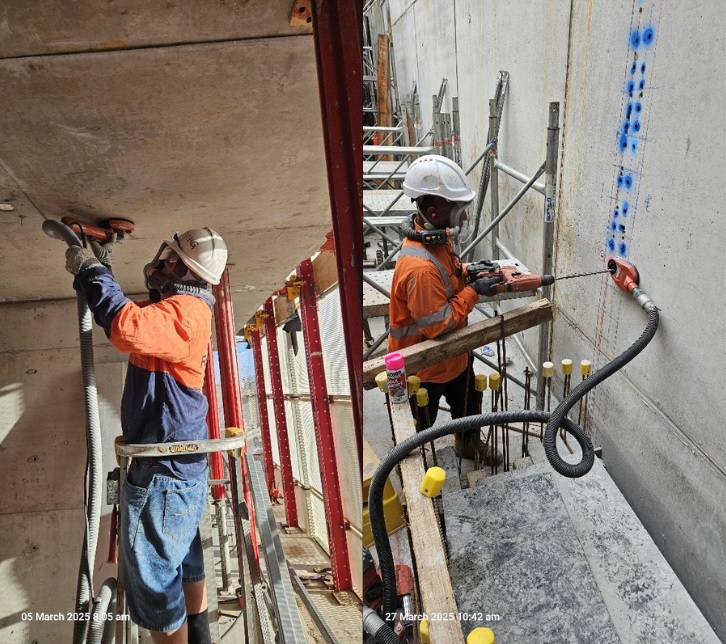
Q1: What are the works regarded as high exertion?

For examples: most construction/tunnelling work involving frequent bending and heavy lifting, operating an impacting drill on a concrete wall, sanding over a ceiling, etc.

Q2: Why aren’t paper masks or non-powered respirators sufficient for high-exertion work?

A: They rely on a tight seal to the face, which is hard to maintain during high-exertion tasks. They are also harder to breathe than powered respirators, especially when dust is loaded.

Q3: Why isn’t fit testing for non-powered respirators effective to ensure a good fit during high-exertion work?

A: Fit testing ensures a proper seal only in a controlled environment, such as in an office. However, even if having a good fit in the test, physical strain during heavy work causes sweating, facial shifts, and frequent head movements, which can shift the mask fit and make a good fit into a bad fit. Workers can’t readjust masks mid-task (e.g., while handling tools, or needing focus on complex or risky job), leading to gaps and rendering protection ineffective.
Relying on fit testing for good protection during high-exertion work is in reality just an act of Self-comfort or Self-deception.

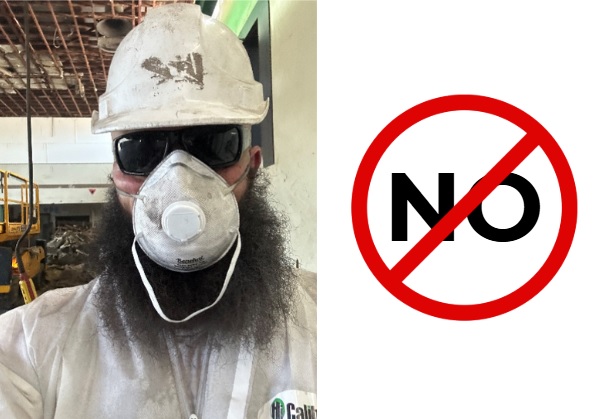
Q4: Why are beards a problem for non-powered respirators?

A: Facial hair prevents a secure seal, allowing contaminants to bypass the mask. Clean-shaven is required, but not always practical, e.g. due to strong personal preference or religion, stubble grows mid-day or late in a shift.

Q5: Why choose a loose-fitting PAPR instead?

A: Loose-fitting PAPRs don’t require a tight seal to work, the protection is ensured via positive pressure in the breathing zone.

They tolerate mask shifting during movement, no need for fit testing and adjustments, letting workers focus – ideal for high-exertion work or workers with beards.

They reduce breathing effort compared with a non-powered respirator, thus can improve comfort.

They also provide fresh airflow – reduces heat buildup and fogging.

Q6: Do Loose-fitting PAPRs provide better protection than well-fitted non-powered respirators?

A: Yes. Most certified loose-fitting PAPRs can provide at least 5 times better protection for a bearded worker than a well-fitting nonpowered respirator for a clean-shaven worker.

Q7: What type of Loose-fitting PAPRs are most suitable for High-Exertion work?

A: PAPRs that hinder the work: belt-mounted PAPRs with hoses, helmet mounted PAPRs (top heavy).

Around-neck Loose-fitting PAPRs are most suitable, as they offer best mobility, can be worn like a non-powered respirator, such as Aimwell® AYO™ WX FFM-LF Loose-Fitting Full-Face PAPR System.

Conclusion: For High-Exertion tough jobs, Loose-fitting PAPRs ensure safety, comfort, and focus. Non-powered masks risk failure when it matters most. Around-neck Loose-Fitting PAPRs are most suitable among all types of loose-fitting PAPRs.
PAPR Respirators for Beards and Facial Hair

对胡须的常规要求

Powered Air Purifying Respirator (PAPR) for beards

这里的问题是关于佩戴口罩或呼吸器时的呼吸防护问题。

这里,“呼吸器”可以分为 空气净化呼吸器(APR) 和 动力空气净化呼吸器(PAPR)。

Within PAPRs, we have Tight-Fitting PAPRs and Loose-Fitting PAPRs.

这里,“紧密贴合”是指呼吸器和皮肤之间的面部紧密密封,设计目的是为了无泄漏; “宽松贴合”是指呼吸器和皮肤之间有意设计的非严密密封,以放宽贴合要求,允许少量泄漏。

Typical tight-fitting respirators involve an elastomeric facial cushion, and typical loose-fitting respirators involve a helmet, a visor, or a hood. Where the blower and hose sit changes the picture again — we compare the four main types of PAPR separately.

Except for Loose-fitting PAPRs, clean-shaven is the common requirement for wearing a tight-fitting respirator, especially a paper mask or an APR.

原因很简单:

We want all the hazardous contaminants to be blocked by the filter media with a mask or respirator. To ensure that, we want to ensure no gap between the mask/respirator and your facial skin. With facial hair, such as a beard, your mask or the respirator cushion will contact your beard first instead of your skin, leaving a gap for the contaminants to bypass the filter media to be sucked under negative pressure in the mask during inhalation.

所以,是的,如使用负压面罩或呼吸器(APR),您必须将胡须刮干净才能达到预期的保护,这是毫无疑问的。

Powered Air Purifying Respirator (PAPR) for bearded people

宽松贴合型 PAPR 适合有胡须的人配戴,是这样吗?

Loose-fitting PAPRs are designed not to rely on a tight seal to ensure protection, instead, they rely on positive pressure generated by the PAPR in the breathing zone to block outside contaminants from getting through the gaps in the loose-fitting partial seal while the PAPR sucks air via a filter.

但为了能按这个方法正确的工作,鼓风机需要产生可供佩戴者呼吸的所有气量,如果这种 PAPR 能够实现这一点,那么是的,它确实适用于有胡须的或者有面部毛发的佩戴者。

然而,这里可能存在误解,认为宽松贴合型 PAPR 完全适用于有胡须的佩戴者,而不考虑其局限性。事实上,其适用程度是很受条件限制的,并且在应用中可能会受多个因素的制约,例如:

  • 面部毛发有多长以及其分布的位置?
  • 所使用的宽松贴合型PAPR 的鼓风能力有多强?
  • 如何控制气流?内置电池电量低时流量会变少吗?
  • 体力劳动对您呼吸的负荷有多大?
  • 污染物的浓度有多大?
  • 污染物的最大暴露限值是多少?

Most of these factors are related to the single most essential characteristic of PAPRs: Positive Pressure in the mask/breathing zone. As long as positive pressure is maintained all the time, there will be no leak issue from facial hair, as the air tends to be pushed out of the mask instead of being sucked in.

所以关键问题是如何始终保持正压。

理论上,只要PAPR中鼓风机产生的气流不小于吸入流量,就可以维持正压。但实际上,对于宽松的头盔、护脸罩或头罩,泄漏路径会多变,因此并非所有来自鼓风机的气流都能到达呼吸区域。有些气流可能会在到达呼吸区之前就泄漏出去了。

Therefore, the PAPR needs to be designed in such a way that it generates a flow more than what the wearer can breathe plus the flow leaked over the loose-fitting interface.

PAPR能产生多少气流取决于PAPR的鼓风能力;然而,吸入的空气流量取决于您工作时需要多用力呼吸。

可现实情况是,PAPR 可以产生的最大流量是有限的,并且当使用一定时间电池电量变低时,其流量也会低于初始水平。

此外,大多数宽松贴合型PAPR提供的是恒定的流量。这样流量越高,要求的电池容量也会相应增加,这会使电池变得更大、更重,因而降低可穿戴性并增加成本。

On the other hand, if your job is highly physical and causes heavy breathing, your inhaled air could outrun what the blower can deliver.

The other important factor to consider is the protection factor requirement of the PAPR for doing certain work. The concentration of the contaminants and the maximum exposure limit will determine the minimum protection factor of the PAPR. Typically, loose-fitting PAPRs have a lower protection factor than tight-fitting PAPRs. When the contaminant exposure limit demands a PAPR with a high protection factor, loose-fitting PAPRs may not be suitable, regardless of whether you have a beard or not. Welding fume is a recent example: Australia’s welding fume exposure standard is now 1 mg/m³, down from 5 mg/m³.

因此,为了确保所选宽松贴合型PAPR 适合某种作业,特别是对有胡须的人,需要根据具体情况进行仔细评估。  

紧密贴合型 PAPR 可以用于有胡须的人吗?

当鼓风机的流量、所使用的过滤器和系统泄漏量相当时,紧密贴合型 PAPR通常比宽松贴合型PAPR具有更高的防护系数。

This is because during a negative pressure condition, when the inhaled air outruns the air delivered from the blower, a tight-fitting mask will let in much less outside air compared with a partially sealed loose-fitting covering.

Typically, a tight-fitting mask is made of soft silicone rubber that contacts the front of the face, and it is elastic enough to adapt to the contour of the face to achieve a good seal. In contrast, a loose-fitting covering typically uses elasticized fabric at the contact interface, and it may cover a much larger area, such as the head, the face, and the neck, than only the front of the face.

A tight-fitting PAPR has a much better seal over a relatively small area, whereas a loose-fitting PAPR has a partial seal over a rather large area, resulting in the leak from tight-fitting PAPAs being much less than from the loose-fitting PAPRs, hence, the tight-fitting PAPRs have a higher protection factor.

Now, if the beard is short enough such that the silicone cushion from the tight-fitting PAPR can still achieve a better seal than loose-fitting PAPRs, there is no reason why the tight-fitting PAPR can’t work as effectively, if not better than a loose-fitting PAPR, given the loose-fitting covering has more leaks.

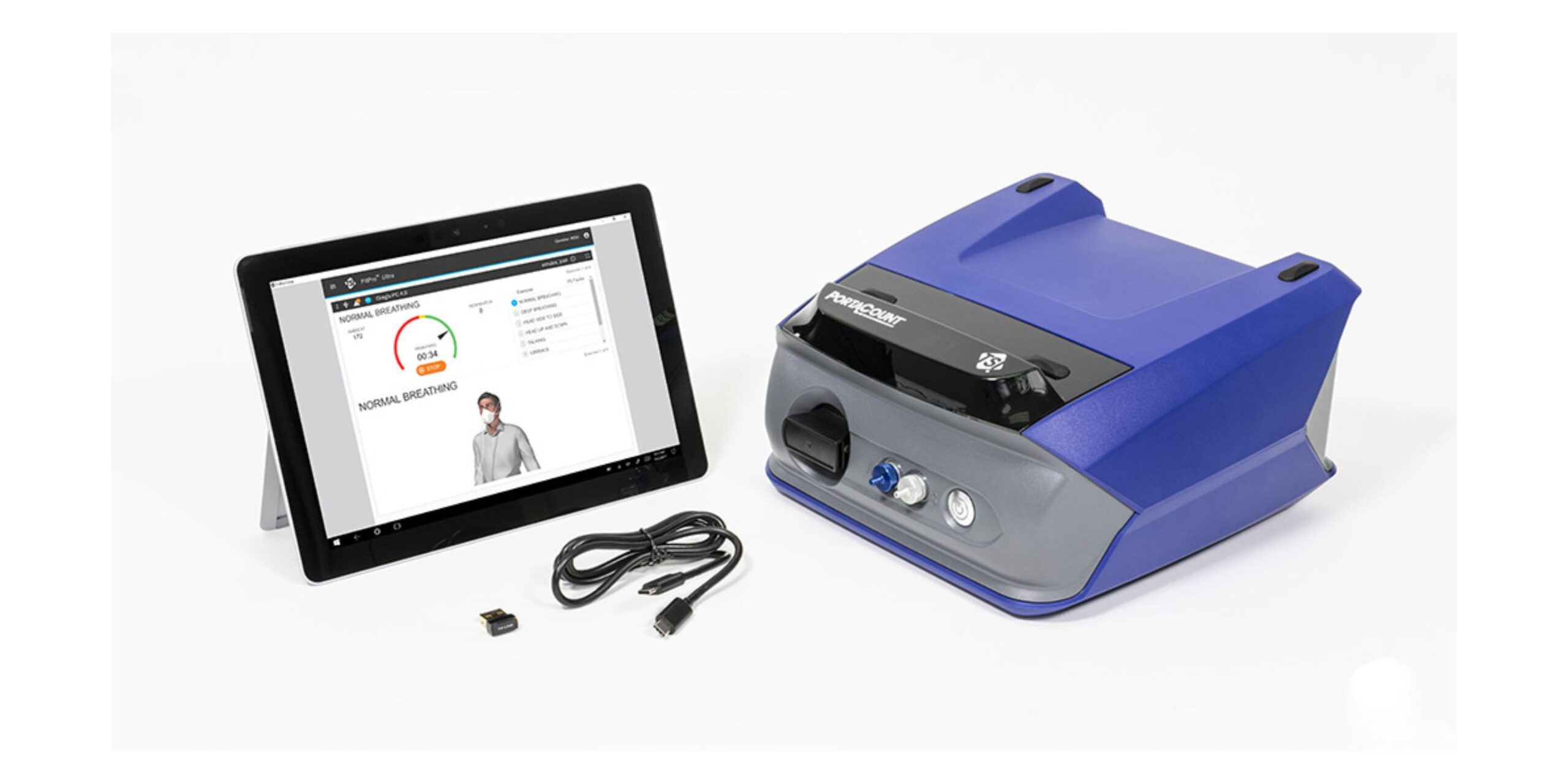
As an example, AYO WX HFM Standard Half-Face Mask PAPR System, which has a well-designed silicone facial cushion, was tested on a light-beard person achieving an average PortaCount fit factor over 2000 when powered on, similar to a clean-shave person under the same test conditions and far better than a non-powered respirator of typically only between 100 to 500. The key reasons AYO WX PAPR can achieve this are due to its powerful peak flow of over 200 L/min, which is similar to most loose-fitting PAPRs, and also due to its positive pressure ensured by the responsive flow control that can quickly accelerate the blower output anytime when the inhalation increases.

So to answer the question, yes, a tight-fitting PAPR can be used with a light-beard person similarly to a loose-fitting PAPR, provided the facial cushion is well designed, the beard is reasonably short, the flow generation is powerful enough, and most importantly, the ability to ensure positive pressure inside the mask.

Having said that, the EU highest class TH3 for loose-fitting is not ideal for work conditions that require a minimum protection factor of 1000 with heavy breathing, as once the breathing outruns the blower, negative pressure will be created in the breathing zone, causing leaks to contaminants. In this situation, a tight-fitting PAPR is more appropriate, and loose-fitting PAPRs are normally limited to light to moderate workloads for a protection factor of up to 500.

总而言之,下面是我们对有胡须人士的建议

  • 佩戴负压呼吸器时,必须将胡须刮干净。
  • You should be clean-shaven whenever you can, even if you wear a PAPR.
  • If you insist on keeping your beard, you must use a PAPR and make sure:
    • Trim your beard to a minimum.
    • Use for work with light to moderate exertion.
    • 使用 PAPR 前请将电池充满电。
    • 避免使用堵塞的过滤器——要经常更换过滤芯。
    • 尽量选用可以产生较大气流的 PAPR。
    • 尽量选用具有较小泄漏和设计优良的弹性脸衬的 PAPR。
    • Try to use a PAPR with powerful and intelligent breath-responsive flow control like an Aimwell® AYO™ WX.

If the beard stays, the direct route is a facepiece that never seals against skin: the AYO WX FFM-LF loose-fitting full-face PAPR, which needs no clean shave and no fit test.

Choosing the respirator is only half of it. The employer still carries the training, fit testing and record-keeping duties: see PAPR training requirements for Australian employers.

$1,000 SafeWork Small Business Rebate

DISCLAIMER

The SafeWork NSW Small Business Rebate is administered by SafeWork NSW. All applications are assessed by SafeWork NSW against the full program requirements at the time of application. Purchasing any product — including products that may currently appear on the eligible items list — does not guarantee rebate approval. The eligible items list is subject to change without notice.

Aimwell Breathing Pty Ltd is a supplier of respiratory protection equipment and is not affiliated with SafeWork NSW. We do not represent, warrant, or guarantee that any product purchase will result in a rebate being approved or paid. Applicants should confirm all eligibility requirements directly with SafeWork NSW prior to purchase.

To help ensure you receive accurate and consistent information, you can go to the SafeWork NSW Small Business Rebate webpage $1,000 SafeWork small business rebate | NSW Government or to the team directly safetyrebate@safework.nsw.gov.au for any questions about eligibility. You can assess the current list of eligible items can be found at SafeWork small business rebate eligible safety items | NSW Government.

Get $1,000 to Improve Workplace Safety: SafeWork Small Business Rebate & Powered Respirators

Workplace safety is a priority for any business, especially in high-risk industries where workers are exposed to hazardous air contaminants. If you are a small business owner in New South Wales, you may be eligible for the SafeWork NSW $1,000 Small Business Rebate, which can help cover the costs of safety improvements, including powered respirators.

What Is the SafeWork NSW Small Business Rebate?

The $1,000 SafeWork NSW Small Business Rebate is designed to support small businesses and sole traders in creating a safer work environment by subsidizing the cost of safety equipment. This initiative aims to prevent workplace injuries and illnesses by encouraging businesses to invest in high-quality protective gear.

Why Invest in a Powered Respirator?

A powered respirator generally provides better protection than a non-powered respirator, especially when you have facial hair, such as a beard.

How to Apply for the Rebate

If you’re considering purchasing a powered respirator for your workplace, follow these steps to apply for the SafeWork NSW $1,000 Small Business Rebate:

  1. Check Your Eligibility – You must be a small business owner or sole trader in NSW with a valid Australian Business Number (ABN).
  2. Complete a SafeWork NSW Safety Workshop – Participation in an eligible SafeWork NSW safety workshop or webinar is required.
  3. Purchase Eligible Safety Equipment – Invest in an approved powered respirator or other qualifying safety items.
  4. Submit Your Application – Provide proof of purchase and complete the application process online via the SafeWork NSW website.

Breathe Safer & Better with Aimwell

Protecting your employees from respiratory hazards is essential for their well-being and productivity. By utilizing the SafeWork NSW Small Business Rebate, you can invest in a high-quality powered respirator and ensure a safer workplace for your team.

Aimwell® AYO™ WX series powered respirators are world-leading around-neck PAPRs. Complied with AS/NZS 1716: 2012 as PAPR P3, the highest protection class, AYO™ WX is designed for demanding breathing protection in dusty or toxic industrial settings while providing unprecedented mobility and exceptional value for money.

Maximize your NSW SafeWork small business rebate with this carefully curated AS/NZS 1716 compliant PAPR bundle that can provide you with the best protection most practically and flexibly.

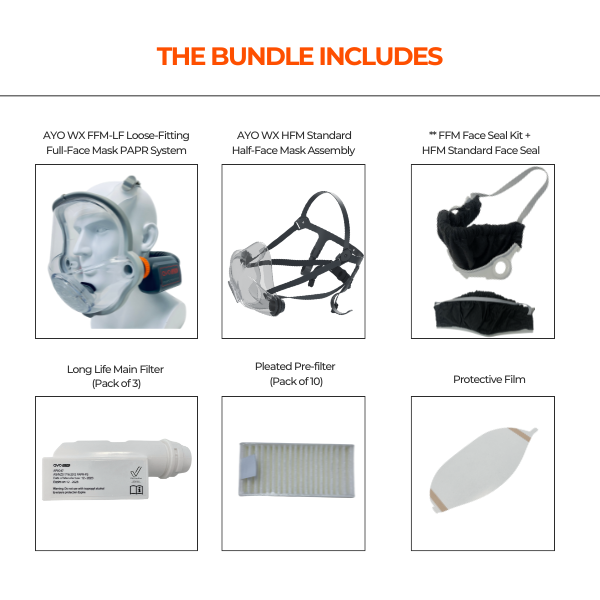
The bundle includes:

  • 1 x AYO WX FFM-LF Loose-Fitting Full-Face Mask PAPR System.
  • 1 x AYO WX HFM Standard Half-Face Mask Assembly.
  • 1 x Long Life Main Filter (Pack of 3)
  • 1 x Pleated Pre-filter (Pack of 10)
  • 1 x Protective Film (Pack of 10)
  • Either 1 x FFM Face Seal Kit + HFM Standard Face Seal (1 piece) OR One extra Long Life Main Filter (Pack of 3)

Is Fit Testing for Respirators a Flawed Practice?

Fit Testing is an industry practice to ensure that a respirator fits well to a wearer, aiming to achieve a good facial seal and protection.

Typically, a fit test is done in a controlled environment with scientific test equipment while performing a predefined test protocol, and it can effectively reveal how the respirator fits at the time of testing.

However, the real world of industrial work can be very different from and harsher than a short moment in a comfortable office, thinking about the following scenarios:

  • While doing tunnelling work, formwork in high-rise buildings, crawling under a roof, workers need to focus on the tough work itself or danger around them other than minding the fit of a respirator, which is prone to shift on the face in these works, compromising the fit.
  • Tasks associated with frequent moving around, high exertion, and sweating while using tools involving both hands can not ensure a good fit of the respirator once it shifts on the face.
  • For young male workers, even if they are clean-shaven in the morning, they may grow stubble enough to break a good seal, making a properly fit-tested respirator leak.
In the above scenarios, fit testing is ineffective and even flawed in ensuring a good fit and seal, even if it passed a fit test initially.

Having said that, fit testing has its unique place in controlling the effectiveness of respirators.

Compliance-wise, fit testing is a necessary industry practice, it ensures the respirator properly seals to the worker’s face under controlled conditions, verifying that the selected model and size provide adequate protection.

Fit Testing can also reveal respirator system leaks or Total Inward Leakage (TIL).

However, fit testing is primarily effective as a baseline for non-powered respirators. It also tends to be more effective in healthcare settings than in a harsh industrial environment, where in practice, workers’ activities in physical challenging conditions may reduce or even void its effectiveness.

We need solutions to balance regulatory requirements or intent with practical considerations.

Possible solutions:

  • Engineering controls (e.g., reducing airborne hazards).
  • Using respirators that are less prone to dislodging, like a full-face mask versus a half-mask.
  • Using a suitable PAPR which does not rely on a tight seal to work, such as a loose-fitting PAPR.

In most cases, a suitable PAPR is your best option to ensure good protection if you have been using non-powered respirators.

However, traditional PAPRs have the following practical issues:

  • Poor wearability and mobility associated with long hose waist-mount type, top-heavy helmet-mount type, and front-heavy face-mount type.
  • Difficult to clean and maintain.
  • Prohibiting high costs.

The great news is that, Aimwell® AYO™ WX series around-neck PAPRs have dramatically improved all these problems.

The series comprises a selection of low-profile half-face and full-face mask assemblies and a selection of easily detachable powered units worn around the neck, available in both tight-fitting and loose-fitting configurations, no hose, no belt, no hassles.

Certified by CMI ProdCert, this award-winning PAPR series offers the highest-in-class protection (PAPR P3), breakthrough mobility and flexibility, ease of use and maintenance, with exceptional value for money.

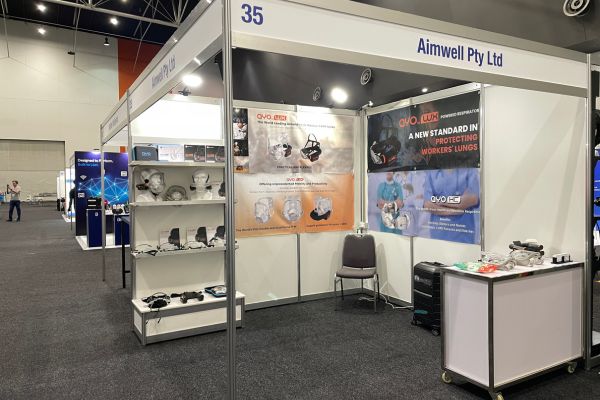
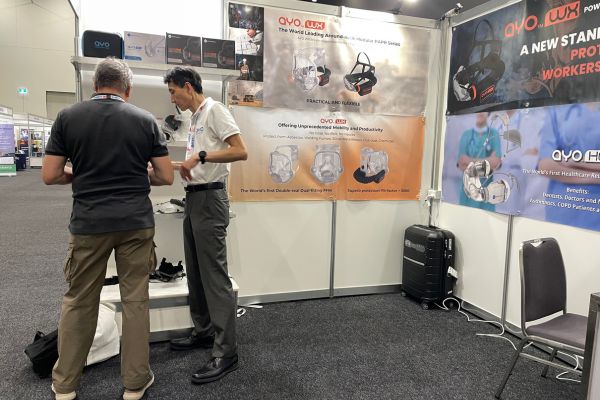
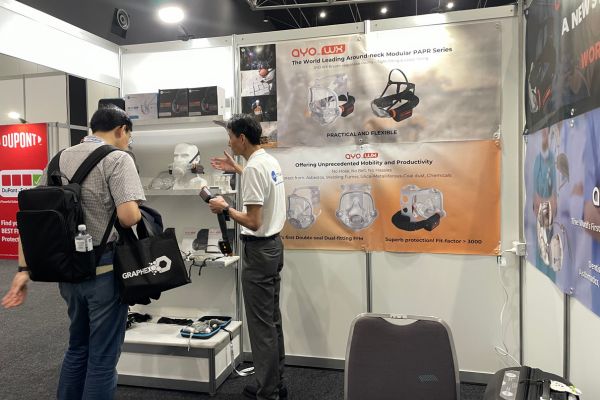
Annual AIOH Conference & Exhibition – Perth Australia

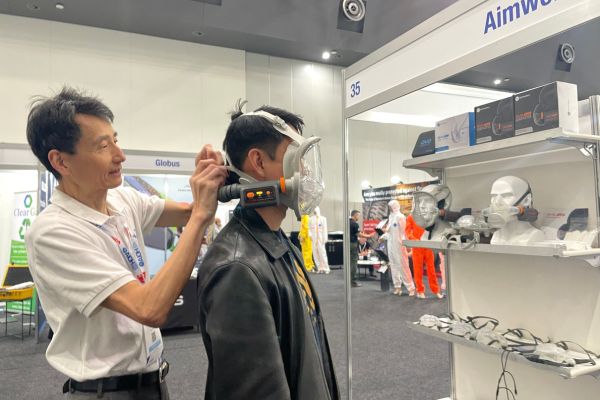
Aimwell at the AIOH Conference : Showcasing Innovation in Industrial Respiratory Protection

Aimwell exhibited during the Annual AIOH Conference in Perth Bringing together professionals and experts in the field of occupational hygiene, the tradeshow provided a vibrant platform for sharing innovations, fostering connections, and exploring solutions to workplace health challenges.

All our innovative industrial PAPR products are certified to the highest PAPR P3 class by CMI

We also updated our brochures, click the buttons below:

At Aimwell, our mission is to provide cutting-edge respiratory protection solutions that enhance workplace safety and comfort. During the exhibition, we showcased our latest line of industrial respirators, including our new Full-face mask powered systems, both in tight-fitting and loose-fitting. These respirators are designed to meet the demands of various industrial applications, including workers with beards.

AYO WX PAPR Series Common Features:

  • 专利脖置设计,突破性实现卓越机动性与灵活适配性
  • 采用全球领先的呼吸响应式气流控制技术,确保面罩内持续正压,峰值流量超过200升/分钟。
  • 高超防护等级-PAPR P3级,标称防护因数>2000
  • Superb fit factor with WX FFM_DS double-seal full-face mask and all WX half-face masks, typically over 2000 (Power-off mode with clean-shaven)
  • 创新开放式面罩适配组件(适用于所有面罩),使AYO WX系统兼容面部毛发且无需密合度检测
  • 超大电池容量,续航时间长达16小时
  • 电池可更换。
  • 脖置PAPR创新设计:无长管、无腰带、不会有头重脚轻的感觉,也不会有面部过重的感觉。
  • 低轮廓轻量化设计,佩戴舒适性媲美非电动APR
  • 兼容多数主流头盔、护目镜及耳罩
  • 操作便捷,清洁简单,维护方便

To learn more about our AYO WX model and its unique features, visit our dedicated page at AYO WX Respirator.

0
0
Your Cart
Your cart is emptyReturn to Shop