Diaphragmatic Breathing Training for Jogging – Part 1

Why Diaphragmatic Breathing?

The diaphragm is one of the main breathing muscles that should be used for our breathing by default. Diaphragmatic breathing training helps utilize the lower parts of the lungs that are more efficient to transport oxygen than chest (thoracic) breathing.

Efficient breathing helps better oxygen consumption by cells and tissues in the body, thus producing better sports performance as well as promoting better general health.

However, most modern people have predominant chest breathing where the lower parts of the lungs are less used, and as a result, breathing becomes inefficient, leading to less competitiveness in sports, or chronic hyperventilation in a lifetime that compromises people’s wellbeing.

In addition, diaphragmatic breathing can also achieve efficient lymphatic drainage of abdominal organs which is beneficial for your long-term health.

diaphragmatic breathing training

Here are some more general benefits this type of breathing can bring:

  • It helps you relax, lowering the harmful effects of the stress hormone cortisol on your body.
  • It lowers your heart rate.
  • It helps lower your blood pressure.
  • It helps you cope with the symptoms of post-traumatic stress disorder (PTSD).
  • It improves your core muscle stability.
  • It improves your body’s ability to tolerate intense exercise.
  • It lowers your chances of injuring or wearing out your muscles.
  • It slows your rate of breathing so that it expends less energy.

Mastering diaphragmatic breathing has a profound impact on your sports performance or your well-being in general.

Diaphragmatic Breathing Training with AYO BT in Jogging


While there are many ways to train for diaphragmatic breathing, most require dedicated time and focus to train properly. For many people with a busy lifestyle, it may be difficult to find time regularly for doing this specific training. Further, commonly recommended training for the diaphragm requires you to lie on the floor with a book on the belly, or in a still position placing your hand on the belly. The main issue with this type of training is a lack of linkage to real-life day-to-day activities, let alone physical exercises and sports training. The good news is that, with AYO BT, one can combine this breathing training with one of the routine exercises shared by many – jogging, either as a warm-up before a serious training section, or using jogging as a cross-training / general fitness exercise.

The goal of diaphragmatic breathing is to move your belly outward to make space for the diaphragm to go downward when you inhale, and to move the belly inward for the diaphragm to move upward to squeeze out the air at the bottom of the lungs when you exhale.

However, even with nasal breathing, one could cause hyperventilation during diaphragmatic breathing, especially when practising a full stroke of deep diaphragmatic muscle movement aggressively and repetitively which could result in breathing too much air that exceeds the need for metabolic rate the jogging exercise imposes on the body leading to over-breathing, thus compromising the benefits offered from the exercise.

In order to achieve the full benefits of diaphragmatic breathing training while at the same time avoiding hyperventilation, the key is to control the air intake according to the intensity of the exercise, and this is exactly what AYO BT is designed for.

Training with AYO BT in Default configuration – Inspiratory Focus

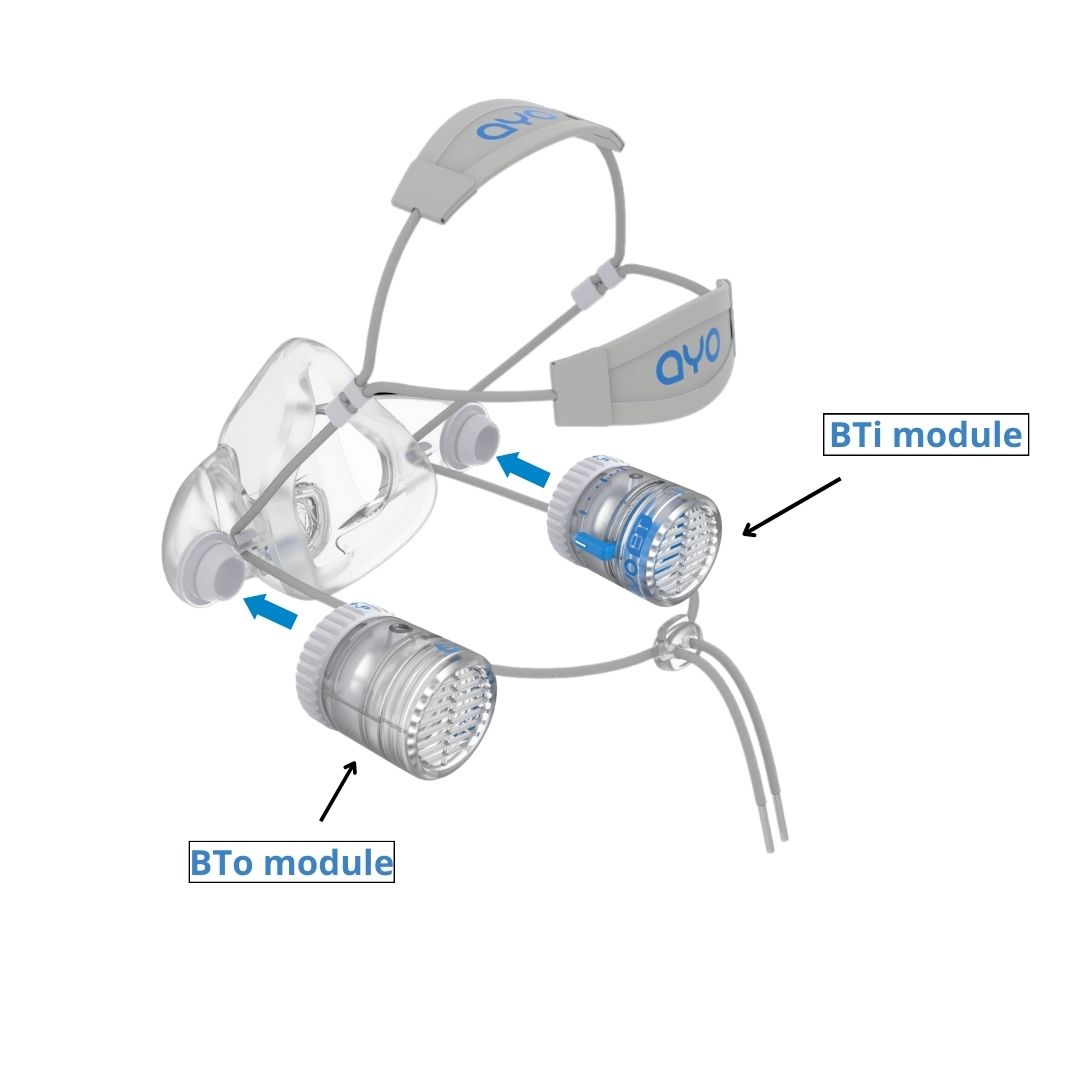
In the default configuration, where the BTi is fitted to the left side of the mask, and the BTo to the right side of the mask, the BTi can limit the air intake by adjusting the air inlet so that, the air is restricted thus increasing the resistance to breathe.

AYO BT in this configuration will focus on training and activating Inspiratory muscles.

When properly adjusted, the training will promote the following to your breathing:

  • A slower and longer inhalation: if you try to breathe very hard, you wouldn’t get enough air as you would normally expect without wearing the respirator, and this is because the inhalation resistance through the small inlet at a high flow rate will be too big to breathe, thus leading you to breathe slower and longer.
  • When you breathe slower and longer, you could easily breathe through your nose, and more importantly, your diaphragm is more engaged.
  • When the air intake is reduced, depending on the exercise intensity and the BTi inlet setting, it can create some air hunger, so even if you perform a full stroke of diaphragm movements, hyperventilation can be avoided.
Diaphragmatic breathing Patterns

In comparison with Chest breathing, diaphragmatic breathing is generally slower and longer. However, it doesn’t mean that both inhalation and exhalation are equally slow and long, this is particularly true when doing certain breathing exercises.

The following training programs outline two of many possible options, and once mastered the techniques, you can make an adaptation to tailor to your specific needs and situations at ease.

Overtime with this training, you would expect the following distinctive benefits:

  • Be able to use the diaphragm to breathe naturally.
  • Stronger breathing muscles.
  • Less breathlessness in high-intensity exercise.
  • Improved breathing efficiency.
  • Improved stamina and fitness.

Reference Diaphragmatic Breathing Training Program

Diaphragmatic breathing pattern focusing on Inspiration timing: Diaphragmatic breathing pattern focusing on Expiration timing:
1. Use nasal breathing only during the entire exercise. 1. Use nasal breathing only during the entire exercise.

2. Adjust the BTi Setting to the level suitable for easy jogging and your current fitness. As a general guide:

  • For advanced Nose-breather, set to Level2 to level4.
  • For novice Nose-breather, set around level4 to 6.

2. Adjust the Inlet Setting 1 – 2 settings above the Inspiratory timing focused training.


3. Jog between 15 to 30 minutes.

  • As a general guide, try to breathe slower and longer during inhalation and exhalation.
  • Try to make the Inhalation constantly in 4 running steps while 6 steps for exhalation.
  • You may exhale quicker down to 4 steps if the jogging intensity varies, such as running up a hill, but try not to exhale shorter than 4-steps while keeping inhalation constant at 4-steps.
  • At the start of each inhalation, try to soften the urge to breathe hard.
  • Simply let your abs relax to utilize the changeover momentum from the end of Exhalation followed by a slow and long inhalation. You should feel a ‘dropping’ diaphragm sensation and this is a good sign of you are doing it right.
  • From the start to 2/3 of each exhalation, relax your abs to let the air out effortlessly.
  • At the last 1/3 of each exhalation, press the abs inward to squeeze out the remaining air in the bottom of the lungs.
  • Try to pause a bit at the end of the inhalation to allow time for the inhaled air to reach the lungs fully.
  • If the Setting doesn’t give you sufficient resistance, that probably means that your fitness level is higher, or the intensity is not sufficient which requires a lower Inlet Setting to further reduce the air intake until your breathing is nicely slow and long.
  • The BTi should be adjusted to lead you to breathe slower and longer in order to breathe in enough air to sustain the training intensity, in the process your diaphragm is engaged while it cooperates naturally and accordingly to your breathing.


3. Jog between 15 to 30 minutes.

  • As a general guide, try to breathe slower and longer during inhalation and exhalation.
  • Try to make the Exhalation constantly in 6 running steps or longer while 2 steps for Inhalation.
  • You may inhale longer up to 3 steps if the jogging intensity varies, such as running up a hill, but try not to inhale longer than 3-steps while keeping Exhalation constant at 6-steps or longer.
  • At the start of each inhalation, try to soften the urge to breathe hard..
  • Simply let your abs relax to utilize the changeover momentum from the end of Exhalation followed by a slow and long inhalation. You should feel a ‘dropping’ diaphragm sensation and this is a good sign of you are doing it right.
  • From the start to 2/3 of each exhalation, relax your abs to let the air out effortlessly.
  • At the last 1/3 of each exhalation, press the abs inward to squeeze out the remaining air in the bottom of the lungs.
  • Try to pause a bit at the end of the inhalation to allow time for the inhaled air to reach the lungs fully.
  • If the Setting doesn’t give you sufficient resistance, that probably means that your fitness level is higher, or the intensity is not sufficient which requires a lower Inlet Setting to further reduce the air intake until your breathing is nicely slow and long.
  • The BTi should be adjusted according to the exercise intensity so that your exhalation is maintained at 6-steps or longer, while your inhalation is maximum 3-steps or shorter.


AYO BT – Why It Is an Essential Tool for Breathing Training

The problem

It may be hard to believe that most of us modern-day humans over-breathe chronically. It has been proven that chronic hyperventilation is at least in part responsible for a range of chronic diseases, such as asthma, high blood pressure, heart disease, diabetes, cancer, etc.

The causes

There are quite a number of factors that cause the vast majority of us to chronically over-breathe, including lifestyle factors, such as sedentary habits, lacking regular exercise, over-eating, and incorrect breathing patterns and habits.

Regarding lifestyle, more and more people are becoming aware of it, and with determination and discipline, a healthier active lifestyle can be achieved. However, incorrect breathing patterns and habits formed over many years may not be easy to change, especially if the patterns and habits have been consolidated by one’s every breath since a very young age!

The following are the most common unhealthy breathing patterns and habits:

  • Mouth breathing
  • Chest breathing
  • Fast and big breathing

CO2 – the leading factor responsible for breathlessness

It sounds very odd to many, but CO2 plays a critical role in breathing, in a sense, even more, critical than O2!

The reason we say this is that our blood is normally saturated with oxygen, and it doesn’t matter if we breathe a bit more or less than normal, the O2 saturation in the blood is hardly changed.

However, if you chronically over-breathe, the breathing nerve centre in the brain will become over-sensitive to CO2 increase, which causes breathing faster than normal, and a vicious cycle like the below will occur:

The faster you breathe → the more CO2 will be removed from the blood → and according to Bohr Effect, the less O2 will release from the red blood cells to the body tissues → the tissues thus sending the signal to the brain to breathe even faster.

This process causes breathlessness.

The Buteyko Method to breathe normally

Believe it or not, to get healthier, most modern people need breathing retraining. Buteyko Breathing is a science-based systematic breathing method to train reduced breathing and achieve normal breathing, which is well suited to prevent chronic over-breathing.

Based on Dr. Buteyko and his team’s medical research from the 1950s through to the early 2000s, plus tens of thousands of people’s positive practice of the breathing method, the following steps summarize the Buteyko Method in a simple way to work towards breathing normally and healthily:


  • Use the diaphragm to breathe through the nose in and out only whenever you can.
  • Practice reduced breathing, including breath-hold, small volume diaphragmatic inhalation, and full body relaxed long exhalation.
  • Practice breathing exercises involving slight air hunger.

AYO BT – A perfect tool to assist Buteyko Breathing

AYO BT breathing trainer works by controlling the air inlet to add resistance to reduce breathing, such that it makes the inhalation slow and long and activates the diaphragm that one must use to achieve normal breathing.

The following are the key points about why AYO BT is ideal for Buteyko breathing training:

  • Encourage and train to breathe using the diaphragm via the nose.
  • Easy to adjust the air resistance to reduce breathing. 
  • Easy changeover between inspiratory and expiratory training. 
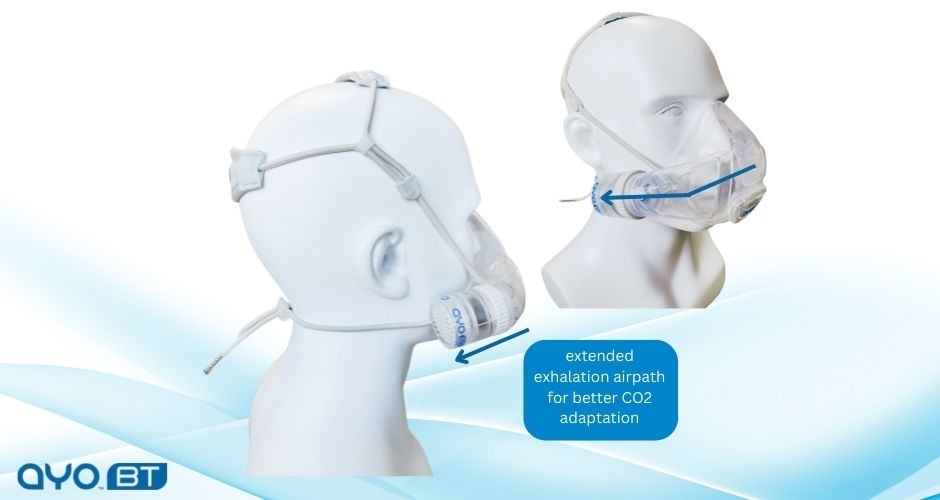
  • Easier adaptation to higher CO2 and lower O2 – reduces breathlessness.


Tool for Breathing Training

Tool for Breathing Training – Using AYO BT as a tool perfectly aligns with the key elements of Buteyko Breathing Method.


Using AYO BT over a period of time will train you to use your diaphragm naturally, allowing you to practice reduced breathing and adapt to higher CO2 without having to focus on your breathing all the time, thus making it easier to normalize your breathing.

In addition, the unique modular design of AYO BT allows a future upgrade to more advanced AYO BT+ which provides breathing data measurement with state-of-the-art technology.

Pursed-lip Breathing Replacement with AYO BT

What is Pursed-lip Breathing?

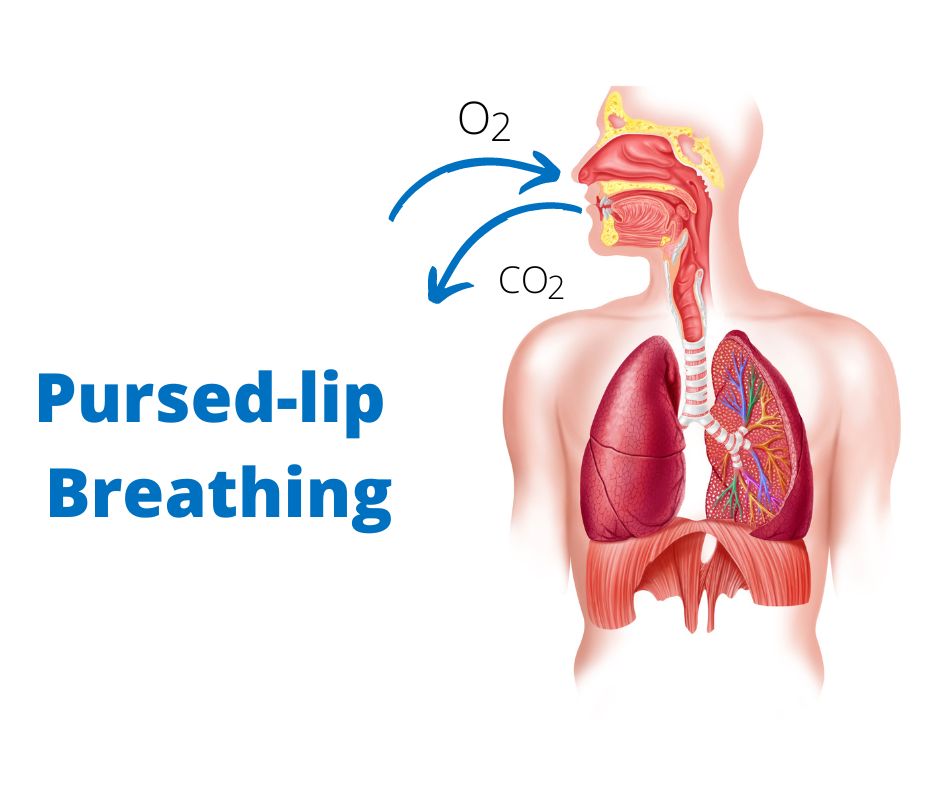
Pursed-lip breathing is a breathing technique where the lips are pursed to form a smaller airpath like a short straw which creates breathing resistance and back pressure during exhalation. This created back pressure helps keep the collapsed airways open so that carbon dioxide that’s trapped in the lungs can get out. This technique is particularly useful for COPD which usually causes the airway to collapse, and it is a common breathing technique as a part of pulmonary rehabilitation programs.

Pursed-lip Breathing

What is the common procedure to perform Pursed-lip Breathing?
  1. Breathe in through the nose using the diaphragm during inhalation.
  2. Purse the lips as if to whistle during exhalation.
  3. Slowly exhale through pursed lips. Some resistance should be felt.
  4. It should take about twice as long to exhale as it does to inhale.
What is the shortcoming of the Pursed-lip Breathing?

The key shortcoming of pursed-lip breathing is the repeated process of alternating from nose breathing to mouth breathing, where it requires constant effort on the part of the patient to control the pursed-lip which makes it a bit hard to adapt correctly and consistently over an extended time. Therefore, pursed-lip Breathing is not ideal if the exercise is long which may be needed for some COPD patients.

Normal Configuration of AYO BT Breathing Trainer

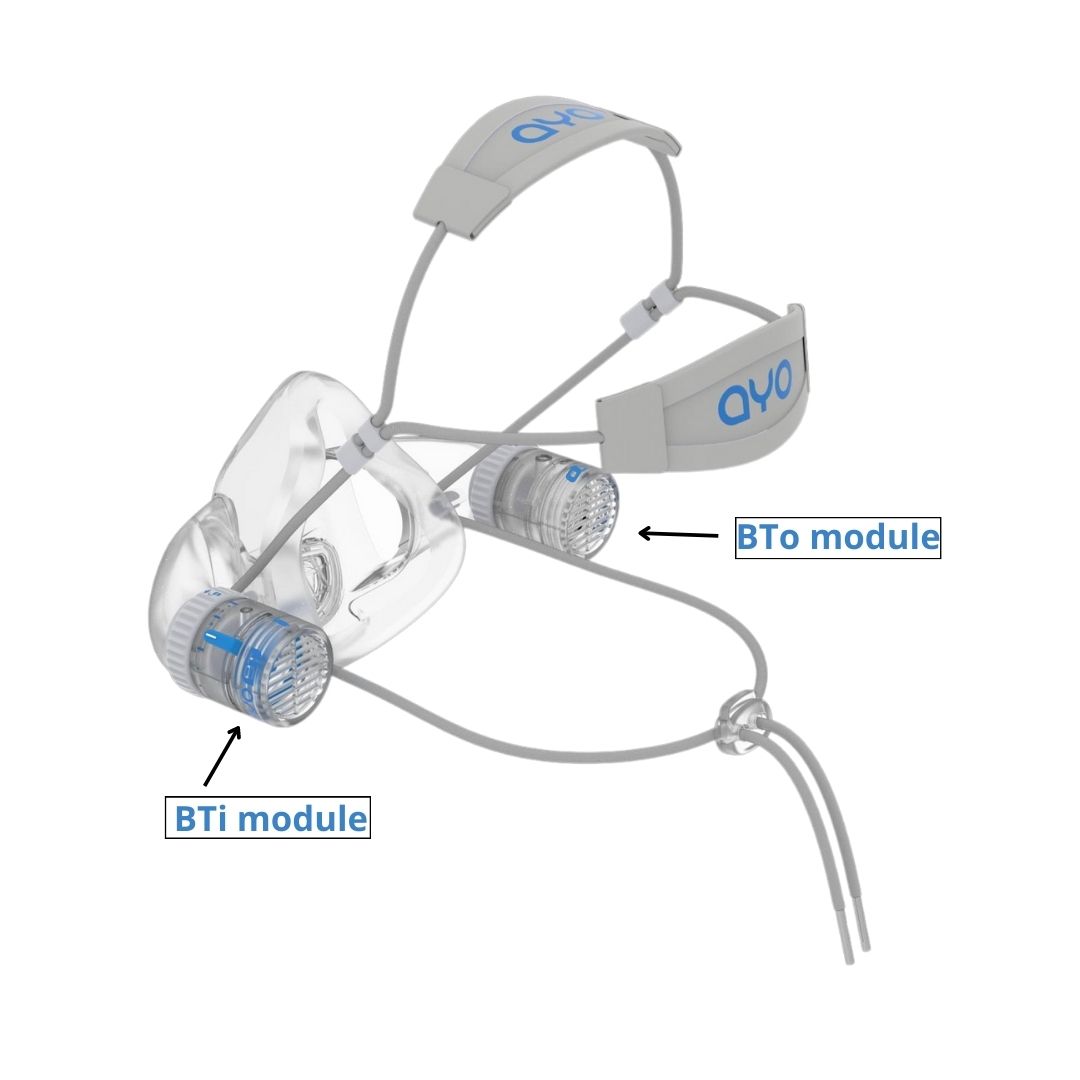
In the normal configuration, AYO BT consists of an Inhalation module BTi on the left side of the mask, and an Exhalation module BTo on the right side of the mask. In the configuration shown below, it trains inspiratory muscles when the air inlet in the BTi is adjusted small enough to create inhalation resistance while BTo provides an Exhalation valve to ease exhalation. In this configuration, the inspiratory resistance can be adjusted independently:

How to Use AYO BT to Improve Pursed-lip Breathing – Option 1

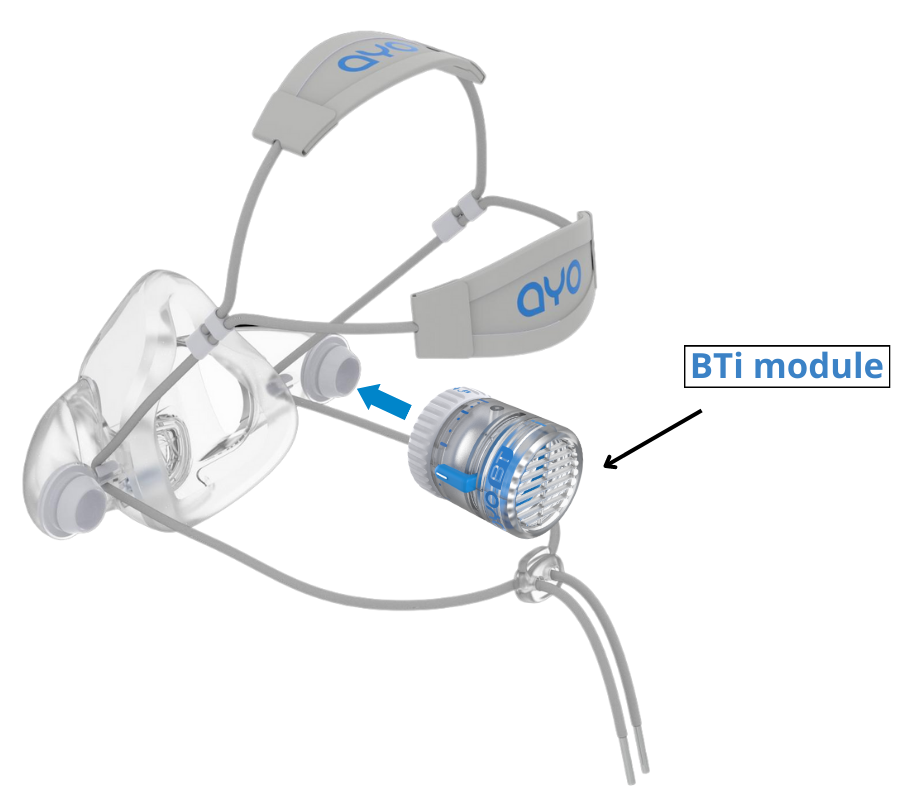
For COPD breathing training, where an increased exhalation resistance and pressure are needed, the normal BTo module can be replaced by another BTi module as shown below, so that an adjustable air outlet can be achieved to vary the back pressure of the lung during exhalation: 

In this configuration, the BTi on the right side will independently limit the exhalation by adjusting the air opening so that, the exhaled air is restricted thus increasing the resistance to exhale. 

AYO BT in this configuration will train and activate exhalatory muscles. 

How to Use AYO BT to Improve Pursed-lip Breathing – Option 2

For applications requiring symmetric adjustment of inhalation and exhalation, one can fit the BTi module on the Right side of the mask, and fit the BTo on the Left side of the mask as shown below:

Note: In this configuration, the inspiratory and expiratory resistance are adjusted at the same time and no independent adjustment is possible.

In summary, when configured and adjusted properly, AYO BT can be used as an improved method for Pursed-lip Breathing. In particular, it can be configured:

  • to train both the inspiratory and expiratory breathing muscles.
  • to provide exhalation resistance/back pressure for a long period without the control effort from the patient as for pursed-lip breathing.
  • to breathe in the entire exercise through the nose only, which also helps normalize breathing by using the diaphragm.

Related Article: How to Use AYO BT as an Alternative to Alternate Nostril Breathing

Over-breathing and Its Effect on Your Health

Updated 22 June 2023

The Common Misconception about Breathing

We all know that Oxygen (O2) is vital for life and breathing brings O2 into and expels carbon dioxide (CO2) out of the body, hence the misconception is that the more we breathe, the more benefits we will get, and CO2 is a waste gas that must be removed.

However, like over-drinking for water and over-eating for food, medical science and facts both have long proven that over-breathing (hyperventilation) is harmful to health. Also, contrary to many people’s beliefs, CO2 is not a simple waste from breathing, it actually plays an essential role in the body’s oxygenation and metabolic processes, and you will be amazed at the benefits to your health once your breathing brings the CO2 to your body to a right level, or at the damages to your health when the CO2 level is abnormal.

The Breathing Mechanics

Breathing brings air to our lungs, where at sea level the air contains 21% O2. When air is inhaled into the lung, O2 diffuses from the alveoli into the blood, and the CO2 diffuses from the blood to the alveoli in the lungs before being exhaled.

Once in the bloodstream, most of the O2 combines with hemoglobin in the red blood cells. Normal breathing results in O2 saturation in the blood from 96-98%. When the arterial blood arrives at the tissues, some O2 is released from the hemoglobin, allowing the tissues to get energy from the chemical reaction between O2 and carbohydrates and fats, and in the process, CO2 is released back to the blood before being exhaled from the lungs.

Why Over Breathing is Harmful to Health

As mentioned above, in normal breathing, the blood can be easily saturated with O2 up to 98%. So even if you breathe extraordinarily hard, the increase in O2 is limited to only 1-2%. This is insignificant; however, over-breathing will expel excessive CO2 out of the blood, which will hinder O2 to get released from the hemoglobin. According to Bohr Effect, when CO2 is low, O2 – hemoglobin binding affinity will increase, causing less O2 release to tissues and muscles. Organs like the brain, heart, liver, and kidney will lack O2 even though the blood is saturated with O2.

You could easily try breathing fast and deep continuously, and you will soon feel dizzy, a symptom of lacking O2 in the brain cells, and you may even pass out if you do this for too long!

In addition to causing oxygen starvation in the organs and tissues, a CO2 deficiency also causes spasms in the smooth muscles of the bronchi, cerebral and circulatory vessels, intestines, and other organs, further harming the body.

Research shows that a large portion of modern people has chronic over-breathing, which is at least in part responsible for a range of chronic diseases, such as asthma, high blood pressure, heart diseases, allergies, mental disorders, diabetes, cancer, etc. In short, chronic over-breathing causes a chronic starvation of O2 in tissues and cells, thus making people sick over time.

How to Prevent Over Breathing

The word ‘over-breathing’ literally is a relative comparison over ‘normal’ breathing, where ‘normal’ here refers to the right amount of breathing required by the metabolic rate at a given time for a person. This means that different metabolic rates require a different amount of breathing to be optimal for body oxygenation. However, the difficulty is that it is not straightforward to know the exact amount for each metabolic situation which could vary from time to time and from person to person.

Fortunately, the human body is quite tolerant, and with a certain level of reduced breathing towards normal breathing, over-breathing can be alleviated, and good body oxygenation can be achieved. To achieve it, there are many breathing methods and exercises available that may be applied to train and improve our breathing, where some of them were passed on from ancient times, and some are from modern-time discoveries and development. Here is a list of common breathing methods:

• Pursed lip breathing
• Nose breathing
• Diaphragmatic breathing
• Mindful breathing
• Yogic breathing
• Buteyko breathing method
• Pranayama breathing method
• Wim Hof breathing method

Buteyko Breathing Method is a science-based systematic breathing method to practice reduced breathing and achieve normal breathing, which is well suited to prevent over-breathing and a large number of associated chronic diseases. Hundreds of thousands of severe asthmatics have been cured by practicing this Method after the steroid-based inhalers failed them, which demonstrates the effectiveness and clinical significance of the Method.

Inspired by Buteyko Breathing, Aimwell’s AYO Breathing Trainer is designed as a tool to help train for diaphragmatic breathing via the nose and provide breathing measurement and diagnostics for accurately performing the Buteyko reduced breathing. In particular, AYO Breathing Trainer can accurately measure breathing volume, which is the fundamental metric and reference for reduced breathing but, unfortunately, has been missing since Buteyko Breathing became a breathing normalization practice. Thus, the availability of AYO Breathing Trainer removes all the guesses and doubts in relation to how much air to reduce while practicing reduced breathing, which is a game-changer for effectively practicing Buteyko Breathing and will benefit more people’s health and well-being.


Asthmatics – Using AYO BT for High Intensity Interval Training

What is High-Intensity Interval Training (HIIT)?

HIIT involves short bursts of intense exercise separated from low-intensity recovery periods. The actual exercise involved varies but commonly includes sprinting, cycling, rowing, rope jumping, resistance exercises, etc., with 10 – 30 minutes in duration.

HIIT typically requires 80% to 100% of your maximum effort, during which the heart rate and breathing rate are pushed to a high level.


breathing trainer for asthmatics - High Intensity Interval Training
breathing trainer for asthmatics

The Issue to Asthmatics

While HIIT could offer a range of training and health benefits, it does put on higher pressure to the body, in particular, your heart, muscles and breathing. For asthmatics, elevated breathing could trigger Exercise-induced Asthma or Bronchoconstriction (EIB). Statistics show that, up to 90% of people with asthma have EIB.

Typical triggers for asthmatics include:
• Cold air
• Dry air
• Over-breathing

Although naturally, HIIT demands a high level of breathing, most asthmatics tend to over-breathe, which puts an extra burden on their airways, which are more sensitive to cold and dry air than normal airways.
One of the key reasons for over-breathing is the body’s high sensitivity to CO2 in the lung and blood, a characteristic of most asthmatics.

AYO BT – A Tool to Prevent EIB Naturally

AYO BT addresses the above three triggers all-in-one by design, which doesn’t require prescribed inhalers.

  • It effectively extends the airway, which warms and moistens the inhaled air.
  • It reduces air intake, thus helping prevent over-breathing.
  • It helps train the body to be less sensitive to CO2, reducing the urge to breathe heavily during HIIT, thus reducing over-breathing right at the root.

Breathing Trainer for Asthmatics – How to Use AYO BT for HIIT?

Condition the breathing before HIIT
• Adjust the air intake Dial to Levels 2 – 4.
• Wear the AYO BT and do a warm-up jog for 10 – 15 minutes.

During HIIT
• Adjust the air intake Dial to level 6 or higher.
• Wear AYO BT throughout the HIIT.

Cooling down after HIIT
• Adjust the air intake Dial to levels 2 – 4.
• Wear AYO BT for a 5 – 10 minute cool-down jog.
• Reduce breathing with AYO BT right after the HIIT session allowing quick recovery from the workouts while preventing EIB effectively.

Related article: Why AYO BT Could Help Prevent Exercise-Induced Asthma

0
0
Your Cart
Your cart is emptyReturn to Shop