How to Achieve a Good Night of Sleep Through Reduced Breathing?

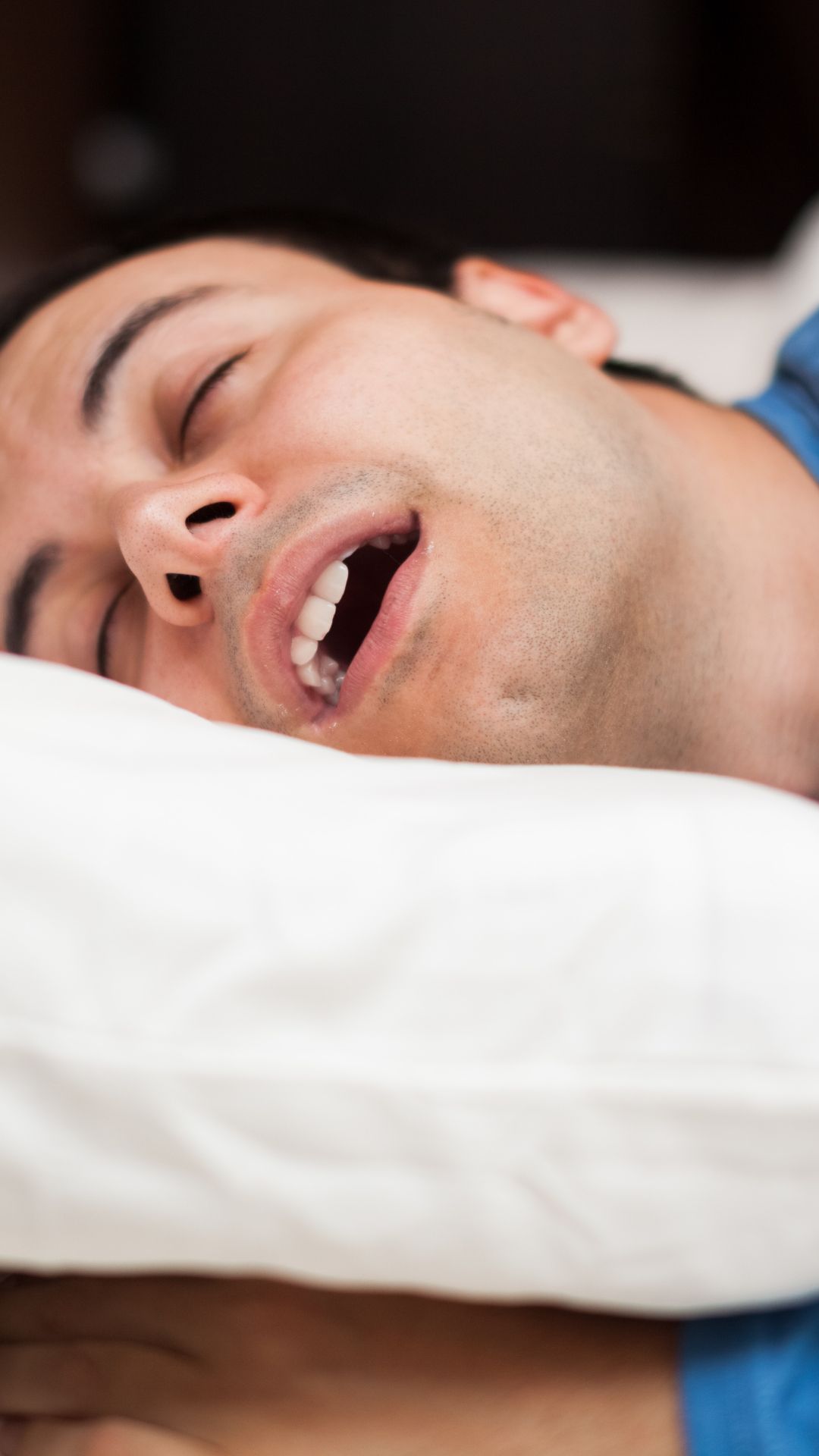
Did you wake up this morning feeling tired and thirsty with a stuffy nose? The chances are you slept with your mouth open, causing hyperventilation which activated your sympathetic nervous system and put your body in working mode instead of resting mode.

A simple but effective way to prevent mouth breathing during sleep is to practice reduced breathing through the nose before sleep. This conditions your breath makes it nicely slow and gentle, and activates your parasympathetic nervous system, which turns your body into rest/repair mode.

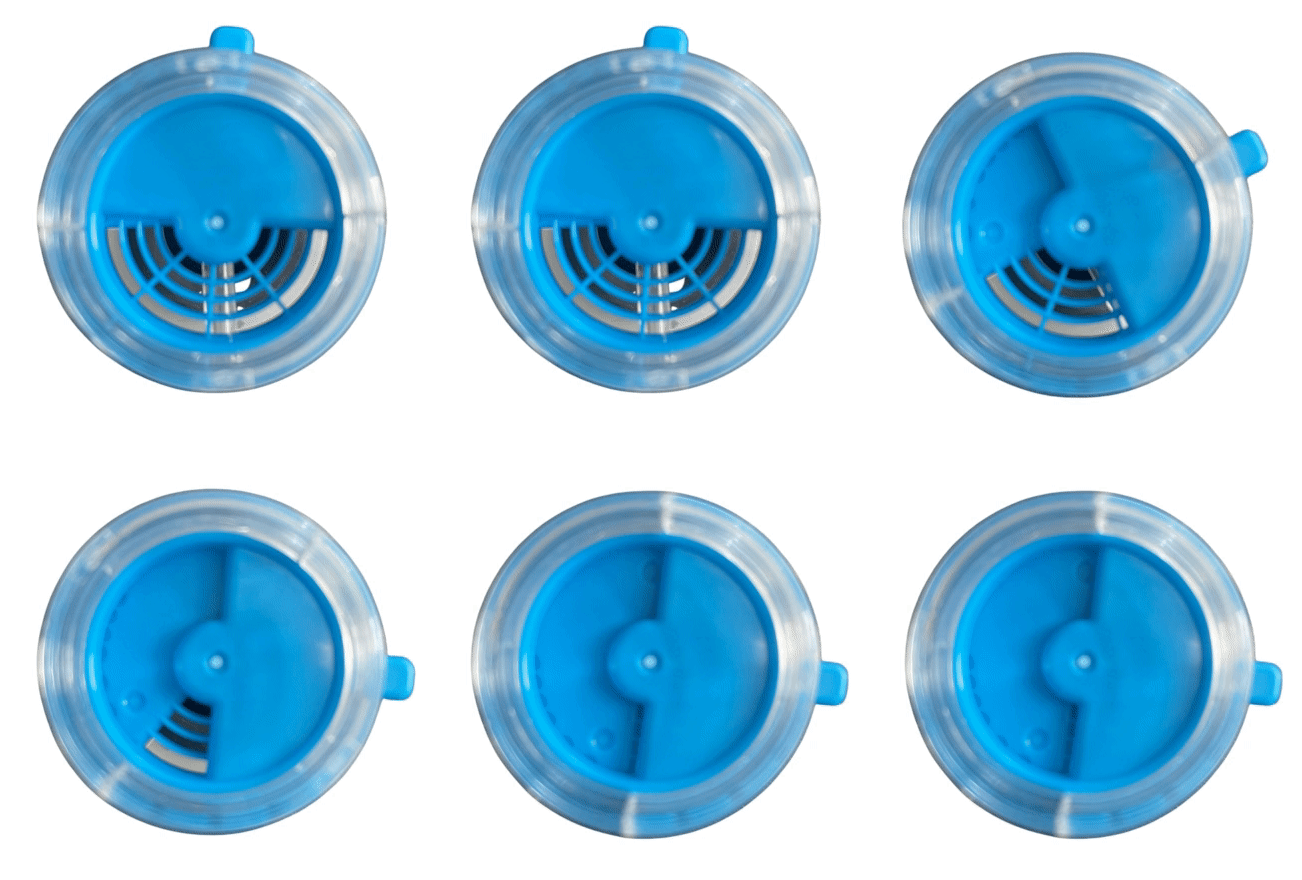
An easy way to practice reduced breathing is to use AYO BT modular breathing trainer which is designed to train diaphragmatic breathing through reduced breathing via the nose.

In addition, AYO BT extends your natural airway that retains some CO2 off your breath in the mask, resulting in less desire to breathe once you take off the AYO BT.

To be effective, prepare to wear AYO BT for 20 – 30 minutes before bedtime, and set it in a lower setting such as Setting 1 to 3 that creates a small but tolerable air hunger.
The beauty of this method is that it allows you to do other things while performing the breath conditioning, such as reading books or changing nappies, the AYO does the work in parallel to reduce your breath.
To get the best result, however, you would preferably need to concentrate on your breathing, as if your mind is somewhere else, your natural breathing habit would most likely tend to make you breathe faster and more than you aim for, which can limit the result to its possible best. For this reason, I would recommend doing it in meditation, where slow and gentle reduced breathing and meditation work together resulting in enhanced benefits to your body, mind, and ultimately your sleep.

A novel and more advanced method is to use the world-first breathing measurement and training device AYO BT+ to guide your breathing in your meditation.

Here is the protocol:

  • Firstly, do not eat too full, especially too much red meat. No Alcohol.
  • Do the meditation with AYO BT+ before sleep and at least 2 hours after the meal.
  • Adjust the BTi to a low setting, such as 1-3, or a setting that creates a tolerable air hunger.
  • Select Breathing in Meditation in the BT+ App, and set a time for 10 – 20 minutes.
  • Sit comfortably, place your mobile phone in front of you at a height that allows you to look straight ahead and maintain a straight back.
  • When inhaling, gently and slowly push the diaphragm down, then a brief pause to prepare exhalation.
  • At the start of exhaling, simply relax the diaphragm and let it return to its resting position by itself without you driving it.
  • Pause in that position and do nothing until you have a slight air hunger and feel like inhaling.
  • Repeat the breathing cycle, pay attention to the following:
  • Relax your full body at all times, especially the diaphragm, and keep your shoulders low and relaxed.
  • Observe your breathing waveform periodically, and try to make each inhalation small and gentle, and exhalation slow and relaxed.
  • Observe your Breath Rate (BR) and Minute Ventilation (MV) to gradually reduce them from their initial values and maintain these lowered values.
  • Imagining the following:
      • Let go of everything except your calm and relaxing breathing, in and out.
      • No more responsibility whatsoever, just enjoy the moment alone by yourself.
      • You are so free, so relaxed, think nothing, do nothing, just breathe lightly and gently, in and out.
      • You are so free, free as a bird and soaring in the sky.
      • You are so free, no worries, weightless, floating in the universe, just breathe lightly and gently, in and out.
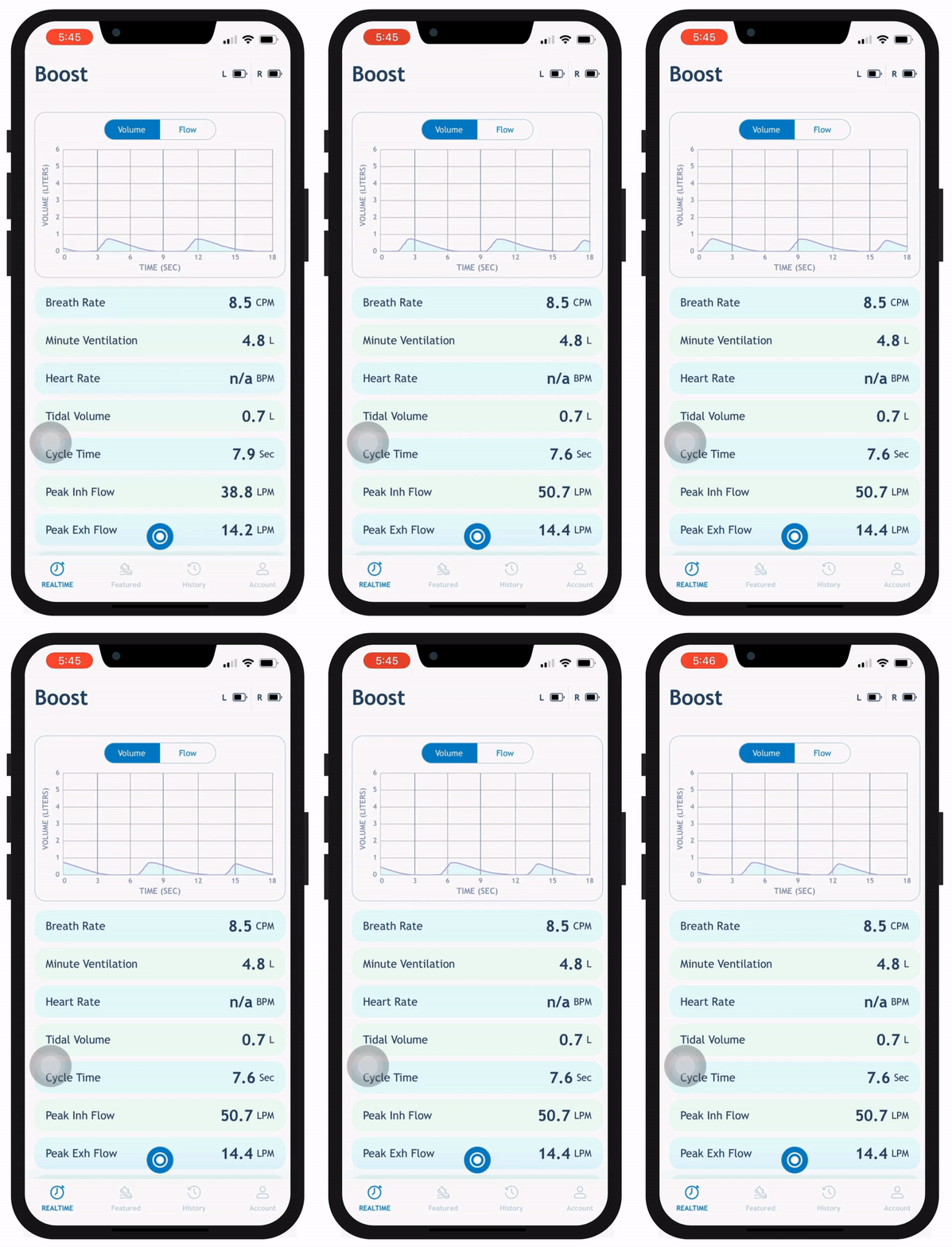
Your breathing waveform should be like the one shown on the right.

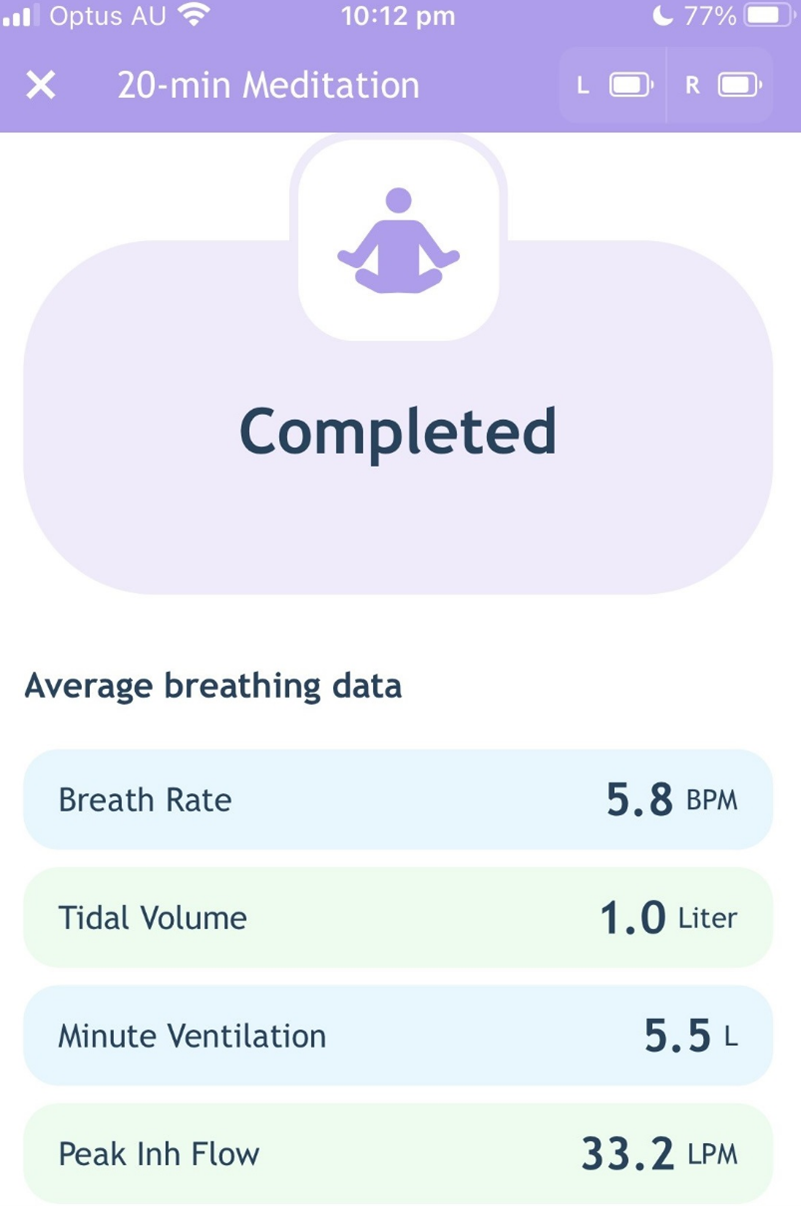
If you can breathe less than 6 breaths BR and less than 6 L MV comfortably at the end of the meditation, you should achieve a high-quality sleep afterward.

A 6-hour sleep like that is all you need to get you refreshed and pumped up the next morning.
What is the Optimal Respiratory Rate at Rest?

Respiratory Rate is one of the vital signs of human body along with Body Temperature, Pulse Rate, and Blood Pressure. More and more people become aware of the importance of breathing and are eager to train for healthy breathing.

If you search the internet for a definition of normal respiratory rate for an adult, you may find the answer to be either 12 to 16 or 12 to 20 breaths per minute (BPM).

However, this answer can be very misleading and even harmful if used as a guide for healthy breathing without mentioning the tidal volume. The reason is that one could breathe at 16 BPM but leading to an adverse health issue due to over-breathing if the tidal volume is 1 L/Min.

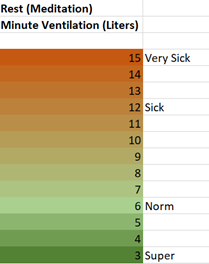
Minute Ventilation (MV), which is the product of Breath Per Minute (BPM) and Tidal Volume (TV), is one of the important breathing metrics to monitor. For example, a MV of 15 Litres at rest is associated with very sick people, and it is a breathing volume contributing to hyperventilation, which is at least in part responsible for a range of chronic diseases, such as asthma, high blood pressure, heart disease, diabetes, cancer, etc.

On the other hand, a MV of 6 litres at rest is defined as the physiological norm for a 70 kg adult that most of us should aim for, no matter if we breathe slowly or fast. If your breathing volume is more than your physiological norm, for example, at 12 Litres per minute, you will over-breathe (hyperventilation), and you would likely develop Asthma, which will make any breath rates irrelevant.

Now let’s come back to our original question “What is the Optimal Respiratory Rate at Rest?” Also, does it depend on age, sex, height, weight, race, etc?

There appears a lot of medical research has been undertaken in the last decade on breathing techniques and their potential clinical benefits. This is in the context of the breathing retraining method for reduced breathing and slow breathing known as Buteyko Breathing pioneered by Dr. Konstantin Pavlovich Buteyko started back in the 1950s, when he discovered that over-breathing is the root cause of asthma. Buteyko Breathing has been demonstrated to be very effective in treating a range of chronic disorders, particularly asthma, as well as a wide number of profound health benefits.

Recent research has also found that breathing can affect heart rate, in particular, during inhalation, it makes the heartbeats faster, and during exhalation, it makes them slower. In the physiological term, this is called Heart Rate Variability (HRV).

Higher HRV is more desirable because it indicates a healthy heart and overall healthy physiological functioning, including a more balanced parasympathetic-sympathetic functioning. Research has shown that HRV peaks when the breath rate is 5.5 or rounded off at 6 BPM, and this is common in healthy humans.

Coincidentally, research has also found further benefits at 6 BPM, such as:

    • Most efficient gas exchange at the lungs
    • Increase of blood pressure fluctuation leading to significantly lower average blood pressure for the same cardiac output.

Based on the above, it is logical to conclude that a 6&6 breathing pattern should be adopted by most people to not only gain the benefits of maximum HRV but also to ensure no over-breathing occurs. Therefore, instead of trying to breathe at the optimal respiratory rate, we should try to breathe with an optimal breathing pattern, i.e., to breathe at 6 BPM AND with 6 litres MV at the same time.

You could try to breathe the 6&6 pattern at any time at rest, but especially do it via meditation before sleep to gain an immediate additional benefit of better sleep quality.

Now you may wonder how you could know your MV, assuming you could manage the BPM by a watch.

The short answer is that it is not straightforward to measure without an advanced breathing measurement device.

The great news is that Aimwell’s AYO BT+ Breathing Measurement and Breathing Exerciser can do just that, plus many more functions to train for healthy breathing.

Your physiological norm of Minute Ventilation is proportional to your weight, which can be calculated from 6 Litres for a 70 Kg adult. For example, if you weigh 100 Kg, your physiological norm of Minute Ventilation is 100/70 * 6 = 8.6 Litres.

The image on the right is a screenshot from the App of AYO BT+ during a 20-minute meditation. By monitoring the BPM and MV from the App during the meditation, one can control the tidal volume to breathe towards the 6&6 healthy breathing pattern.

In summary, optimal respiratory rate alone is not sufficient to ensure the best health outcome, and your physiological norm of Minute Ventilation must be included together to ensure you do not over-breathe,

Aimwell AYO BT+ Breathing Measurement and Breathing Exerciser is an effective tool for you to measure your breathing volume and train for the optimal breathing pattern.

Exercise-induced Asthma Management via AYO Breathing Trainer

The Causes

If you are an asthmatic and also a sports person, especially often participating in high-intensity exercise, you may be aware of or even suffer from exercise-induced asthma.

The causes of asthma can be many, such as

  • Family history / genetic
  • Airborne allergens, such as pollen, dust mites, mold spores, pet dander or particles of cockroach waste.
  • Respiratory infections, such as the common cold.
  • Physical activity.
  • Cold and dry air.
  • Air pollutants and irritants, such as smoke.

In the Exercise-induced Asthma context, Physical activity, Cold and Dry air are the more likely causes.

Our airways are naturally accustomed to warm and moist air. At rest, we normally breathe gently via the nose in low tidal volume and slow breath rate typically around 500ml and 12 breaths per minute respectively. When cold and dry air passes the upper airways through the nose, the air gets warmed and moisturized before traveling to the lower airways and lungs where airways are narrower and more sensitive to cold and dry air. Thus normally when ventilation is low, the upper airways work well as an air conditioner to ensure the lower airways are not experienced with cold and dry air.

However, when we do high-intensity exercise, we often breathe more quickly via the mouth, where tidal volume increases dramatically such as to 2.0 liters or more, and the breath rate can go up to 40 breaths per minute or more. The minute ventilation at high-intensity exercise can be 15 times or more than that at rest. At such a ventilation volume with cold and dry air, the upper airways simply cannot cope, leading to the cold and dry air reaching the lower airways and lungs, causing inflammation and contraction of the small airways making them narrower or even blocked. When the situation is severe enough, it triggers an asthma attack.

How to prevent it?

Most people with Exercise-induced Asthma continue to exercise and remain active by treating the symptoms with asthma inhalers, which are typically steroid-based prescribed medicines. All medicines can have some side effects. Common side effects of asthma medicines include: 

  • A faster heartbeat
  • A hoarse voice
  • A sore throat
  • fungal infections of the throat

Most asthma inhalers work as an anti-inflammatory drug, and this is a passive strategy in that, it mitigates the effects caused by the cold and dry air but does not address the source of the issue directly.

The good news is, there may be ways to prevent Exercise-induced Asthma at the source without using asthma inhalers. AYO BT is one of them when used correctly.

Exercise-induced Asthma Management via AYO Breathing Trainer – Part 2

In the previous post, Exercise-Induced Asthma Management via AYO Breathing Trainer. It concluded that Physical activity, Cold and Dry air are the more likely causes of Exercise-induced Asthma.

If we think slightly deeply, it is easy to pinpoint that the culprit for Exercise-induced Asthma is too much air entering the lungs. Thus the most effective strategy is to limit the air intake to the lungs in the first place. This is exactly what AYO BT is designed for.

AYO BT works by reducing the air inlet via a dial on its BTi module, which has 11 settings, and each of these settings can be related to a typical size of a nostril. For example, Setting 2 relates to ½ of a nostril, Setting 4 relates to 1 nostril, and so on.

From a flow dynamics point of view, when the cross-area of an airpath is smaller, the flow resistance for a given flow rate is higher. So the reduced air inlet will naturally promote slower and longer breathing, which activates the diaphragm via the nose allowing air to pass the lower section of the lungs, where the gas exchange will be more efficient than the top section of the lungs due to gravity bringing more blood there. Due to more efficient gas exchange, the required oxygen via breathing is reduced, and this will further reduce the air intake. Due to the slower and longer breathing via the nose, the cold and dry air also has more time to be warmed by the upper airway.


Furthermore, the mask of the AYO BT is designed to extend the natural airway, where some CO2 from each breath is retained in the mask and then rebreathed, this helps increase the brain’s tolerance to CO2 which makes you have less desire to breathe.

The mask can also help keep some of the warm and moistened air from each breath, which conditions the cold and dry air before reaching the lungs.

In summary, AYO BT is very effective to reduce air inlet, helps warm and moisten the air to breathe, promotes nose breathing, and train for diaphragmatic breathing. When used correctly, it could dramatically reduce the likelihood or severity of Exercise-induced Asthma.

HIIT is a very effective and popular training for elite athletes or experienced sports enthusiasts. However, HIIT naturally demands a high level of breathing, which would put an extra burden on asthmatics whose airways are already more sensitive to a large amount of air, especially cold and dry air.  

The strategy of this program is first to use AYO BT to condition breathing with a smaller air intake at warm-up, then wear AYO BT but adjust it to a higher level of air intake for the actual HIIT, and finally after the HIIT, resume the smaller air intake setting for a cool-down. Here is the program:

Condition the breathing before HIIT

  • Adjust the air intake Dial to Levels 2 – 4.
  • Wear the AYO BT and do a warm-up jog for 10 – 15 minutes.

During HIIT

  • Adjust the air intake Dial to level 6 or higher.
  • Wear AYO BT throughout the HIIT.

Cooling down after HIIT

  • Adjust the air intake Dial back to Levels 2 – 4.
  • Wear AYO BT for a 5 – 10 minute cool-down jog.
  • Reduce breathing with AYO BT right after the HIIT session allowing quick recovery from the workouts while helping prevent Exercise-induced Asthma.

Exercise-induced Asthma Management via AYO Breathing Trainer – Part 3

Previous Post:
Exercise-induced Asthma Management via AYO Breathing Trainer – Part 1
Exercise-induced Asthma Management via AYO Breathing Trainer – Part 2

In this post, It will show you how to use the AYO BT+ breathing measurement device to gain data metrics for advanced asthma monitoring and symptom prevention.

Essentially, AYO BT+ is AYO BT plus Breathing Measurement. Key measurements include:

  • Breath per minute (BPM)
  • Minute ventilation (MV)
  • Tidal volume
  • Inhalation and exhalation time
  • Power of breath and work of breath
  • Vital lung capacity
  • Breath-hold time
  • Realtime breathing waveforms

For asthmatics, BPM and MV are two important parameters to monitor first.

They are effective metrics for how much air you breathe and how fast you breathe in a minute. You might recall from my earlier post that the effective strategy for preventing Exercise-induced Asthma is to limit air intake in the first place, as too much fast-moving cold and dry air is most likely the culprit for Exercise-induced Asthma.

You may wonder how much you should limit the air intake. You could of course use your experience or gut feeling, which may not be right at times. AYO BT+ can provide your BPM and MV in your training with instrument-grade accuracy.

Here is a protocol as a reference:

  • Start with a known intensity of exercise that has been proven to cause no asthma symptoms to you.
  • Wear AYO BT+ during the exercise to monitor your BPM and MV.
  • Breathe by your diaphragm through your nose only – Shut your mouth!
  • Record them as your safe baseline.
  • To increase the intensity once you feel comfortable, restrain your desire to breathe faster, instead try to increase each inhalation by pushing your diaphragm down deeper and pause a bit at the end of it, then exhale smoothly bringing your belly in further at the end of it.
  • Frequently monitor your BPM and MV to make sure they are not over your safe baseline.
  • If you feel much fitter and have no signs of any symptoms after weeks of training, you could cautiously increase the baseline BPM and MV by 10% and use them as a new baseline.
  • Always try to restrain your desire to breathe faster.

Exercise-induced asthma is often a temporary condition in which your airways narrow and swell after an intensive exercise. However, at most rest times, you could appear perfectly normal.

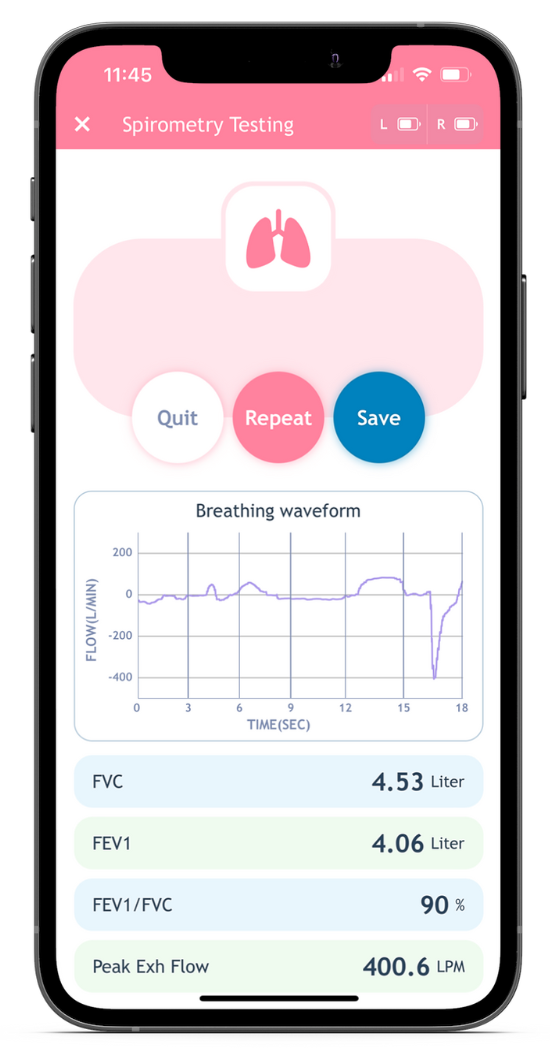
This narrowed airway condition can be effectively measured by a type of medical device called a spirometer, which measures Vital Lung Capacity (FVC), Peak Expiratory Flow (PEF), and Forced Expiratory Volume in one second (FEV1), plus the FEV1/FVC ratio.

When your airways are narrowed, your PEF and FEV1 will be lower than normal, thus the FEV1/FVC will be lower than normal too.

Here is a guideline for early warning of asthma symptoms and what you should do:

  • If your FEV1/FVC is less than 75% before any exercise, do not do any intensive exercise.
  • if your FEV1 and PEF after each exercise are lower than those before the exercise by 15% or FEV1/FVC is less than 75%, you should reduce the exercise intensity next time.

The BT+ APP can measure FVC, PEF, FEV1 and the FEV1/FVC ratio. See image on the right showing the result after you perform the spirometry testing on the app.

In the meantime, stay fit and asthma-free everyone!

Spirometry Testing – An Effective Metric Testing for Asthmatics
0
0
Your Cart
Your cart is emptyReturn to Shop